
 E-Paper



Manish Sisodia Covid-19 positive but rapid tests miss 2 MLAs
While Sisodia was tested through the gold-standard Reverse Transcription Polymerase Chain Reaction (RT-PCR) method, two of the MLAs mentioned above were cleared to attend the session after their rapid antigen tests were negative.

 Prefer HTon Google


New Delhi:
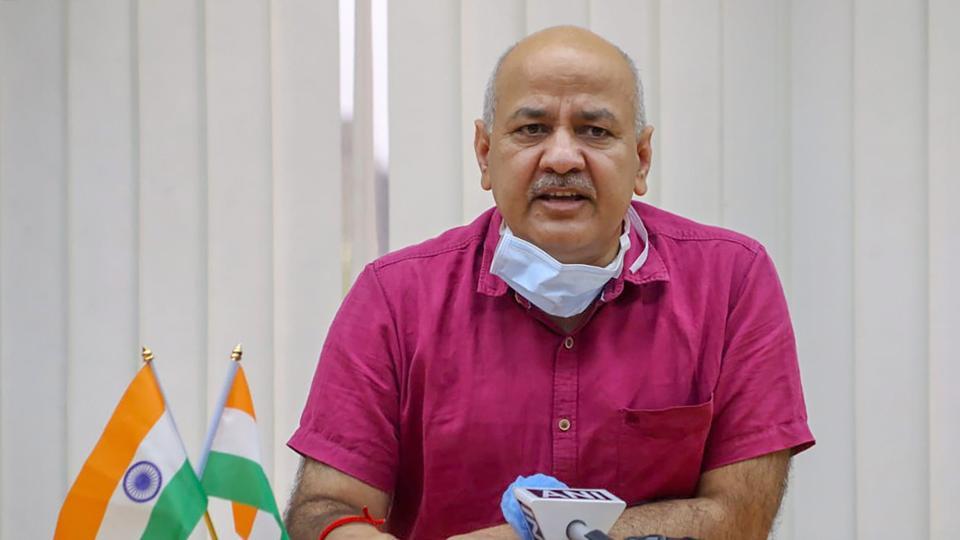
Delhi’s deputy chief minister Manish Sisodia said on Monday that he is going into isolation after contracting the coronavirus disease, even as a special session of the state assembly concluded in a scare with three Aam Aadmi Party (AAP) MLAs, who came to attend the House proceedings, testing positive for Covid-19 by evening.
Sisodia did not attend the session because he was down with fever since morning. “After suffering from mild fever, I took a coronavirus test and it turned out to be positive. I have isolated myself. I don’t have a fever or any other problem as of now. I am absolutely fine. With your prayers, I am sure I will return to work after regaining my health,” Sisodia tweeted in Hindi.
While Sisodia was tested through the gold-standard Reverse Transcription Polymerase Chain Reaction (RT-PCR) method, two of the MLAs mentioned above were cleared to attend the session after their rapid antigen tests were negative.
The third MLA, Girish Soni (Madipur), was found positive during a rapid antigen test conducted on the assembly premises before entering the House. Soni left the area immediately after that.
Under the guidelines of the Delhi assembly, all MLAs have to undergo RT-PCR tests to attend the session. But the results of at least seven MLAs had not arrived until the Hose convened. Hence, the assembly secretariat made those without an RT-PCR report to undergo rapid antigen tests.
Pramila Tokas (RK Puram) and Vishesh Ravi (Karol Bagh) tested negative during this drive but were found to have contracted the infection in their RT-PCR reports hours later. Their reports came when the session was underway and when they were in the House.
The incident highlights the pitfalls in the Delhi government’s reliance on rapid antigen tests, which can throw up “false negatives” — or give a negative result for an infected person — in as many as 50% of positive cases, researchers have said. Delhi has been conducting about 80% antigen tests over the past two weeks as it has scaled up testing.
“A total of 49 MLAs attended the Assembly session on Monday. While most of the legislators were allowed entry based on their latest RT-PCR negative test report of the past 48 hours, there were a few whose reports were yet to come. So, we arranged rapid antigen tests before the session for such MLAs,” a senior official in the Delhi assembly secretariat said, explaining what happened.
“The reports of the three concerned MLAs in the rapid antigen test had come negative and they were asymptomatic. But, when RT-PCR test reports came by evening, the reports of Tokas, Soni and Ravi came positive,” he added.
There was no response from the Delhi government till the time of going to the press.
A second official in the assembly secretariat said about two dozen people, including a few MLAs, who came in contact with Tokas, Soni and Ravi, have been asked to go under self-isolation.
In addition, three staff members of the assembly were also found positive. They, too, were present on the assembly premises during various session-related work.
“The assembly is now being fully sanitised. Contact tracing is still on to ensure whoever came in contact with them are put under self-isolation. The three MLAs who tested positive are under home quarantine,” the official said.
On Saturday, four legislators -- BJP MLA from Ghonda Ajay Mahawar, and AAP MLAs Rajesh Gupta (Wazirpur), Rituraj Jha (Kirari) and Surendra Kumar (Gokalpuri) had told the assembly that they were infected with Covid.
Dr Lalit Kant, former head of epidemiology and infectious disease at the Indian Council of Medical Research (ICMR), said the Delhi government’s testing strategy needs a review.
“Just increasing testing is not the point. Which form of testing is being increased is also significant. Ideally, rapid antigen tests should be conducted only in hospitals, containment zones and on special surveillance groups and high-risk groups such as senior citizens. The primary form of testing ideally should be RT-PCR in the city. Even the high court has noted this point,” he said.


