E-Paper



Smart city means no drinking water: Rahul Gandhi attacks BJP over Indore deaths
Leader of the Opposition and Congress lawmaker Rahul Gandhi on Saturday hit out at the Bharatiya Janata Party (BJP) over diarrhoea outbreak linked to contaminated water

 Prefer HTon Google


Bhopal: Leader of the Opposition and Congress lawmaker Rahul Gandhi on Saturday hit out at the Bharatiya Janata Party (BJP), saying its “new model smart city that doesn’t even have clean drinking water,” amid conflicting claims over the toll in Madhya Pradesh’s Indore following a diarrhoea outbreak linked to contaminated water.
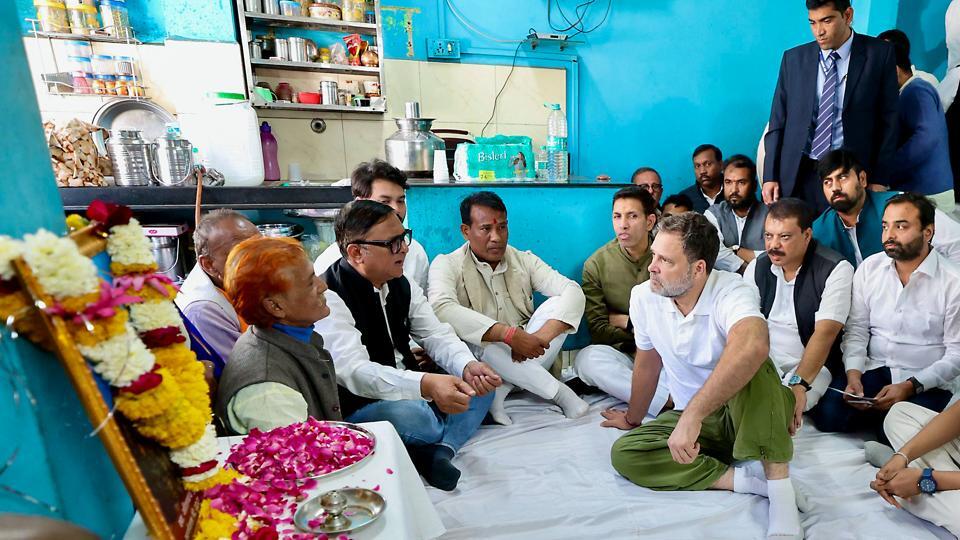
Gandhi arrived in Indore on Saturday, where he met patients admitted to Bombay Hospital and the families of those who died.
“People died and families fell ill. It was promised that the country would be given smart cities, but this is the new model of a smart city—there is no drinking water, and people are being scared. Entire families have fallen sick after consuming the water. This shows that clean water is not available in Indore. People are dying after drinking contaminated water, and the government is failing in its responsibility,” Gandhi said.
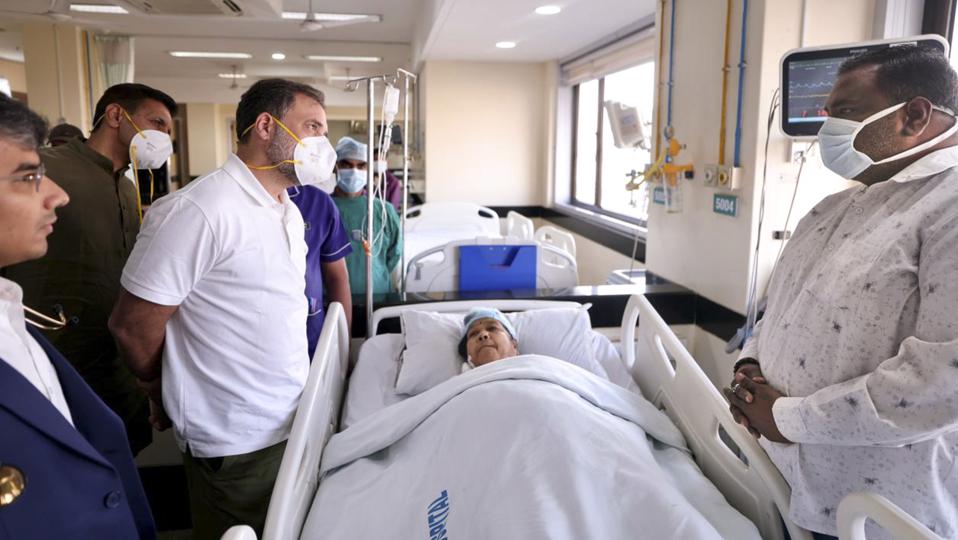
While the state health department has confirmed six deaths so far due to the consumption of contaminated drinking water in Bhagirathpura, residents have claimed the toll to be much higher. A panel of doctors from a government medical college has attributed at least 15 deaths to the recent outbreak of diarrhoea, a senior official confirmed on Tuesday.
Referring to the recent reports highlighting sewage contamination in drinking water across parts of Rajasthan, Madhya Pradesh and Uttar Pradesh, terming the issue a serious environmental and public health concern, Gandhi said that the issue was not limited to Indore.
“This is happening in other cities as well. The government’s responsibility is to provide clean water and reduce pollution, but it is not fulfilling that responsibility. Someone in the government must be held accountable. Compensation should be provided for the treatment of patients and for the deaths that occurred due to negligence,” he said.
“The residents told me that the water tank here is symbolic. Even today, clean water is not available. A temporary solution has been implemented only because the media and the country’s attention is on this issue. Once the spotlight shifts, the situation will return to what it was before, and contaminated water will be supplied again. The government must work systematically to ensure clean water is available,” Gandhi added.
Water resources department minister Tulsiram Silawat questioned Gandhi’s visit to Indore “after 20 days.” “Why is he visiting when things are getting normal? The government was on the ground helping people when they were in distress. This visit of Gandhi is not to support people but to do politics,” he said.
Gandhi hit back, “I have come here to support the people. As Leader of the Opposition, it is my responsibility to raise their issues. If someone calls this politics, so be it—but people must get clean water.”
Rahul Gandhi visited Bhagirathpura, where he met the families of Geeta Bai and Jeevanlal, whose deaths were linked to contaminated water. He handed over cheques to both families. Later, at Sanskar Garden, he met other affected families, giving each a cheque of ₹1 lakh, while the Leader of the Opposition in the state assembly, Umang Singhar, provided cheques of ₹50,000 each.
To be sure, the state administration has distributed compensation of ₹2 lakh each to 18 affected families, saying it wants to “help” those who have lost their loved ones.
More than 450 people were admitted to hospitals. Five patients are still in the intensive care unit (ICU) out of 16 patients who remain admitted.