
 E-Paper



Student leader recalls anti-Hindi protests in 1965
P R Rangaswami recalled that students spilled onto the streets when the day of the switch-over from English to Hindi neared. With students in the forefront, a fledgling protest found support in states like Bengal until the proposal was dropped.

 Prefer HTon Google


P R Rangaswami, 77, was a first-year student at Chennai’s Pachaiyappa’s college which led the anti-Hindi agitation in 1965 in erstwhile Madras state which snowballed into a riot and till date politicians of Tamil Nadu warn the union government of such a reaction when rallying against Hindi imposition, which was recently fuelled by Amit Shah’s remarks that Hindi be a link language in India.
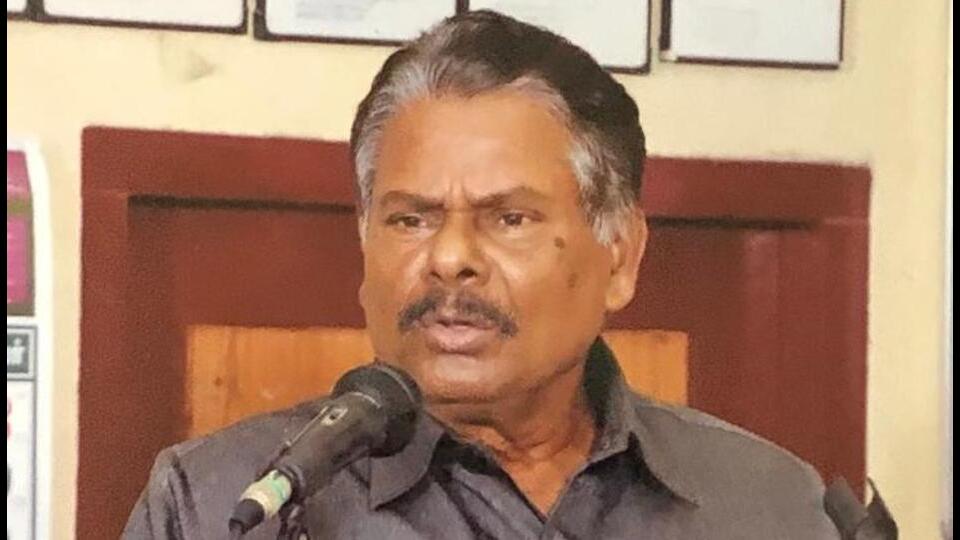
Though Rangaswami was insistent that they protest peacefully, across Tamil Nadu students pelted stones on buses, set trains on fire and several immolated themselves. “It was a complete standstill for days together,” says Rangaswami. “We were protesting peacefully inside our campus first. But some students pelted stones at a police station in Nungambakkam so the police entered our campus.”
He recalled that students spilled on to the streets when the day of the switch-over from English to Hindi neared. With students in the forefront, a fledgling protest found support in states like Bengal until the proposal was dropped.
DMK founder C N Annadurai announced that January 26, 1965 (when the Official Languages Act came into force) will be observed as a day of mourning. About 3,000 DMK cadre, including Annadurai, were arrested as a pre-emptive measure to foil the protests. About 70 people were killed, according to government estimates.
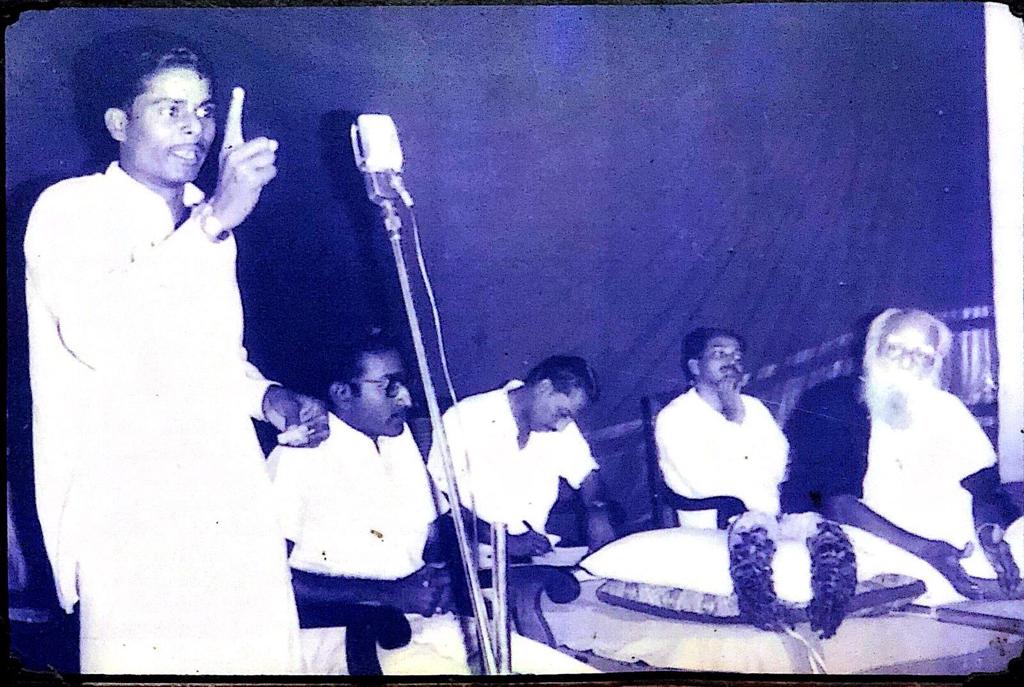
It was this protest that caused a major political change in the history of the state. It ousted the Congress in Tamil Nadu, brought the DMK to power for the first time in 1967 under Anna and since then the state has only swung between the Dravidian majors. The movement which was led by students also gave birth to future leaders, such as the state’s water resources minister Durai Murugan.
Rangaswami recalled that he hid in Durai Murugan’s room when police began lathi charging students. The following day when Rangaswami left the college campus, he was jailed in the central prison for 10 days. Protesting along with him were present day politicians who were then students, such as V K Sasikala’s late husband M Natarjan from Presidency college and G Vaiko from the city’s law college. By the time he was out, the Indira Gandhi-led union government had recalled the order and it was guaranteed that Hindi and English would be used in official transactions. “When the Congress government’s law minister called us students and asked why we were protesting, I told him that Hindi can never enter Tamil Nadu,” says Rangaswami. It’s a sentiment which he holds till today.
Anti-Hindi sentiments Reignited
As the DMK is closer towards completing its first year in government led by M K Stalin, the party’s trademark electoral campaign against imposition of Hindi has had another fresh start following Shah’s comments. Last week, the DMK’s mouthpiece Murosoli warned the BJP not to forget the anti-Hindi agitation from 1965.
On April 8, union home minister Shah while presiding over the 37th Parliamentary Official Language Committee said that Hindi should be accepted as an alternative to English in Indian states as a unifying language. “Prime Minister Narendra Modi has decided that the medium of running the government is the Official Language, and this will definitely increase the importance of Hindi. Now the time has come to make the Official Language an important part of the unity of the country,” Shah had said.
Stalin was quick to slam his comments saying that it was an attack on the unity of India. “The BJP leadership is continuously working to destroy India’s diversity. Is Amit Shah thinking that ‘Hindi state’ is enough but not Indian states? One language for all does not ensure unity. Uniformity also does not create unity. You are repeating the same mistake. But you will not succeed in it,” Stalin had said.
BJP’s ally and the main opposition of Tamil Nadu, the AIADMK, too opposed such a move. Former Karnataka chief minister Siddaramaiah and the Trinamool Congress also said that Hindi imposition will always be resisted. Oscar-winning and pan-India musician A R Rahman first tweeted an illustration of ‘Thamizhanangu’ (meaning Goddess Tamil) on April 8 with a slogan roughly translated as beloved Tamil is the root of our existence which led to wide speculation that it was a response to Shah’s comments. Later when reporters asked Rahman for his reaction, he said, “Tamil should be the link language.”
Rangaswami laughs when asked about the situation. “From A R Rahman to BJP’s ally, everyone has opposed it. That’s the sentiment of the people of Tamil Nadu and it will never change.”
Anti-Hindi protests that sowed the seeds for State versus Union
Rangaswami recalls how they led a march from inside the college campus of Pachaiyappa’s to the city’s famous Marina beach. “We raised slogans, “Hindi ozhiga, Tamil vaazhga’ (meaning down with Hindi, long-live Tamil.” Both Pachaiyappa and Marina are important spatial orders in the history and politics of the state and the country. In 1988, on the sands of Marina a seven-party National Front led by Vishwanath Pratap Singh was formally launched. The euphoric movie-style political rally was hosted by Karunanidhi. Renowned mathematician Ramanujan and former Tamil Nadu chief minister Annadurai are among its many alumni. Even during the Quit India movement, Pachaiyappa’s College students played a prominent part. The college is now a mere shadow of its past. B R Ambedkar, Mahatma Gandhi, and Swami Vivekananda have also walked through this institution’s narrow corridors.
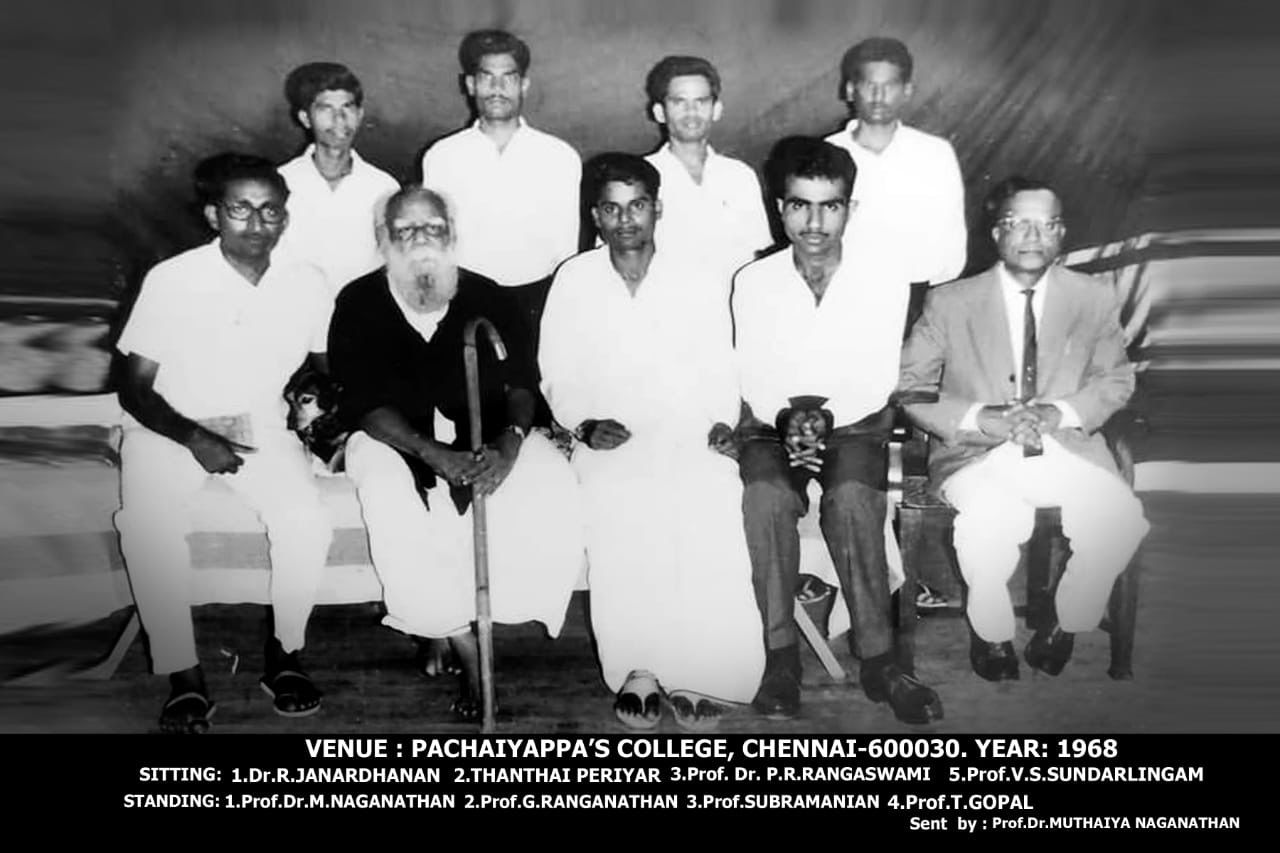
It was in this corridor where Rangaswami waited to meet the then principal of the college in his last attempt to get admission under the principal’s quota. Ranagswami had come to erstwhile Madras from a remote village in Tiruvannamalai with the sole aim to study in Pachaiyappa’s because Annadurai had studied there. Rangaswami’s uncle who was with the DMK had given him a note addressed to DMK’s star campaigner and matinee idol M G Ramachandran (MGR who later went against Karunanidhi and founded the AIADMK). Chennai’s AVM Studios would not let Rangaswami in to meet MGR where he was shooting. Rangaswami in his last attempt went back to AVM studios one day and the watchman let him in. “MGR was extremely respectful,” says Rangaswami’s son Anbu Rangaswami. “After the meeting my father realised that MGR was a trustee in Pachaiyappa’s and that’s why his uncle had addressed the note to him.” MGR, known to be a giving person, took a bunch of cash and pressed it into Rangaswami’s pocket, called up the Principal and his admission was sealed.
In the college’s internal elections Rangaswami went on to beat Durai Murugan to become the secretary of the students’ union and later the chairman and he retired as the Principal of the colonial-era college. Rangaswami was asked to contest against his mentor Kamaraj which he refused to do. And another Pachaiyappa’s student Srinivasan, who had participated in the anti-Hindi agitations, was fielded against the mighty Kamaraj. And to everyone’s shock he defeated Kamaraj.
Though buoyed by DMK’s victory which was the course of Tamil Nadu’s politics, Ranagswami invited Kamaraj to preside over a function in Pachaiyappa’s. Karunanidhi was the transport minister in Anna’s cabinet when Rangaswami led a student delegation to meet him. “In those days, Anna consulted the students’ union on policies and took their feedback,” says Anbu. “So my father went in with a group of students and asked Karunanidhi, we fought so much against Hindi so what are we doing for Tamil? Karunanidhi responded what he could do as a transport minister. My father suggested they print Thirukural on public transport buses.” His idea was implemented.
After Annadurai’s death in 1968, Karunanidhi became chief minister and Ranagswami brought him to Pachaiyappa’s too which Anbu says was his first public appearance as CM. But with the changeover in DMK, Rangaswami began to withdraw from politics and took to academic life.
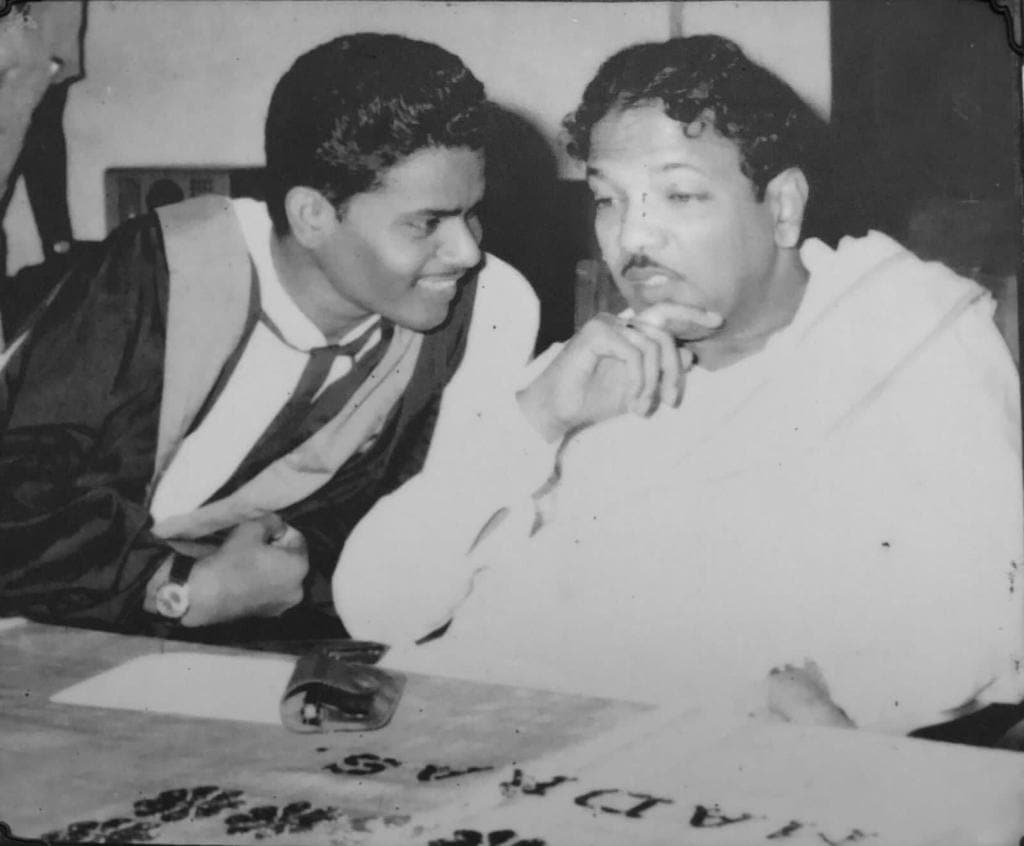
“He was the first and last Principal of Pachaiyappa’s who went to college by bus,” says Anbu. Rangaswami still lives in a two-bedroom apartment allotted to him by the Tamil Nadu Housing Board in the 1970s. While the anti-Hindi agitation he participated in is still alive today, his contributions remain in the shadows. “It’s not possible for Tamil to be the link language. And it’s also never possible for Hindi, definitely not in Tamil Nadu,” says Rangaswami.
Tamil Nadu has maintained that it isn’t opposed to the language, but against the imposition of Hindi. The state has refused to accept the three-language formula under the NEP and is steadfast in following the two-language policy (Tamil and English) brought in by Annadurai’s cabinet.


