E-Paper



Trial without accused: Supreme Court quashes murder conviction over violation of mandatory safeguard
The bench underscored that the prosecution could not escape its responsibility to ensure the accused’s presence during the recording of evidence.

 Prefer HTon Google


The Supreme Court has set aside the life sentence of a tribal man from Chhattisgarh convicted of murder after finding that the trial court recorded the testimony of key prosecution witnesses without his presence, and held the lapse vitiated the entire trial for violating a mandatory procedural safeguard.
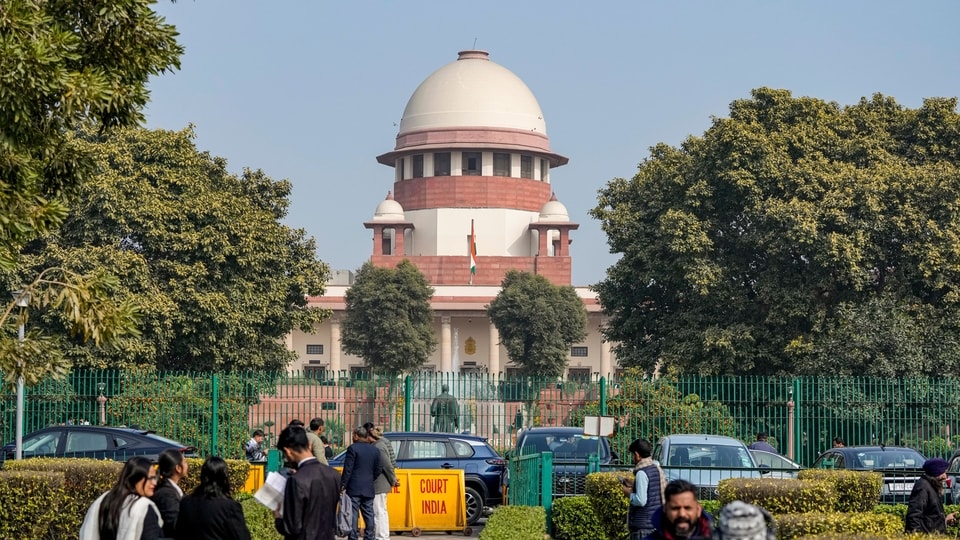
Coming to the rescue of Munna Mandavi, who has spent nine years in custody, a bench of justices Satish Chandra Sharma and Nongmeikapam Kotiswar Singh ordered a fresh trial, directing the trial court to examine all witnesses afresh in his presence. The court also ordered his immediate release on bail, subject to conditions imposed by the trial court.
The bench underscored that the prosecution could not escape its responsibility to ensure the accused’s presence during the recording of evidence, particularly when he was in custody and the district jail was barely three kilometres from the court.
“We are dealing with a case concerning a poor tribal who is not aware with the legal provisions and who, with great difficulty, engages a lawyer,” noted the court in its October 5 order, highlighting the circumstances in which the trial had proceeded without Mandavi being present to hear the evidence against him.
The case arose from an incident on December 29, 2017, in Sukma district, where Mandavi allegedly assaulted Somaru, whom he suspected of practising black magic and being responsible for the death of his son. Somaru succumbed to his injuries, leading to Mandavi’s prosecution for murder under Section 302 of the Indian Penal Code (IPC) and an offence under the Chhattisgarh Tonhi Pratadna Niwaran Adhiniyam, 2005 -- a law dealing with witchcraft-related harassment.
The trial court convicted Mandavi in November 2021, relying, among other things, on the testimony of two prosecution witnesses who attributed the assault with an axe to him. The Chhattisgarh High Court upheld the conviction in January 2025, leaving him to serve a life sentence.
Before the Supreme Court, Mandavi’s counsel Nirmal Chopra argued that the proceedings stood vitiated because the evidence of prosecution witnesses had been recorded in his absence, contrary to Section 273 of the Code of Criminal Procedure (CrPC). The provision mandates that evidence during a trial or other proceeding must be recorded in the presence of the accused or, where personal attendance has been dispensed with, in the presence of his lawyer.
Mandavi was in custody, and there was no question of his personal attendance having been dispensed with, the court noted. “Meaning thereby, all evidence was required to be taken in the course of the trial in the presence of the accused. The same, however, has not been done. Therefore, the entire trial stands vitiated,” declared the bench.
The state opposed the plea, pointing out that in an earlier Supreme Court judgment, Atma Ram Vs State of Rajasthan (2019), the defence lawyer had objected when witnesses were examined in the accused’s absence, whereas no such objection had been raised in Mandavi’s case.
The bench was not persuaded that this distinction could save the proceedings. It emphasised that nothing prevented the prosecution from producing Mandavi before the trial court, especially when the witnesses’ statements were being recorded behind his back. With the accused in custody and the jail located close to the court, the responsibility to ensure his presence could not simply be overlooked.
The court accordingly held that the entire trial stood vitiated and set aside both the trial court’s conviction and the high court judgment affirming it. It directed a de novo trial, requiring all witnesses to be examined afresh in accordance with the prescribed procedure.