
 E-Paper



Tigress in Odisha to return to MP after failure of translocation exercise
In December 2019, the National Tiger Conservation Authority (NTCA) asked the Odisha government to send Sundari back from Satkosia


More than two and a half years after a tigress was brought from Madhya Pradesh to Odisha under India’s first interstate relocation exercise for tigers, the big cat will be sent back, signalling the failure of the exercise, following allegations of mishandling of the animal by Odisha’s forest department, said officials.
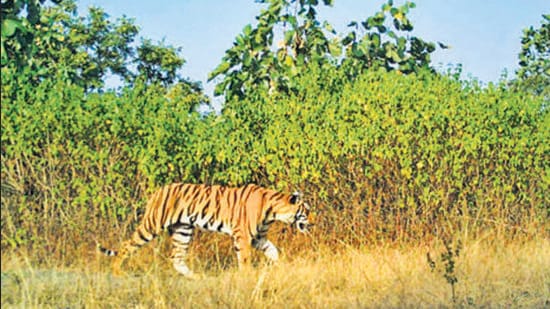
Odisha chief wildlife warden Shashi Paul said a team comprising a veterinary doctor, a senior forest official, and 5 to 6 auxiliary staff from Kanha National Park in Madhya Pradesh will reach Satkosia on Saturday to take back tigress ‘Sundari’, who was brought from the Bandhavgarh Tiger Reserve in June 2018 and released into Satkosia Tiger Reserve in Odisha’s Angul district.
Paul said the team will examine Sundari’s health and then shift her to the Ghorela Rewilding Centre in Kanha National Park in the next 3 to 4 days. “If the tigress is found fit for the transportation, it would be translocated in the next 3 to 4 days,” he said.
Sundari was shifted to a special enclosure in Satkosia tiger reserve after it killed a 45-year-old woman and a 65-year-old man living inside the reserve in September 2018, triggering violence by locals who burnt the forest department’s boats and beat house. Mahabir, the first tiger relocated from a tiger reserve in Madhya Pradesh in June 2018 died due to metal snares laid by poachers that caused deep wounds on its neck.
In December 2019, the National Tiger Conservation Authority (NTCA) asked the Odisha government to send Sundari back from Satkosia, accusing the state forest and wildlife department of messing up the monitoring and management of the relocated tigress by not following the standard operating procedure.
In December last year, MP chief minister Shivraj Singh Chouhan wrote to Odisha chief minister Naveen Patnaik alleging that Sundari lost its natural instinct and behaviour due to improper handling in Odisha.
“A team sent to Odisha to take back the tigress found that Sundari has lost its wild nature due to prolonged confinement and presence of humans around her. If it is released into the wild again, it would be dangerous for the animal as well as humans. Therefore, I request you to ensure proper care of the tigress until we have prepared fully to take it back and shift it to Ghorela centre,” Chouhan wrote to Patnaik.



