
 E-Paper



TN Planning Commission Study
he survey picked Nagapattinam, Madurai and Tiruppur specifically to see how it benefits women in various sectors, such as agriculture, trade and industry. The survey was conducted in August with more than a 1000 frequent travellers and a report was released by the government on Saturday


Chennai: A survey by Tamil Nadu’s planning commission has revealed that the government’s flagship scheme providing free bus travel for women in state-owned buses has helped women in Chennai save ₹858 every month. In three districts of Madurai, Tiruppur and Nagapattinam, women saved ₹888 per month.
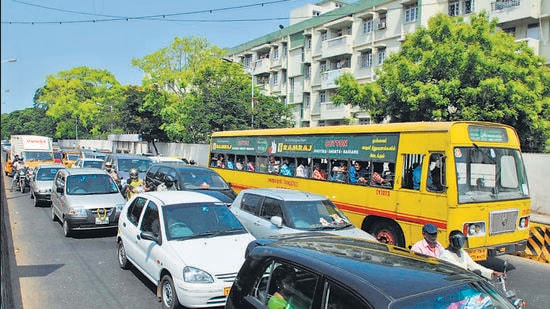
The Zero-Ticket Bus Travel (ZTBT) scheme, an election promise of the DMK, was rolled out on May 8 last year a day after M K Stalin was sworn in as chief minister. Women travellers need not pay any fare in government-run normal-fare buses – for short distances up to 30 kilometres – in cities and towns across Tamil Nadu. A zero-ticket (a fare less ticket) is issued when they travel in these buses.
The survey picked Nagapattinam, Madurai and Tiruppur specifically to see how it benefits women in various sectors, such as agriculture, trade and industry. The survey was conducted in August with more than a 1000 frequent travellers and a report was released by the government on Saturday. This was in continuation of a previous study done for Chennai. “The scheme has particularly helped women users by contributing to higher disposable income, enabling higher work participation, reducing dependence on family members for their mobility and fostering new opportunities for social networks and learning,” the report said.
Almost 50% of women travellers are above 40 years of age, the study found and suggested its importance to the lives of older women. Though the scheme is operational in buses originating from urban areas, women from rural households have been found to benefit more. It also found that women from lower caste hierarchies who were marginalised have benefitted more as 39% of the women belong to Scheduled Castes (SCs), 21% to Most Backward Classes (MBCs) and 18% to Backward Classes (BCs).
“On an average, women save about ₹888 every month due to the ZTBT scheme. Savings across different occupational categories of women passengers range from ₹756 to ₹1012 per month,” the study said. More than 80% of the women surveyed earn less than ₹12,000 a month and their savings ranged from ₹756 to ₹1012 in their monthly income. Daily wage workers in agriculture/construction, street vendors and domestic workers saved approximately 14% of their monthly income. They used their savings for groceries and vegetables which the study says has helped these women “partly from the impact of retail inflation” in India.
“The scheme has generated incentives for women to undertake self-employment activities such as vending of food products, thus contributing to higher work participation,” the report said. “Women users also report reduced dependence on family members for their travel needs contributing to their empowerment and dignity. By enhancing their ability to seek and access new learning/skilling opportunities in urban areas, as well as to access urban leisure spaces at reduced cost, the scheme improves the social well-being of women users in multiple ways.”


