
 E-Paper



TN temple refuses to allow govt audit
In 2014, the Supreme Court ruled that the “podhu dikshithars” will run the temple by setting aside a 2009 Madras High Court order that allowed appointment of an officer by the HR&CE department to oversee the administration of the temple.

 Prefer HTon Google


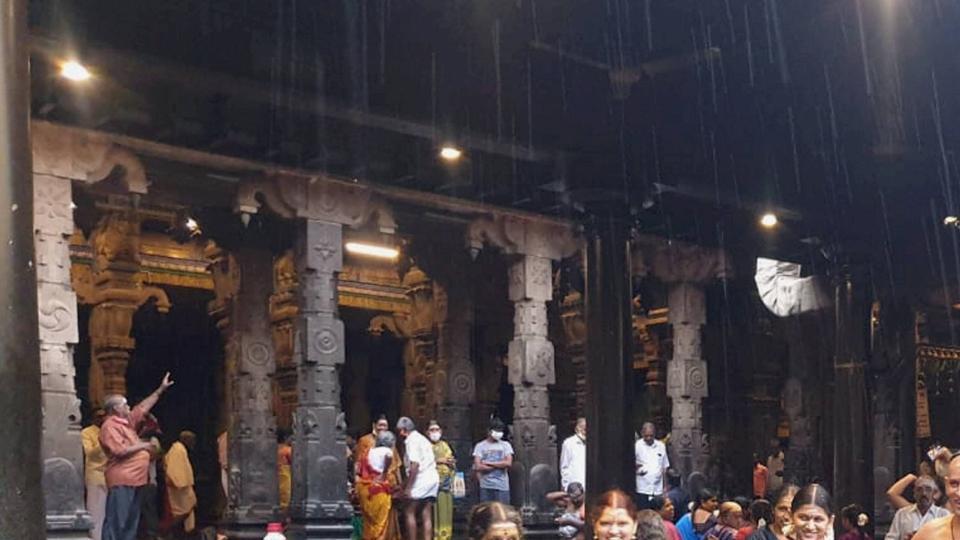
The famous Nataraja temple in Chidambaram on Tuesday did not allow officials of the Hindu, Religious and Charitable Endowments (HR&CE) to check their accounts, saying they have “no jurisdiction to call for records or inspect the premises”.
This happened a day after the pontiff of Madurai mutt, an ancient Hindu monastery, called for disbanding of the department as it was interfering in running of the Hindu religious places.
In May, the HR&CE department had served a notice to the general “dikshithars” (hereditary priests) of Nataraja temple to keep records on the temple’s accounts and assets ready for an inquiry committee’s visit on June 7 and 8.
But when a team of five members from the HR&CE department went to inspect the temple on Tuesday they were turned away twice, officials part of the team said. The general dikshithars of Nataraja temple refused to show records to the team from the HR&CE department, contending that the latter had no jurisdiction to call for records or inspect the premises.
Officials said the team was to check records from 2014 relating to income and expenses, audit reports and jewels belonging to the 1,000-year-old temple. The notice for enquiry was promoted after the state’s department had received complaints of irregularities in the temple accounts.
In 2014, the Supreme Court ruled that the “podhu dikshithars” will run the temple by setting aside a 2009 Madras High Court order that allowed appointment of an officer by the HR&CE department to oversee the administration of the temple.
Citing the SC order, the temple management said the HR&CE officials cannot inspect records as this isn’t a public temple. “We reiterate that we maintain all accounts and other records as per our bye-laws of our Temple sattam (law),” the temple management said in a statement. “We will cooperate with a validly formed committee that has jurisdiction of verification and audit.”
The HR&CE department manages 44,000 temples and trusts in Tamil Nadu. HR&CE minister PK Sekar Babu on Saturday assured that the government has no intention to take over the temple. Following the developments on Tuesday, Babu said the state government will consult legal experts and ensure that the accounts of the temple are checked.
“Refusing permission to the HR&CE officials is against ‘Manu dharma’. It is a public temple and it is the right of the HR&CE department to look into complaints or irregularities in the temple given by devotees. I personally went to Chidambaram temple on June 6 and explained to them why we need to inspect,” the minister said. “Why are they not cooperating with the department to enquire into complaints of irregularities? If they have nothing to hide, why are they resisting?”
On Monday, the pontiff of the Madurai Aadheenam (a Tamil Shaivite monastery) came down heavily on the HR & CE and called for the department to be disbanded accusing them of corruption. “The government does not interfere in the functioning of churches. The same goes for mosques. But the government interferes in the functioning of our temples through the HR & CE department. This department has turned our temples into a den for plunderers, and it should be disbanded,” the chief of the Madurai Aadheenam, Harihara Desika Gnanasambantha Paramacharaya, said on Monday.
To this, Babu said he was making controversial statements only to be in the limelight. On Tuesday, he reiterated that the Madurai pontiff was speaking like a politician. “He has no right to say that we cannot interfere,” Babu told reporters in Chennai.


