E-Paper



Trade agreement RCEP to be key focus of PM Modi’s Singapore visit
The Regional Comprehensive Economic Partnership (RCEP), which aims to create the world’s largest free trade area, will be in focus when Prime Minister Narendra Modi visits Singapore during November 14-15 for the East Asia Summit and associated meetings.


The Regional Comprehensive Economic Partnership (RCEP), which aims to create the world’s largest free trade area, will be in focus when Prime Minister Narendra Modi visits Singapore during November 14-15 for the East Asia Summit and associated meetings.
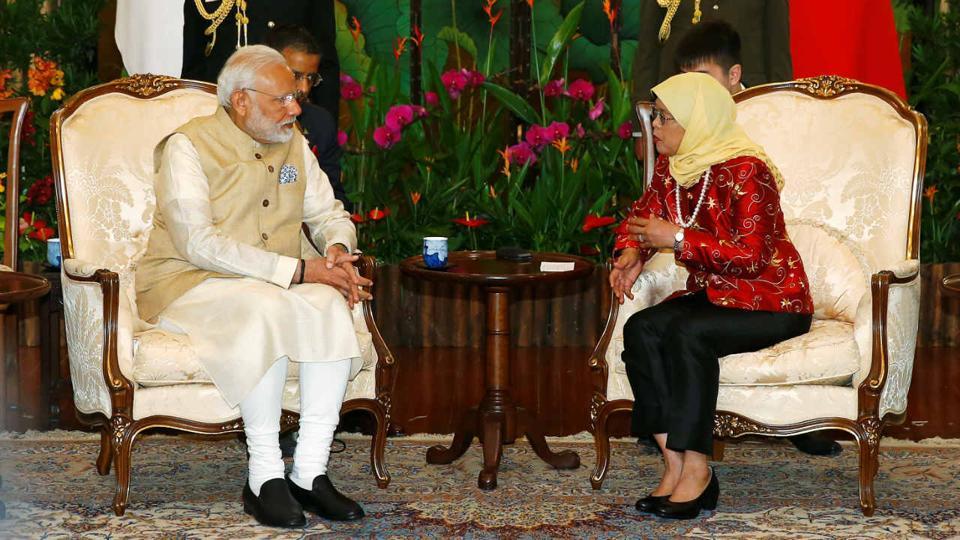
Member-states of the Association of South East Asian Nations (ASEAN), whose leaders are attending the summit, are looking to India to make a formal announcement regarding the substantial conclusion of negotiations for RCEP, said an official from an ASEAN state who didn’t want to be named.
However, people familiar with the latest developments said a major breakthrough on RCEP was unlikely during the November 14 meeting due to Indian sensitivities that remain to be addressed. The sensitivities include the possibility of more Chinese goods making their way into India if it significantly opens up its markets to other members of RCEP, which comprises 10 ASEAN members and China, Japan, South Korea, Australia and New Zealand. India also wants the other members to liberalise their services markets to allow free movement of its skilled professionals. “It isn’t as if India is playing spoil sport for RCEP but we would like our concerns to be substantially addressed in the negotiations,” said one of the persons cited above. Chinese manufacturers with a significant presence in several ASEAN member states could also contribute to the inflow of Chinese goods into India, another person said.
Against India’s offer of tariff liberalisation on 74% of goods from China, Australia and New Zealand, and up to 86% for other RCEP members, the other countries want New Delhi to open up its market for 92% of goods.
Negotiations on RCEP began during the ASEAN Summit in Cambodia in November 2012, and once concluded, will lead to the largest regional trade bloc, accounting for 30% of global trade. During an RCEP ministerial meeting in Singapore in August, the 16 members agreed on a package of deliverables to be achieved by the year-end, but things haven’t moved further since then, the people said.
The official from an ASEAN state said the members of the grouping appreciated India’s concerns, but were looking to New Delhi to play a larger role in view of its rising economic profile.
Former commerce secretary GK Pillai indicated an early breakthrough on RCEP was unlikely. “It is not to India’s advantage to be part of RCEP unless we have access to the services market in the other participating countries,” he said.
“India will only enter if this access is given, but the feeling so far is that the other countries are not keen on services but only concessions for manufactured goods.” Besides the meeting on RCEP and the East Asia Summit