
 E-Paper



Trump shares his ‘favourite word in the dictionary’, carries meaning for India
American tariffs are at the nub of ongoing tension between US and India as they struggle to strike a trade deal; Trump repeated India-Pak ceasefire claim too

 Prefer HTon Google


US President Donald Trump said he loves “tariffs” and it is the “most beautiful” and his favourite word in the English dictionary, on Tuesday, September 30. His continued assertion comes even as American tariffs or import duties have been a subject of much wrangling internationally, and ongoing tension between the US and India as they struggle to strike a trade deal.
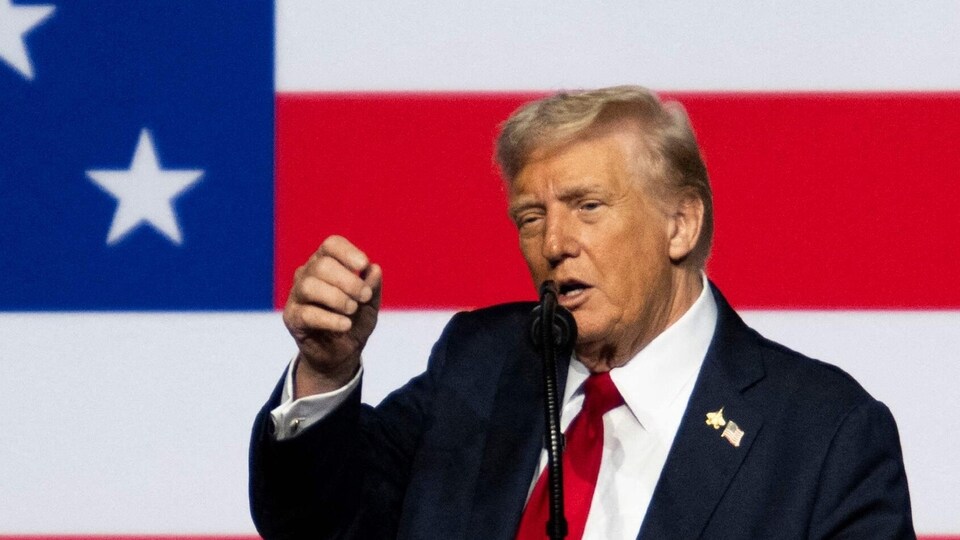
And he again said he “settled the war” between India and Pakistan, a claim that he has repeated over 40 times even when India sees it as an affront to its sovereign policy.
On tariffs, he said, “Other countries were taking advantage of us for years and years. Now we're treating them fairly,” in his speech at a gathering of top US military generals and others at the Marine Corps Base Quantico in Arizona.
India, besides Brazil, has been amongst the highest-tariffed countries by the US, at 50% since August. Half of that is “penalty” for buying Russian oil, Trump has said. Even at the UN recently, he called India and China the primary funders of Vladimir Putin's war in Ukraine.
Trump said tariffs are “making us very rich” as he claimed trillions are coming into America ever since he went big on tariffs about two months ago.
He also expressed confidence that the Supreme Court won't rule against the tariffs. A lower court had held that Trump did not have the required powers — only the US Congress did — to impose tariffs through executive orders. That court deferred the implementation of its strike-down decision, and the Trump administration is now in appeal at the SC.
Mentioning the case, Trump justified the tariffs: “This is what other nations have done to us."
Tariffs on India kicked in by August-end, and then heated statements by US officials — including Trump and his secretaries such as Howard Lutnick and advisers such as Peter Navarro — meant talks were stalled.
There was a thaw recently between Trump and his stated “good friend”, PM Narendra Modi, that led to resumption of the negotiations.
But the US sticks to “no Russian oil” as a condition. India has said that's its own decision, also arguing that the US had encouraged it to buy from Russia even after the war to keep global prices low.
Further, US commerce secretary Lutnick added "open markets” as another condition for a trade deal even as India insists on a red line on allowing American goods to compete with its domestic farming and dairy goods.
The latest round of talks — the process began in April — was held only last week, but a breakthrough is awaited even when both sides at one point said a deal would be done by the fall season.
As for the rhetoric of favourite words, Trump did tweak his position a bit later in his Tuesday speech. He said the media — or “fake news” as he calls them — asked him “what about words like ‘love’, ‘god’, ‘religion’, 'family?”
“I got killed! So I changed it; now it's my fifth favourite word,” he said.
But there was no change in his claim to have stopped seven wars, including India-Pakistan — a reference to India's Operation Sindoor in May as response to a terror attack in Kashmir.
“We want to have no wars, but you have to be there. And, you know, sometimes you have to do it. I've settled so many wars. I've settled seven and yesterday we might have settled the biggest of them all,” Trump said, the last reference being to his Gaza peace plan.
“Pakistan-India was very big, both nuclear powers, I settled that,” he added, just days after he made the same claim on the biggest stage of global diplomacy, the United Nations General Assembly.
Not helping his claim to a Nobel Peace Prize — something said to be a reason for his tariff aggression — India has said it took the ceasefire decision after a request from Pakistan. But Pakistan has been happy to play along with Trump's claims, even backing his Nobel bid, as he hosted its leaders multiple times over the past few months.
The other wars he claims to have settled include Israel-Iran, Egypt-Sudan, Rwanda-Democratic Congo, Armenia-Azerbaijan, and Cambodia-Thailand, though he's been fact-checked on some of those too.
At one point the count went up to 11, but came down to seven again, having at one point hit six too — depending on how he interprets “ending the war”.


