
 E-Paper



UP back to a four-cornered fight as BSP, SP part ways
The logic of the alliance was clear. The SP and the BSP had faced a rout both in the 2014 parliamentary and the 2017 assembly elections (BSP had also lost the 2012 assembly polls to SP).

 Prefer HTon Google


With Mayawati formally breaking the Bahujan Samaj Party (BSP)’s alliance with the Samajwadi Party (SP) in Uttar Pradesh, after their joint defeat in the Lok Sabha polls, what was billed as an audacious political experiment has ended in heartland politics.
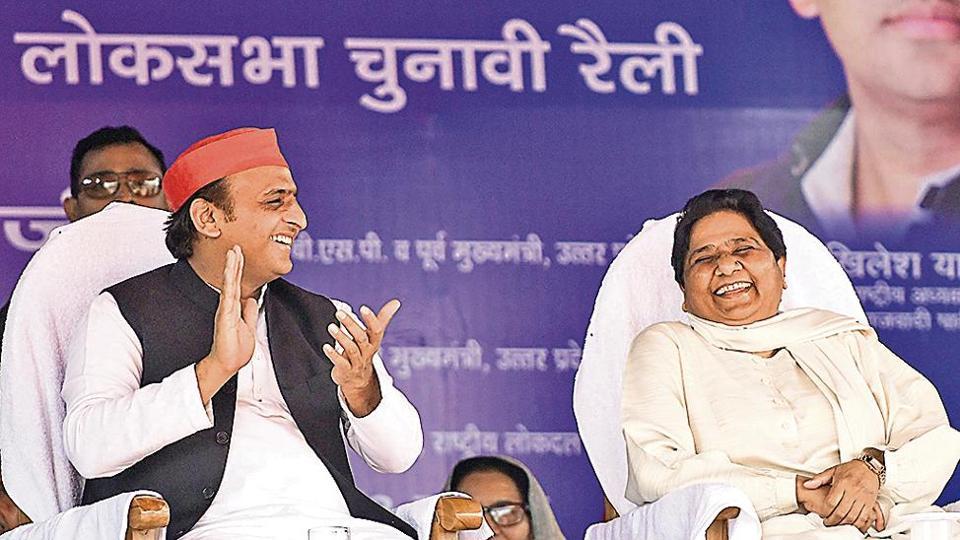
The logic of the alliance was clear. The SP and the BSP had faced a rout both in the 2014 parliamentary and the 2017 assembly elections (BSP had also lost the 2012 assembly polls to SP). The Bharatiya Janata Party (BJP) was on the ascendant. Both regional parties saw the 2019 election as a battle of survival. Their diagnosis of past defeats was simple - BJP’s vote consolidated; the anti-BJP vote of Muslims, Jatavs and Yadavs fragmented; get together and arithmetic will overpower the saffron chemistry.
The results, however, proved otherwise. The BSP could take its strength up from zero to 10 in the Lok Sabha. The SP stayed at five seats, the same as the 2014 election. The BJP, along with its ally, the Apna Dal, won 64 of the 80 seats. (The Congress, which fought separately, won only one seat and data suggests may have eroded the alliance’s prospects in eight other seats.)
This triggered obvious introspection in the SP-BSP ranks. Mayawati was more aggressive in the blame game, despite having benefited more than the SP from the alliance. Her diagnosis this time was that Yadavs did not transfer their votes to BSP candidates. And instead, there was counter-consolidation of all other castes behind the BJP. And so, it was time to break the alliance and build strength autonomously.
There is no clear empirical basis for this analysis. Yadavs indeed seem to have broken away in pockets, and moved to the BJP. But it is equally likely that Jatavs — Mayawati’s own core base — moved away in other pockets where the SP had put up candidates and voted for the BJP too. This shows that the era of captive vote banks, where every individual of a social group would vote for a particular party just because of a top-down diktat from a leader, is over.
What we know for sure from the results is the following. The BJP’s vote share increased; the SP-BSP were, at most, confined to their three social groups which was not enough to overwhelm the BJP’s much wider social coalition of upper-castes, non-Yadav OBCs, and non-Jatav Dalits; and voters were attracted to Narendra Modi and wanted him as PM, and did not particularly think of Mayawati as an alternative prime ministerial candidate, which was the subtext of the alliance campaign.
If this is the case, Mayawati would have done well to ask the following questions. Why did her party, once seen as a champion of all Dalits and a segment of backwards, get reduced to such a narrow social base? Why was it that, as a leader, she did not appeal to other social segments in the state?
These questions would throw up an altogether different diagnosis of the polls.
It will reveal that Mayawati has increasingly come to be seen as an aloof, disconnected leader. A party that champions the cause of the marginalised has to be associated with social movements and politics on the ground. But Mayawati spends all her time, between elections, in Delhi and Lucknow, and rarely visits districts and constituencies.
Her party meetings are always held in her Lucknow mansion, never on the ground. She gets out only to address mega rallies during the campaign.
(And even there, Mayawati and Akhilesh Yadav’s first rally in 2019 was in Saharanpur, less than a week before the first round of polling.) A majority, if not all of her district party secretaries, belong to one community — Jatavs. And there is a widespread perception in the state that BSP ticket distribution happens on an entirely transactional basis, where those who contribute to the party kitty are rewarded with the symbol to contest polls.
Add to it the fact that a majority of the BSP’s original members, who laid the foundations of the party along with Kanshi Ram, have drifted away or have been marginalised, and Mayawati has made the party essentially an outfit of her own family.
Finally, it would reveal that it if you have national ambitions, you have to tell a story, build a narrative that convinces a very large segment of swing voters that you have the intent, integrity and vision to improve their lives.
The SP is confronting a similar set of issues — of being perceived as a party of just one caste; of being seen as a family enterprise; of a leader who does not have the ground connect or staying power of his predecessor, Mulayam Singh; of a weakened organisation on the ground; the inability to reach out to other communities in the state to construct a wider alliance; and the failure to tell a wider story which inspires voters.
Contrast this with the BJP, which began its campaign in the middle of last year. It made its party structure inclusive - giving space to backward communities even if the balance of power is strongly tilted towards upper castes. It used its government and organisation to reach out to beneficiaries of welfare schemes on a targeted basis.
It projected Modi and launched a campaign blitz with the PM regularly visiting UP since January, much before the official campaign started. And more than the individual candidate, the party organisation fought the election. Collectively, it built a multi-region, multi-class, multi-caste alliance.
It would be reasonable for Mayawati to conclude that since the alliance with SP did not work, it is time to junk it and start afresh. But unless she addresses the real structural problems that confront the BSP internally, it is unlikely that fighting alone would really fetch the political dividends she is hoping for.
With the Opposition in UP now in disarray and the old conflict between the SP and the BSP set to escalate, be prepared for continued BJP dominance in the state. This year’s election was their most difficult because of the arithmetic, with senior leaders admitting it gave them sleepless nights. But success has ensured that UP politics goes back to being four-cornered. Three years is a long time in politics. And there is increasingly a pattern of voters choosing differently in state and central polls - so any extrapolation from 2019 for 2022 would be an exercise laced with risk.
But Yogi Adityanath would be a happy man with the SP-BSP break and a return to the “normal” rules of UP politics, as the chips begin falling into place for him.


