
 E-Paper



UPSCWB to seek clearance of Ayodhya development authority for Dhannipur complex
The Dhannipur project includes a mosque, hospital, museum, library, community kitchen, Indo-Islamic Cultural Research Centre and a publication house.


The Uttar Pradesh Sunni Central Waqf Board (UPSCWB) will submit the layout of the Dhannipur Complex in Ayodhya to the state authorities for no objection certificates (NOCs) to make the dream project a reality, the Indo-Islamic Cultural Foundation (IICF) said Wednesday.
“Dhannipur complex is a major project and executing it is a mammoth task. Since Dhannipur village falls under the jurisdiction of the Ayodhya Development Authority (ADA), there is a need to submit the layout and get clearance from the development authority,” said Athar Hussain, spokesperson of Indo-Islamic Cultural Foundation (IICF), the trust set up by UPSCWB to look after the construction of the Dhannipur complex.
The complex is coming up on five acres of land allotted to the board in compliance with the Supreme Court directives in the Ayodhya title case in which the apex court paved the way for construction of Ram temple at the disputed site on November 9, 2019.
The Dhannipur project includes a mosque, hospital, museum, library, community kitchen, Indo-Islamic Cultural Research Centre and a publication house. Board officials said the trust was also preparing the list of NOCs needed while initiating the layout clearance process.
“There are more than a dozen NOCs from fire, environment, administration, education departments and others for which clearance is required,” an official said.
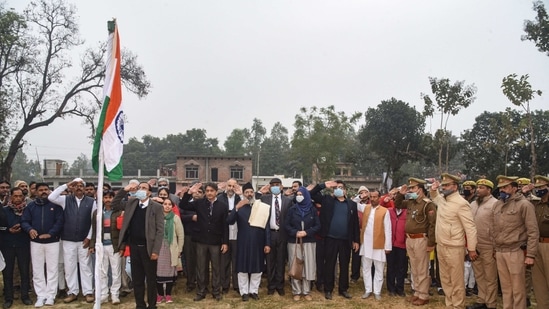
On January 26, the Board launched the Dhannipur project by hoisting the national flag and planting saplings to mark Republic Day celebrations.
A team of architects also carried out soil testing to assess the nature of the soil and the density. On December 19, 2020, the trust had released the blueprint of the mosque and other structures designed by Professor SM Akhtar, a Lucknow-based architect and town planner, whom the trust has hired to design the mosque that would come up in Dhannipur in place of the Babri Masjid. Akhtar is the founder dean of the Faculty of Architecture at Delhi’s Jamia Milia University


