
 E-Paper



Use of drones by terrorists poses challenge: BSF chief
The repeated use of drones for dropping drugs, arms and ammunition by Pakistan-based terror organisations and smugglers into Indian territory is turning out to be challenge for the BSF.

 Prefer HTon Google


The repeated use of drones for dropping drugs, arms and ammunition by Pakistan-based terror organisations and smugglers into Indian territory is turning out to be challenge for the Border Security Force (BSF) and investigation agencies, according to officials familiar with the matter.
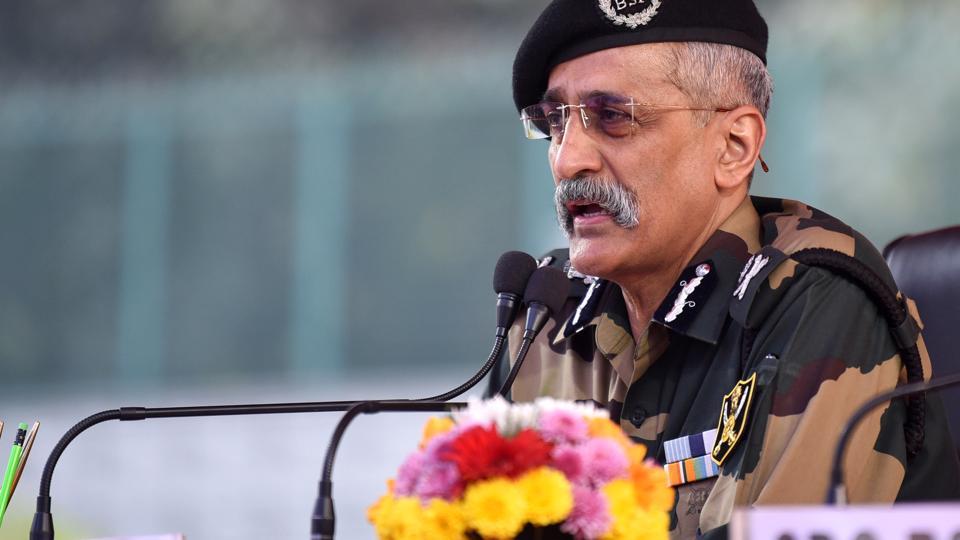
According to BSF chief Pankaj Kumar Singh, the majority of drones (around 95%) carry narcotics from across the border. Singh on Tuesday said it was hard to intercept, stall and deactivate them all.
“Drone flights are a cause of concern. The drones that are coming to our country are fairly small and these are by-and-large Chinese-made drones carrying small payloads. This year alone there have been 67 drone sightings. We have been able to shoot down two but it is next to impossible task to track and shoot down every moving drone,” Singh said.
He said BSF has deployed anti-drone systems at the border that work reasonably well and that the force is in the process of getting more anti-drone technology. “However, covering the entire 2,300km of the India-Pakistan border with anti-drone technology may not be possible as it will cost a lot,” the BSF director general said.
He admitted that though there is no foolproof system to counter drones, combating the threat was BSF’s highest priority.
Also Read | BSF lodges protest with Pak Rangers over border violations using drones
The use of drones is also been probed by the National Investigation Agency (NIA), which is trying to trace the key people behind these flights, according to officials familiar with the matter who asked not to be named. The Pakistan army, the country’s spy agency ISI, and terror outfits Lashkar-e-Taiba (LeT), Jaish-e-Mohammad (JeM), are often using drones instead of operatives to send narcotics, explosives and weapons to India, these officials added.
Five months after two improvised explosive devices (IEDs) were dropped at Jammu air force station, NIA is also trying to piece together details of that conspiracy . The Resistance Front (TRF), an LeT proxy, is said to be behind the attack, and several persons associated with the organisation were raided in October, but investigation has not reached a definite conclusion yet, the people cited above said.
BSF chief Singh also spoke about the threat posed by tunnels at the Indo-Pak border .
He said some tunnels are 100 metres below the international border, and are used by Pakistan-based terrorists to infiltrate into India. Mohammad Umar Farooq, the mastermind of February 14, 2019 Pulwama attack, in which 40 Central Reserve Police Force personnel were killed, used a tunnel in Kathua sector in J&K to enter India in April 2018.
When contacted, Sameer Patil, fellow at the International Security Studies Programme at Gateway House, said: “From the security forces’ and NIA’s point of view, the threat emanates due to their inability to detect incoming drones, despite implementing counter measures. Since drones are a handy equipment -- at least the kind which are used here -- terrorists and smugglers can deploy them on the move and not have a fixed or stationary set-up. This gives these elements an advantage since agencies may find it difficult to apprehend the saboteurs.”


