
 E-Paper



Uttarakhand panel for Uniform Civil Code holds first meeting in Delhi
The chairman of the five-member draft committee for the implementation of Uniform Civil Code in Uttarakhand said that preliminary discussions were held in the panel’s first meeting and a second meeting will likely be held after a week

 Prefer HTon Google


The first meeting of the five-member draft committee for the implementation of Uniform Civil Code in Uttarakhand met for the first time after its formation in May in New Delhi on Monday. The meeting was held in Uttarakhand Sadan under the chairmanship of Ranjana Desai, retired judge of the Supreme Court.
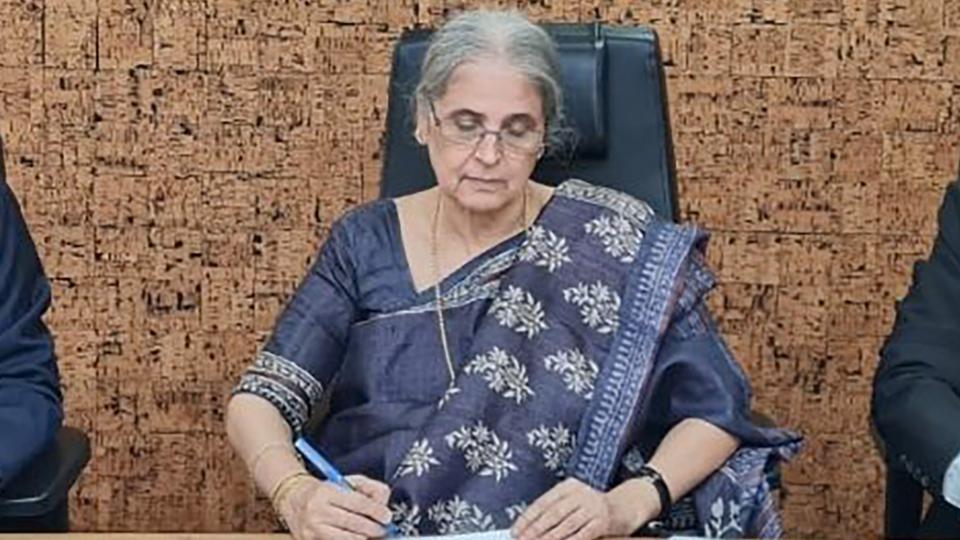
After the meeting, Desai told reporters that it was the first meeting of the committee in which preliminary discussions were held. She added that the second meeting will likely be held after a week. The committee has to submit its draft report to the state government within six months.
The Uttarakhand government on May 27 formed the five-member draft committee headed by Ranjana Desai for preparing a draft for implementation of Uniform Civil Code (UCC) in the state. The other members of the committee include Pramod Kohli, retired Delhi high Court judge, Manu Gaur, social activist, Shatrughan Singh, retired Indian Administrative Service (IAS) officer and Surekha Dangwal, vice-chancellor, Doon University.
UCC essentially refers to a common set of laws governing personal matters such as marriage, divorce, inheritance and succession for all citizens of the country. Article 44 of the Constitution, which is one of the Directive Principles of State Policy, also advocates a uniform civil code. However, governments since Independence have allowed respective religion-based civil codes.
Chief minister Pushkar Singh Dhami on February 12, during election campaigning, announced that the implementation of UCC will be the first decision the Bharatiya Janata Party (BJP) government would take after coming to power.
On March 24 this year, in the first cabinet meeting after the government formation in Uttarakhand, the BJP government passed a proposal to implement Uniform Civil Code in the state. The government said that a committee headed by a retired Supreme Court or high judge will be formed for preparing its draft. After the cabinet meeting, Dhami said that Article 44 of the Constitution empowers the state governments to implement UCC. “This decision has been taken so that there is same law for everyone here,” he said.
Article 44 of the Indian Constitution says, “The State shall endeavor to secure for the citizens a uniform civil code throughout the territory of India.”
Dhami, sharing the reasons for implementing UCC in the state, earlier said that it is being done “to provide uniformity (in law) to all religious communities and to preserve the culture of Devbhoomi, the land of Gods.. as had been promised in our Sankalp Patra (manifesto) at the time of elections”.
In March, Dhami, speaking about the importance of UCC in the state, said that Uttarakhand is a very important state from the strategic point of view for the country. “Being connected to the international borders of two countries, the geographical and strategic importance of this state increases greatly for India. Therefore, the role of Uttarakhand is also important for the defence of the nation..Goa is an example before us. Supreme Court has also from time to time stressed that it needs to be implemented by the governments and has even expressed its displeasure over the same…. UCC will also ensure Article 44 of Constitution is followed... and it will bring equality, all people will be under the purview of same laws…”.
Goa is the only state in India that has a uniform civil code regardless of religion, gender or caste. It has been following the Portuguese Civil Code 1867, which is also called Uniform Civil Code. After its liberation from Portuguese rule, the UCC survived through Section 5(1) of the Goa, Daman and Diu Administration Act, 1962.
In March 2022, the Supreme Court told the central government to respond to a public interest litigation that sought the implementation UCC.
Chief ministers of several BJP-ruled states such as Assam’s Himanta Biswa Sarma and Himachal Pradesh’s Jairam Thakur have also advocated implementation of UCC.
Uttarakhand has 13.9 % Muslim population, according to 2011 census, mostly in Terai area. Haridwar and US Nagar districts have over 34 % and 22 % Muslim population, respectively.
Congress state general secretary, Mathura Dutt Joshi, said it is unfortunate that the BJP government instead of focussing on more pressing issues like creating employment avenues in the state and reviving the economy is focussing on issues like implementation of UCC. “This shows what their priority is. The unemployed youth of the state and other pressing issues which the state is facing is not on their priority list. It is very unfortunate”, he said.
Devendra Bhasin, BJP state vice president said Congress has a habit of criticising every initiative of the state government. “The Congress is mixing up things. The state government is working on creating employment avenues for the youth. And at the same time, the BJP government is also fulfilling the promises it has made to the people including the implementation of UCC. Why should the Congress have a problem with this”, he said.


