
 E-Paper



Weeks after SC order, Delhi government issues new guidelines on stray dogs | Check rules
The new rules also stated that CCTV coverage in operation and kennel areas at the Centres is a must, with recordings meant to be maintained for at least 30 days

 Prefer HTon Google


Nearly a month after the Supreme Court modified its stray dogs order, the Delhi government issued guidelines for the management of canines, eradication of rabies and reduction of human-dog conflict in the capital.
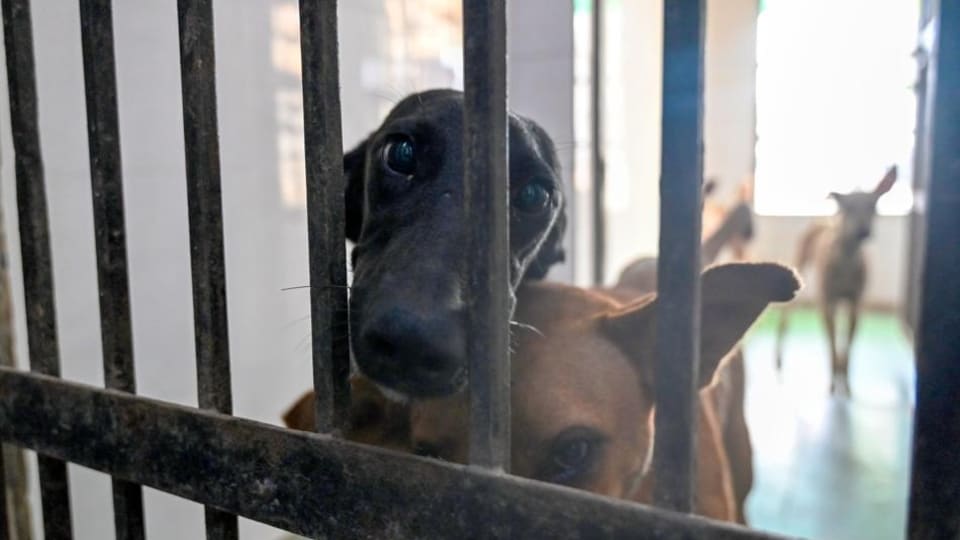
On August 22, the top court modified its previous order dated August 11 that barred the release of stray dogs once picked up by civic bodies. It clarified that the dogs must be released back into the streets after sterilisation and immunisation, except those infected with rabies or exhibiting aggressive behaviour.
The apex court also broadened the scope of the matter and issued notices to all states and union territories, as well as the Animal Husbandry department.
On Monday, the Delhi Department of Urban Development issued the guidelines and shared them with the Commissioner of the Municipal Corporation of Delhi (MCD), the Chairman of the New Delhi Municipal Council (NDMC), and the Chief Executive Officer of the Delhi Cantonment Board (DCB), news agency PTI reported.
The department said that the regulations have been prepared in accordance with the provisions of the Prevention of Cruelty to Animals Act, 1960, the Animal Birth Control Rules, 2023, and the directions of the Supreme Court.
ALSO READ | Delhi to microchip 1 million stray dogs with UNDP aid in 2 years
It also incorporates the revised Animal Birth Control Module released by the Animal Welfare Board of India (AWBI). The standards are aimed at ensuring the smooth implementation of the programme while protecting public safety and animal welfare.
Animal rights activist and former Union minister Maneka Gandhi hailed the guidelines and termed them "truly brilliant".
Listen In…
New rules in Delhi for stray dogs:
- "Under the new framework, the responsibility for implementing the programme rests with the MCD, NDMC, and DCB. At present, the MCD operates 20 ABC centres through NGOs for the purpose of sterilisation and vaccination of street dogs," it said.
ALSO READ | Vijay Goel, FONRWA flag rising stray dog menace, seek new action in Noida
- Local authorities should only engage with AWBI-recognised Animal Welfare Organisations, the guidelines said.
- Under the new rules, veterinarians, handlers and para-veterinary staff of these AWOs have to undergo mandatory training at the ABC Training Centre, which is jointly operated by the AWBI.
- Further, no programme related to street dog management can be implemented without proper certification from the Board.
- The guidelines specify that infrastructure at each of the centres must have sufficient kennels, operation theatres with electricity backup, specially modified transport vans, and facilities for the safe disposal of waste.
- It further mentioned that CCTV coverage in operation and kennel areas at the Centres is a must, with recordings meant to be maintained for at least 30 days.
- The guidelines require maintaining detailed records of the street dogs' sterilisation, vaccination, feeding, and medical care.
- Expenses for sterilisation and vaccination should be reimbursed to the AWOs after proper verification.
UP govt issues new rules
The Uttar Pradesh government also introduced new guidelines for managing aggressive stray dogs.
A dog will be kept in an animal centre for 10 days if it has bitten a human without provocation, said Dr Vijay Amritraj, Veterinary and Animal Welfare Officer with Prayagraj Municipal Corporation.
The dogs will be sterilised, microchipped, and then released back to their original spot. Dogs biting human without any reason will be confined for life in an animal centre, unless adopted.
In case of adoption, the adopters must sign an affidavit promising lifelong care and not releasing the dog back into the streets.
"On 10th September, the Uttar Pradesh Administration passed an order that if any dog that has bitten a human without provocation, then it will be kept in an animal centre for 10 days. If the dog is sterilised, it will be released back at its original place with microchipping. If the dog bites a human for the second time, then this dog will be kept in the animal centre for the remainder of its life. If any person wants to adopt such a dog, then they will have to keep it for its life term," Dr Vijay Amritraj told news agency ANI.
A three-member panel, comprising a veterinary doctor, an animal behaviour expert, and a municipal representative, will determine whether the bikes were provoked or unprovoked.
"In such a situation, if someone is repeatedly provoking the dog, then action will be taken against them as well, and the dog will be trained with the help of a dog trainer so that it can keep itself calm in such a situation in future," Amritraj added.
(with inputs from PTI, ANI)


