
 E-Paper



What Canadian media said on India's invitation to PM Mark Carney next year
India is aiming to strengthen economic ties and free-trade partnerships with Canada amid strained diplomatic relations.

 Prefer HTon Google


India has extended an invitation to Canadian Prime Minister Mark Carney to visit New Delhi early next year for talks with Prime Minister Narendra Modi, a move that could open the door to a wide-ranging economic and free-trade partnership, The Globe and Mail reported.
Dinesh Kumar Patnaik, India’s new high commissioner to Canada, told the newspaper that both countries are making a "sincere effort" to mend strained diplomatic ties and focus on trade and investment amid ongoing tariff tensions with the United States.
"Bilateral trade could exceed $50 billion annually if a far-reaching deal is reached," he said. "We want an early visit of the Prime Minister to India. It is a relationship we do not want to go downhill."
Free-trade talks were put on hold in fall 2023 after then-prime minister Justin Trudeau accused the Modi government of involvement in the killing of Sikh separarist Hardeep Singh Nijjar in Surrey, BC.
Canada later expelled India’s high commissioner and five other diplomats following RCMP claims linking Indian government agents to homicides, extortion, and other violent acts in Canada. India denied the allegations and responded with reciprocal expulsions.
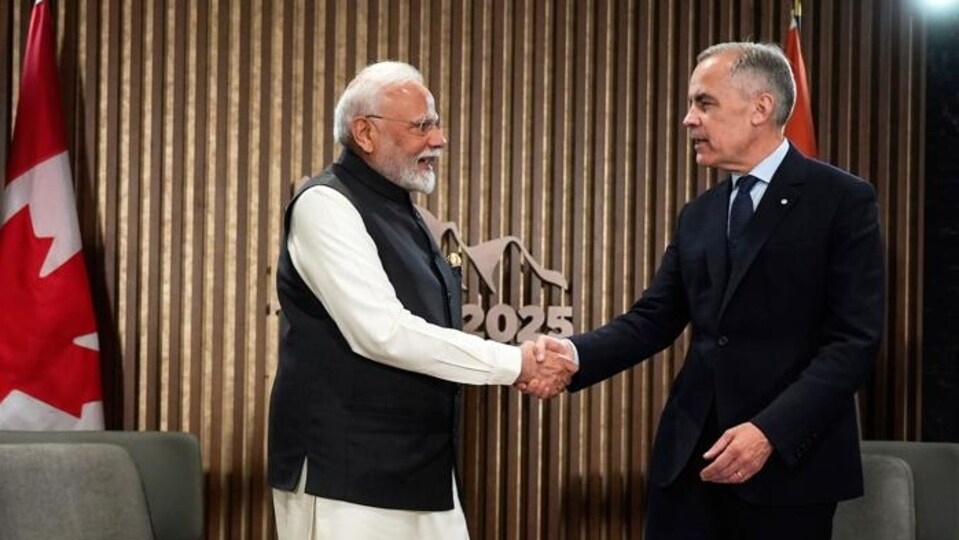
Diplomatic ties began to normalise after Carney and Modi met at the Group of Seven or G7 summit in Alberta in June. Patnaik said high-level discussions have continued since summer to address security concerns and allow both leaders to prioritise economic cooperation.
Carney has been invited to the Artificial Intelligence Action Summit in New Delhi in February, an event that this year was held in Paris with heads of state, CEOs, and AI leaders. Patnaik said Modi would make time to discuss bilateral issues, including an economic and free-trade pact.
"We are hoping he accepts. If not, we will always find some time when we can do this before March," he said. "I want him to go before May when it really heats up."
Bilateral trade between India and Canada hit a record $23.6 billion in 2024, up $12.7 billion from the previous year. Patnaik said a formal trade agreement could easily double that figure. "If Canada wants to start negotiations we would be more than happy to speed up things, to do it in a fast way," he said. "You are looking at minimum of $50-billion if we allow the proper environment for it."
India is interested in Canadian oil, gas, nuclear power, battery storage, fertilisers, processed food, and agricultural products, along with cooperation in AI and quantum computing. Patnaik said Canadian canola could find a market in India, the world’s largest consumer of cooking oil, potentially reducing Canada’s dependence on China after its recent ban on Canadian canola.
He added that marketing efforts would be needed as Indians generally prefer sunflower, palm, rapeseed, and mustard oils. India is also open to investing in Canadian energy and critical minerals, but Ottawa must ensure clear investment rules, environmental standards, and recognition of aboriginal title.
"Frankly, we would be happy to come to invest in Canada, but you have to create the ecosystem for people to come in," he said, praising Carney for setting up a fast-track Major Projects Office in Calgary.
Patnaik added, "We are waiting for Canada to sell to us but if Canada doesn't come, we'll find other suppliers. It's not a [India] market where we can wait forever for Canada to come sell to us."
The newspaper also highlighted the recent visit of Canadian foreign affairs minister Anita Anand to India, where she signed a joint declaration covering law enforcement and the rule of law, also providing a framework to strengthen trade and economic ties.
Patnaik said Indian police and national-security agencies are exchanging information and seeking closer cooperation with the RCMP and Canadian Security Intelligence Service. He denied India’s role in Nijjar’s killing and criticised Canada for not acting against violent activities by some Canadian Sikhs advocating for Khalistan.
"Your evidence is enough but our evidence is not enough," he said. "We need to talk. We need to have a clear security dialogue."
He also recounted threats from Khalistani separatists outside his residence, including chanting for his death, displaying a target, and offering a $10,000 reward. "I had my daughter and granddaughter visiting me, and they were scared," he said.


