
 E-Paper



What will decide high-stakes UP contest?
If BJP retains power in the state, it will be the first government to do so in over three decades; but its aura of invincibility will be undeniably dented if SP emerges victorious

 Prefer HTon Google


March 10, 2022 may well rank among the most important days in India’s contemporary political history. It is a day that will define the country’s immediate political future, and draw the contours for 2024. It’s the day that results to the latest round of assembly elections in Punjab, Uttarakhand, Goa and Manipur will be declared. But it is most significant because it is the day when the results of the polls in Uttar Pradesh, India’s largest and most politically important state, will be announced.
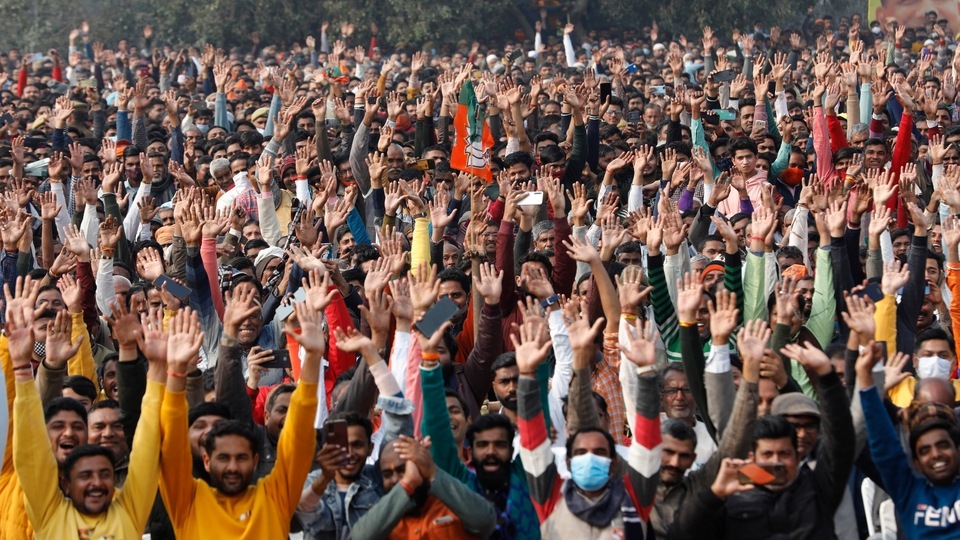
Much of what happens in the next two years – in the run-up to 2024 – will be decided by the results of that one election.
If the BJP retains power, it will be the first government to do so in over three decades. It will cement the place of Yogi Adityanath as one of the BJP’s pre-eminent mass leaders both within the party and nationally, perhaps second only to Prime Minister Narendra Modi. It will add to the BJP’s political hegemony, demoralise the opposition that is attempting to stitch together an alliance that can take on the BJP, and make the idea of a change in power seem farfetched.
But Indian politics is fickle, replete with seemingly powerful, unstoppable governments brought to their knees in a matter of months. Think Indira Gandhi, or even the BJP’s own Atal Behari Vajpayee. If the Opposition, with the Samajwadi Party’s Akhilesh Yadav emerging as the lodestar, pulls off an improbable victory, the BJP’s aura of invincibility will be undeniably dented. It will buttress the narrative that powerful regional leaders are regaining strength, and that the broad coalition that the BJP has built, particularly in northern India, is showing signs of wear. It will also set off conversations of who is best placed to lead the opposition in 2024.
Either way, March 10 will be momentous.

Before that day though, will be seven phases of voting across the 403 assembly seats in Uttar Pradesh, beginning February 10. After spending weeks on the ground, HT looks at the primary players in Uttar Pradesh, and the issues that will define these elections.
THE CONTENDERS
Bharatiya Janata Party
Such is the pre-eminence of Uttar Pradesh chief minister Yogi Adityanath in the BJP’s ecosystem, that it is easy to forget that he was not the face of the party’s massive 312-seat tally in 2017, and was only installed in the top chair post the results. Since then, Adityanath has not only grown in stature within the UP BJP, but also become important in the party’s national scheme – for instance, he has campaigned in almost all states that have gone to the polls since 2017. Across Uttar Pradesh, it is now clear that the BJP voter speaks of him in the same breath as Prime Minister Narendra Modi, as their tallest state leader. This is also perhaps why, despite some rumblings within the BJP, the option to replace Adityanath was never really there.
For those backing the BJP, the primary reasons to vote for the party, being the only party that unapologetically speaks for “Hindu pride”, “law and order” and “suraksha”, or security (all frequently come up in conversations with people) are best embodied by the incumbent chief minister. These are juxtaposed with the alleged “gundaraj” (as BJP leaders refer to it) of the Samajwadi Party government that preceded the BJP.
For the BJP, the broad Hindu umbrella that it stitched together from 2014 to 2019, which included non-Yadav OBCs, and non-Jatav Dalits, supplementing its already strong upper caste vote base, is key. Therefore, one of the key aspects of its outreach among the marginalised is the free ration that the state government supplied during the Covid pandemic. But even as the BJP attempts to keep this social coalition intact, Adityanath himself may be more hindrance than help. He wears his Thakur identity proudly on his sleeve, leading to suggestions that his is a government seeped in Thakurvaad, or rule by the Thakurs.
The BJP has also lost the advantage of not being the incumbent. There is no anti-incumbency of either the UPA (2014) or the Samajwadi Party (2017); instead it must deal with anger against its own government, and importantly, individual MLAs. With the BJP ruling at both the state and the centre, issues of livelihood, agriculture, and employment are being spoken of on the ground, and there is nobody else to blame. Thus far, unlike say the Muzaffarnagar riots (2013), or the Pulwama attack or the Balakot airstrikes (both ahead of the 2019 elections), there is no galvanising issue that can paper over these cracks, and the impact of the call for a grand temple at Krishna Janmabhoomi in Mathura remains muted.
While most BJP leaders on the ground now admit that this is a much closer-fought battle than those in the last decade, they take solace in the scale of the lead that the BJP holds: 40% vote share and 312 seats in 2017 (when the Congress and SP partnered), 50% and 62 of 80 seats in the 2019 Lok Sabha elections (when the SP and BSP partnered), mean the party can lose some ground and still win comfortably.
Samajwadi Party
It has been a long, difficult, and even improbable road to redemption for Akhilesh Yadav and the SP. From a government with 224 seats and 29.15% vote share in 2012, the party fell to a measly 47 seats in 2017. It came third in terms of vote share with 21.82%, behind the BSP’s 22.23%. Two years later, in 2019, the BSP and the SP fought together, and won only five seats.
In one sense then, it has been quite the revival for the SP, which has now successfully positioned itself has the principal opposition to the BJP, aided also by BSP leader Mayawati’s relative silence. There have been signs of course correction. If the 2017 Akhilesh was saddled with the reputation of being unable to wrest control of his own party, he is now the only face, having brokered peace with uncle Shivpal Yadav after an alliance with the latter’s Pragatisheel Samajwadi Party, and his ailing father and party patriarch Mulayam Singh Yadav fading into the background.
There is also a clear and conscious effort to break into the social coalition that the BJP has constructed, by creating a “forward versus backward” narrative. This has two obvious corollaries if successful. The first is that it will supplement the Samajwadi Party’s traditional Muslim plus Yadav core support base. And the second, that these votes will largely be at the cost of the BJP. There have been signs of success too, with alliances with Om Prakash Rajbhar’s SBSP, and Jayant Choudhary’s RLD forged, and senior OBC ministers Swami Prasad Maurya and Dharam Singh Saini switching over from the BJP. Across districts too, there has been a surgical intake of caste-based leaders into the SP, in the hope that the votes of their community will follow.
A large part of the Samajwadi Party campaign has understandably looked to attack the BJP on issues of development, the local economy, agriculture, and livelihood, presenting Yadav as a development icon. There are however drawbacks to running a presidential campaign centered around one personality with smaller alliances. Even as the BJP will look to unleash a battery of leaders, both from the state and the centre to campaign across the next month, except perhaps Western Uttar Pradesh, where there is Jayant Choudhary, Yadav will have to bear the burden by himself. He has had to bring in leaders such as West Bengal chief minister Mamata Banerjee who have little or no influence in Uttar Pradesh. If campaigning will be a lonely affair, on the ground it is also clear that the lack of rallies has hurt. HT found villagers were amenable to voting for the SP, but had little idea of their promises or plans, with the BJP’s cadre now making daily trips to mitigate damage.
As Uttar Pradesh stands on the precipice of the first phase of voting, the SP will be encouraged that it is finding traction on the ground, each seat is now a fierce contest, and that the contest looks open. However, if there is no wave for the BJP, there is no all enveloping wave that has emerged for Akhilesh Yadav yet either, and the momentum from the first few phases will be key.
Bahujan Samaj Party
Enter Mayawati. Much of the commentary about the former chief minister and BSP supremo has been around her silence in a crucial campaign, and her descent to an also-ran. This despite the fact that over the past three assembly election cycles, the party’s vote share has never shrunk below 20%: 30.43% in 2007, 25.91% in 2012, and 22.23% in 2017. But there are signs that while she is clearly not in a position to win a majority, it is Mayawati that may well decide this election, and conversations of her electoral demise may yet be exaggerated.
In a waveless, seat-by-seat, first-past-the-post contest, how many votes Mayawati’s party gets will be key. Already in strongholds such as in Agra, there are signs of a BSP recovery, with Jatavs, her traditional vote bank consolidating around her, and sections of non-Jatav Dalits angry enough to turn away from the BJP, but not angry enough to vote for the SP. Both the SP and the BJP will contend that this benefits them. The SP will argue that this brings the BJP vote share down, but the BJP will believe that the stronger Mayawati is, vote transfer from the BJP to the SP becomes less likely. The SP also however hopes that with it emerging the primary contender, the Muslim votes that Mayawati usually garners will shift to the Akhilesh Yadav-led party.
In 2012, when the Samajwadi Party won the elections, the BSP won 80 seats, which fell to 19 five years later. The vote share difference between those two elections however is illustrative in just how close the margins in UP are. Between these two elections, the BSP vote share only dropped 3.7%, from 25.91% to 22.23%. At 30. 43% in 2007, the BSP stormed to power with 206 seats. Even a slight rise from 2017 then, can mean that come March 10, Mayawati may still hold all the bargaining chips in a hung house.
Others (RLD, SBSP, Apna Dal, AIMIM, INC)
These elections will be also be won and lost based on the effectiveness of the allies of the BJP and Samajwadi Party, and the votes cut by parties that may not win seats, but will influence the outcomes of individual seats and regions. The SP will hope that the Jayant Chaudhary-led RLD can do the trick in western Uttar Pradesh, on the back of the 14-month long protests against the three eventually withdrawn farm laws. While the BJP is trying to remind the Jats of the 2013 Muzaffarnagar riots, the opposition alliance is confident that there is enough of a shift from the 2017 position. And former BJP ally Om Prakash Rajbhar’s SBSP may do well in eastern Uttar Pradesh where the Rajbhar community has a considerable presence.
The BJP’s allies, Anupriya Patel’s Apna Dal(Sonelal) and Sanjay Nishad’s Nishad Party may help the party consolidate its OBC vote. The SP has allied with Apna Dal (Kamerawadi), led by Krishna Patel, Anupriya Patel’s mother. The election will also see the participation of the AIMIM and Chandrashekhar Azad’s Azad Samaj Party which could not arrive at an agreement with Akhilesh Yadav, but has declared that it will fight against Chief Minister Yogi Adityanath from Gorakhpur.
Despite a high-decibel campaign targeting women, “Ladki hoon, lad sakti hoon”, these elections may have well been reduced to an exercise in party building for the Congress. The party has no caste base to call its own, a big mistake in UP. It does have popular candidates in some select few seats but they must base their campaigns around themselves, not the party. Still, in a close election, those votes(the Congress got 6% in 2017, down from 11 % in 2012) could be the difference.
THE ISSUES
Caste
It is caste that will once again decide the future of Uttar Pradesh. In 2014, 2017 and 2019 the BJP was successful in building a large social coalition that encompassed upper castes, Dalits, and backward classes. Whether this holds, and to what degree, will be the key to these elections plays out. The SP has a strong support base in the Yadavs and sections of Muslims and hopes the RLD will add Jat votes; the BSP had diehard voters in the Jatavs. In this milieu, the non-Yadav OBCs and the non-Jatav Dalits will be crucial. The BJP has been hit by the exits of OBC minister Swami Prasad Maurya, Dharam Singh Saini, and Dara Singh Chauhan, but whether these exits mean a vote transfer to the SP remains to be seen. Maurya is a study in himself. In 2016, just a year before the BJP rose to power , he switched from the BSP to the BJP and was made minister in the Adityanath cabinet. The BJP insists that since OBCs have switched to their party, regardless of leaders like Maurya, and will not be swayed. The question is not only if the Mauryas will turn behind Swami Prasad, but if the old Kanshi Ram ally has read the ground correctly again.
COMMUNAL POLARISATION
The BJP’s attempts to keep the Hindu vote together are evident. While Adityanath has said that after Ayodhya and Kashi, there is still work to do in Mathura, he has also used the loaded term that this is an election between the “80% and 20%”. According to the 2011 census, the Muslim population in Uttar Pradesh was 19.26%. Yet, while Uttar Pradesh is no secular paradise, and religion remains one of the primary factors that undercuts caste for the BJP, there is the suggestion that anti incumbency and the lack of an immediate trigger, means this does not have the resonance of past elections. The SP hopes that with Akhilesh Yadav emerging the clear alternative as chief minister, Muslims in the state will coalesce around him. Just how consolidated both the Hindu vote and the Muslim votes are will decide a great deal in this election.
AGRICULTURE
In western Uttar Pradesh in particular, issues around the three farm laws could play an important role. While this is no Punjab, there is anger among the Jats against the BJP not only because of the time taken to withdraw the farm laws, but the names they were called during the protests, ranging from anti-national to Khalistani. This is mitigated somewhat by memories of the Muzaffarnagar riots (which the BJP has played on), but margins are small and small shifts will decide seats. Elsewhere, too, on the ground, there is the sense that the BJP has not delivered on agriculture, far away as it is from the promise of doubling farmer incomes by 2022. Unpaid sugarcane dues are an issue from Muzaffarnagar to Lakhimpur Kheri and there is also the issue of stray cattle destroying fields across the state, exacerbated by stringent cattle slaughter laws.
ECONOMY AND COVID
There is palpable anger in villages against price rise, with the rates of petrol, diesel, cooking and vegetable oil constantly being mentioned to attack the government. Two years of Covid have brought job losses, damaged incomes, and worsened unemployment. These are also the first major elections after the devastating second wave. It is true that on the ground, the word “Covid” is spoken very little, and on paper, UP’s dashboard of cases and deaths is downright impressive. But even if the vocabulary is different, the shadow of Covid does loom. It’s why one of the most powerful calling cards of the BJP in this election is the free ration (that is still) being distributed. But across seats, constituents are angry that their leaders were missing in action when they were needed most, with some, according to anecdotes from the ground, even failing to pick up the phone. Candidate selection is therefore crucial. The BJP has dropped at least 55sitting legislators so far, but there are some suggestions that the SP-led alliance may have also erred with its choice of candidates in some districts.
To be sure, these noises are not unusual in an election campaign, particularly from leaders that suddenly find themselves out of candidate lists. But in a high-stakes election, there is no margin for error.


