
 E-Paper



Final probe report pending, questions about AI 171 crash that remain unanswered
Key findings of AAIB's preliminary report on the Air India flight 171 crash, as the country marks one year of the disaster.

 Prefer HTon Google


As India marked a year of the Air India-171 crash in Ahmedabad, the Aircraft Accident Investigation Bureau (AAIB) did not release a final report on its probe, but said that it had carried out a comprehensive analysis of factors linked to the plane crash.
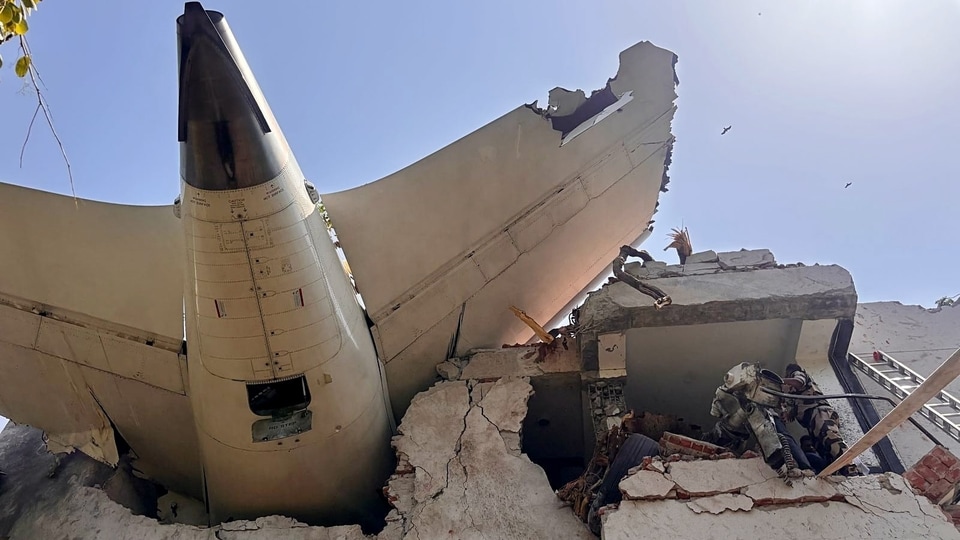
This includes technical, operational, organisational and human factors, the agency said.
In its preliminary report released a month after the June 12, 2025, crash, AAIB had provided the first official account of the disaster that killed 260 people just after takeoff from the Ahmedabad airport.
Here are key findings of the report, what they mean, and the questions that remain unanswered.
What caused the crash?
Both engine fuel switches “transitioned from RUN to CUTOFF position one after another with a time gap of 01 sec”, roughly three seconds after the plane lifted off from the ground. This immediately cut fuel supply to both engines, causing loss of power and, consequently, lift. The report, however, did not determine what caused the switches to move—whether it was human action, mechanical failure, or electronic malfunction. That answer to that question remains critical in ascribing fault.
What potential causes have been ruled out?
Several factors have now been eliminated:
- Weather: Good conditions for flight with light winds and clear skies
- Bird strike: No evidence in CCTV footage or physical examination
- Aircraft configuration: Flaps correctly set, landing gear retracting normally
- Weight and balance: Within normal operating limits
- Fuel quality: Airport samples tested satisfactory
- Engine problems: Both engines operating normally until fuel cutoff
Does this mean the pilot was responsible?
We don't know that yet. The voice recording reveals one pilot asked the other why he cut off fuel, and the colleague responded he did not. It does not rule out human error, or action, but it suggests fuel cut-off may have been unintentional.
Also read: No pressure on AI-171 families for final settlement, says Air India
What happened in the cockpit?
First Officer Clive Kunder was the pilot flying while Captain Sumeet Sabharwal was monitoring—standard practice where the junior pilot flies and senior captain supervises. The report provides only paraphrased communications relating to the fuel cutoff switch: “One of the pilots is heard asking the other why did you cutoff. The other pilot responded that I did not do so.” It does not give the full transcript.
Could the crew have recovered the plane?
The pilots made a valiant attempt to save the aircraft. Within 10-14 seconds of fuel cutoff, they moved both switches back to “RUN”. Both engines began restart sequences—engine 1 showed recovery signs, engine 2 attempted relight.
However, recovery was ultimately impossible due to insufficient time and altitude. At only 625 feet when engines stopped, restart procedures need significantly more than the 29 seconds available before impact. Jet engines typically require several minutes and higher altitudes for successful restart.
Were there any problems with the plane?
Aircraft VT-ANB had a clean maintenance record with no fuel control switch defects since 2023. All inspections were current with valid airworthiness certificates.
But, a 2018 US Federal Aviation Administration bulletin (SAIB No. NM-18-33) addressed potential fuel control switch locking mechanism problems on Boeing aircraft, including the 787. It was issued after reports that 737 fuel switches were installed with locking features disengaged.
Also read: ‘Ultimate test’: A first responder’s account of Ahmedabad AI crash
What did the advisory on switches address?
The 2018 FAA bulletin concerned fuel control switch locking mechanisms that prevent inadvertent movement. When disengaged, switches could move more easily through vibration, contact, or other factors. The FAA didn’t mandate fixes, only recommending inspections to ensure proper locking engagement.
What next?
This preliminary report's findings could have shifted as the probe went on. A final report determining probable cause of the plane crash and safety recommendations is yet to be released.
HT reported earlier in the week that AAIB was waiting on an engine analysis, which has held up the final report. The probe body, in its statement on Friday, marking a year of the disaster, fulfiled its obligation under international aviation conventions.


