
 E-Paper



Why bills on PM, CM removal are being opposed: ‘Can be sacked on mere allegations’
Oppn MPs say sacking anyone on mere allegations, before they are even held guilty, would be against the Constitution, and give unbridled powers to central govt

 Prefer HTon Google


The BJP-led NDA government's proposed new laws on removal of the PM, CMs, and ministers at the Centre and states/UTs, based on mere allegations — not requiring conviction by a court — have been described as “squarely destructive” by the Opposition.
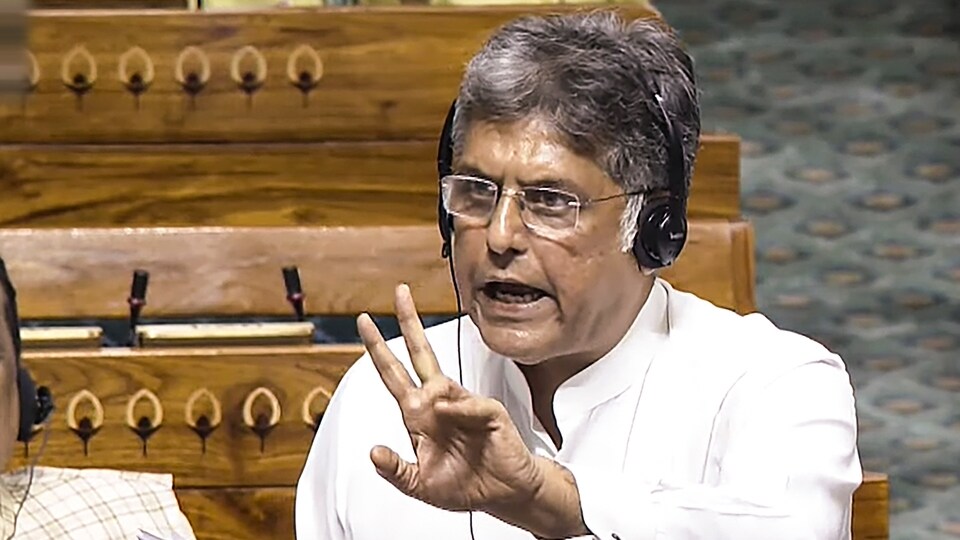
The Lok Sabha saw major disruption on Wednesday as Opposition MPs tore up copies of the bills. Chief ministers of non-NDA states have also stood up against the proposed legal framework, which comes at a time when the Opposition has been making headlines with “vote theft” allegations.
The argument being cited against the bills is straight: Sacking anyone over mere allegations and arrest, before they are even held guilty, would be against the Constitution.
The government, which pitched the three bills as an anti-corruption measure, has now referred these to a joint parliamentary committee for a relook.
‘Changes principle of innocent until proven guilty’
In the Lok Sabha, soon after union home minister Amit Shah moved to introduce the first of the three bills, Congress MP Manish Tewari got up and said: “The Indian constitution says there should be rule of law, and the basis of that is that you are innocent until proven guilty. This hopes to change that."
Watch | Opposition tears, throws contentious PM-CM removal bills as Amit Shah speaks
Calling the proposed code “squarely destructive”, the Chandigarh MP pointed specifically to the constitutional amendment bill that covers the PM: “It makes an executive agency officer the boss of the Prime Minister.”
Tewari, a lawyer and multi-term MP, said the government's bills would "changes the judicial jurisprudence of Article 21", which grants the fundamental right to life and personal liberty.
What bills propose: On ‘30 days’ and ‘five years’
The bills in question are: The Constitution (130th Amendment) Bill, which covers the PM and states, plus Delhi NCT; The Jammu & Kashmir Reorganisation (Amendment) Bill, and The Government of Union Territories (Amendment) Bill.
These bills propose that a sitting minister, chief minister or even the prime minister lose their position if they are arrested or detained for 30 days straight over an offence that carries a jail term of at least five years.
‘Makes probe agencies judge and executioner’
The move to introduce the bills was opposed by AIMIM president Asaduddin Owaisi, too, who is a lawyer as well.
He argued that the bills violate the principle of separation of powers – that is, the Parliament, the executive (or government), and judiciary.
“This gives executive agencies a free run to become judge and executioner based on flimsy allegations and suspicions,” the Hyderabad MP said, building on past allegations that the central government has been misusing CBI and ED, for instance, to target and jail Opposition leaders.
Owaisi alleged that the central government led by Narendra Modi “is hell-bent on creating a police state”.
Will PM eventually be covered, and who gets powers?
But does the government have the numbers, and which of the three bills can eventually become laws — these are questions being discussed ever since the news about the bills first came on Tuesday night.
- The bill that covers the PM, states and the National Capital Territory (NCT) of Delhi proposed to amend the Constitution. This would need two-third majority in both Lok Sabha and Rajya Sabha, and thus may not pass as the BJP-led ruling alliance does not have that majority.
- That leaves the other two bills, which address union territories, including J&K and Ladakh as formed in 2019. These would need simple majority, and can be pushed through unless the government refers them for review to a parliamentary committee.
- Because of this arithmetic, the Opposition and some analysts have said that enacting such laws about J&K and other UTs would give powers to the Centre to remove elected leaders even before they are convicted for any offence.
‘More than super-Emergency’
West Bengal Chief Minister Mamata Banerjee sees this as a move to “consolidate a 'one man-one party-one government’ system”.
"I condemn it as a step towards something that is more than a super-Emergency, a step to end the democratic era of India forever. This draconian step comes as a death knell for democracy and federalism in India," Banerjee, who leads the Trinamool Congress, wrote on the social media platform X.
The central government, on its part, has argued in the bills that someone who faces allegations of serious criminal offences “may thwart or hinder the canons of constitutional morality and principles of good governance”.


