
 E-Paper



With focus on Ladakh status, Jaishankar begins China visit
Jaishankar’s two-day visit to China was finalised before New Delhi revoked the special status to J&K and bifurcated the state into two union territories on August 5. China has called India’s decision to change Ladakh’s status to a union territory (UT) “unacceptable”.

 Prefer HTon Google


External affairs minister S Jaishankar arrived in Beijing on Sunday, ahead of a key meeting with his Chinese counterpart Wang Yi, in the backdrop of China’s concerns over the developments in Jammu and Kashmir.
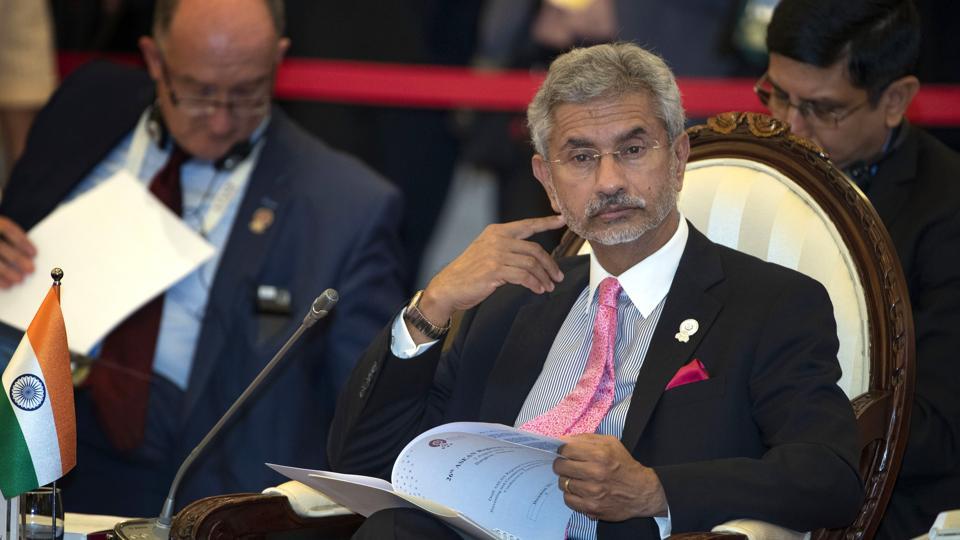
Jaishankar’s two-day visit to China was finalised before New Delhi revoked the special status to J&K and bifurcated the state into two union territories on August 5. Beijing is nevertheless expected to raise its concerns about the situation, especially because its all-weather ally, Pakistan, already sent its foreign minister, Shah Mahmood Qureshi last week to discuss the issue with Wang. China has called India’s decision to change Ladakh’s status to a union territory (UT) “unacceptable”.
During their meeting on Monday, Jaishankar and Wang are expected to finalise details about President Xi Jinping’s upcoming visit to India in October for his second “informal summit” with Prime Minister Narendra Modi — the first one in Wuhan in central China in April 2018 thawed the chill in bilateral ties after the Doklam military standoff the year before.
It will be Jaishankar’s first visit as foreign minister to China where he served as India’s ambassador between 2009 and 2013, the longest by an Indian diplomat.
It’s yet to be announced who among the top Chinese leadership the Indian foreign minister will call on.
Four memorandums of understanding (MoUs) will be signed during Jaishankar’s meeting with Wang.
The two foreign ministers will also co-chair the second meeting of the “High-Level Mechanism on Cultural and People-to-People Exchanges”. The first meeting was held in New Delhi last year.
Both Jaishankar and Wang are scheduled to talk about the state of bilateral ties at the end of a media forum on Monday evening.
The two ministers are likely to touch upon a wide range of issues – both bilateral and international – during their meeting.
Some parts of the discussion will likely focus on expanding bilateral trade ties amid the worsening trade war between China and the US.
In that context, the upcoming trials in India for launching 5G technology could come up in the talks.
A Reuters report from New Delhi said last week that Beijing has warned India that there could be repercussions for Indian companies operating in China if New Delhi stopped Chinese telecom giant Huawei from taking part in the trials.
Huawei has been accused of spying for the government by the US, a charge strongly denied by the Chinese company.
India’s concerns over bilateral trade deficit — it stood at $57 billion last year — was expected to figure in talks even as officials here expect the trade would cross $100 billion this year for the first time.
The question of how much the recent development in J&K and Ladakh will be part of the discussions, however, remains.
China had responded with two statements after India announced its decisions on J&K last week.
In one, Beijing objected to the formation of Ladakh as UT, saying it undermined its territorial sovereignty.
In the second statement on Kashmir, it expressed “serious concern” about the current situation in the region and said “relevant sides need to exercise restraint and act prudently”.
“I guess, he (Jaishankar) might clarify India’s modification (of J&K) issue and do some damage control. This unilateral activity from India is really bad for improving bilateral ties,” said an Jianxue, deputy director, department for Asia-Pacific Studies, China Institute of International Studies.


