E-Paper



Collegium system opaque, needs improvement: 2 judges hearing NJAC case
Two of the five judges of the constitution bench that struck down the new law to appoint judges criticised the collegium system the top court restored on Friday for lacking “transparency, accountability and objectivity”.

 Prefer HTon Google


Two of the five judges of the constitution bench that struck down the new law to appoint judges criticised the collegium system the top court restored on Friday for lacking “transparency, accountability and objectivity”.
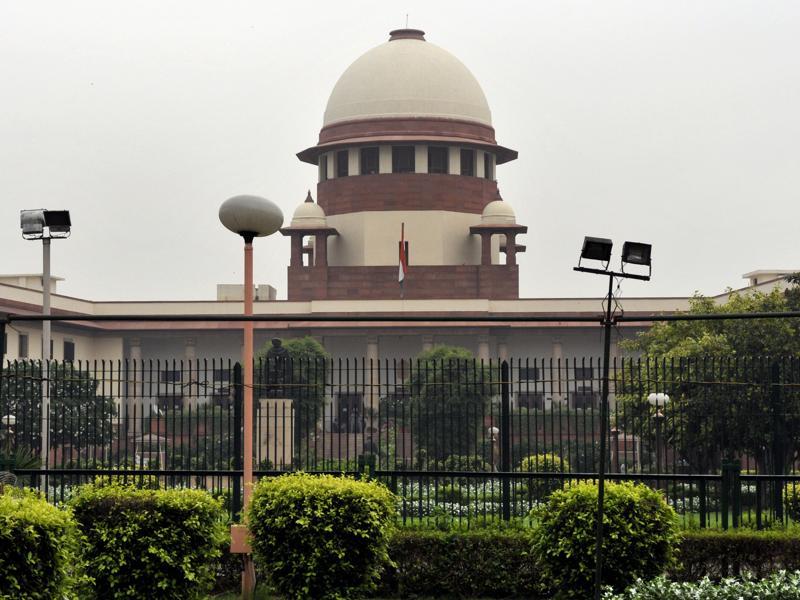
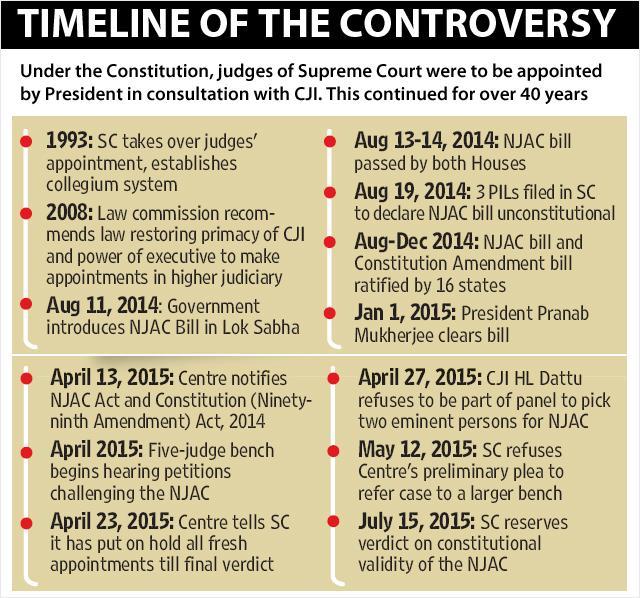
Under the collegium system created in the 1990s, the executive was excluded from the judicial appointment process and a few judges appointed other judges in complete secrecy in a bid to ensure judicial independence.
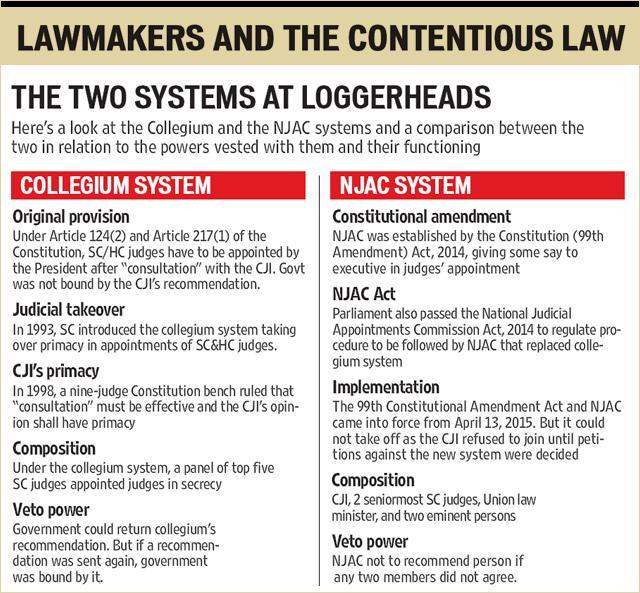
Over the years, the system was criticised for being “opaque” and vulnerable to favouritism, prompting the new law that gave the government a greater say in the appointment of Supreme Court and high court judges.
Also read: With NJAC, politicos would fill judiciary with ‘favourites’: Khehar
Justices J Chelameswar and Kurien Joseph mooted overhauling the system which excluded deserving candidates for “subjective reasons” and denied opportunities to the “less patronised ones”.
Justice Joseph said the collegium system “certainly” called for a deep introspection. “The dictatorial attitude of the Collegium is seriously affecting the self-respect and dignity, if not, independence of judges…,” he observed.
“... the Collegium system needs to be improved requiring a ‘glasnost’ and a ‘perestroika’, and hence the case needs to be heard further in this regard,” he said.
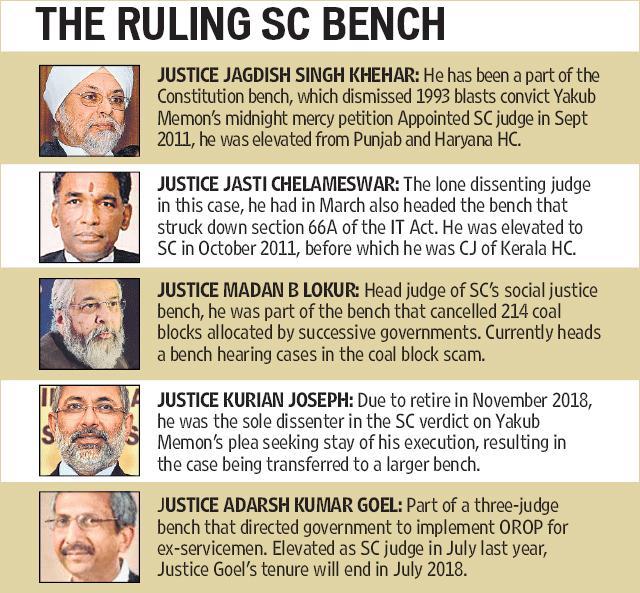
Justice Chelameswar, who authored a dissenting judgment to uphold the constitutional amendment on setting up the new judicial appointments commission, said the records of those appointed under the collegium were beyond the reach of any person, including an SC judge. He said the proceedings of the collegium were absolutely “opaque and inaccessible” to the people at large.
“Such a state of affairs does not either enhance the credibility of the institution or good for the people of this country,” he said. According to him, one of the flaws in the collegium was that it sometimes went back on its decisions without giving a reason.
“There are also cases where the collegium of this court quickly retraced its steps having rejected the recommendations of a particular name made by the HC collegium …,” Justice Chelameswar noted.
Justice Joseph said the executive’s active silence in not preventing so-called “unworthy appointments” was one of the reasons for the failure of the system.