
 E-Paper





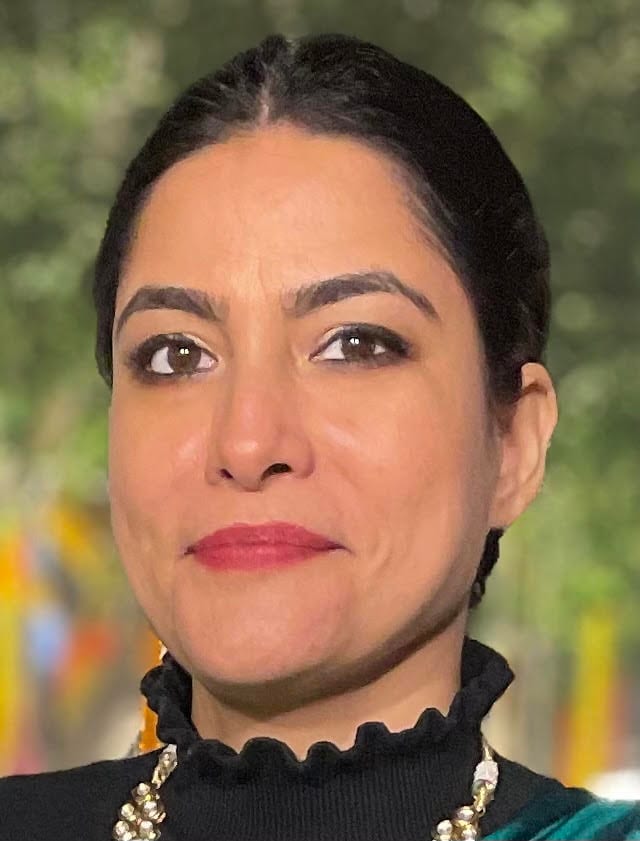
Rhythma Kaul is the national health editor of the Hindustan Times. She has been reporting on public health, medicine, and medical research, with a particular focus on how government decisions and health system reforms shape people’s lives. Rhythma has over 25 years of journalistic experience. She joined Hindustan Times in 2008, and has since covered everything from pandemics and infectious diseases to cutting‑edge medical research and climate‑related health challenges. Her stories routinely track the work of the Ministry of Health and Family Welfare, department of pharmaceuticals, and key national health programmes, making complex medical science and policy accessible to a wide audience. One of her prominent news breaks has been the 2012 Baby Falak case: A two-year-old brutally battered baby girl was admitted to AIIMS-Delhi with severe head injuries, multiple fractures, human bite marks, and burns. The police investigation revealed this to be a case of multi-state human-trafficking racket. She was profiled by The Wall Street Journal for breaking this story. Rhythma holds a Master’s degree from Jawaharlal Nehru University, Delhi. Prior to Hindustan Times, she worked with the India Today Group. Rhythma can be contacted at rhythma.kaul@hindustantimes.com. Her X handle is @RamblingBrook.
‘I was made to feel like a mere tourist, not native Kashmiri’
On talks about resettlement of Kashmiri Pandits in the Valley, Radhika Koul said, “Resettlement back in Kashmir isn’t possible anymore because of the dominant Islamist ideology that governs Kashmir and that’s the reason I felt unwelcome when I went there last.”

“It is difficult to hang on to your culture without the land,” says Radhika Koul, a 22-year-old Yale University graduate.

Born in a post-migration era of Kashmiri Pandits from the Valley, Koul grew up in Ranchi, Jharkhand.
“I was around 10 when I realised that I was a Kashmiri and that we had a different language and culture. I also got to know only then that we had to flee from our own homeland. The urge to visit the place of my ancestors took shape then,” she said.
Koul was 12 when her family finally visited Kashmir in 2004. Since then she has been to the valley four times.
“I still remember my mother had removed her bindi, aath (an ornament that married KP women wear), bangles, etc. before landing there though I didn’t realise why,” she recalls.
It was not until 2013, when Koul last visited the valley that she realised why.
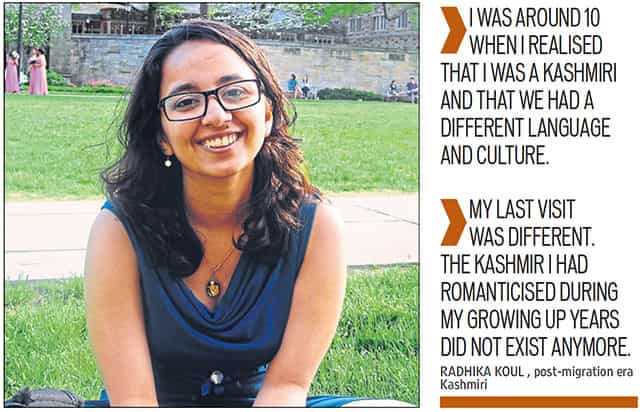
“My last visit was different. The Kashmir I had romanticised about during my growing up years did not exist anymore. The feeling that I got was you are just a tourist and you do not belong here.”
On talks about resettlement of Kashmiri Pandits in the Valley, Koul said, “Resettlement back in Kashmir isn’t possible anymore because of the dominant Islamist ideology that governs Kashmir and that’s the reason I felt unwelcome when I went there last.”
“The whole exodus has been a very silent episode. There has been no redressal; I don’t think we have got justice. Perhaps only those who live in refugee camps may end up returning to the Valley.”
“I wanted to live and die there but my efforts will now be focused at ensuring our culture and language doesn’t become extinct,” she said.


