
 E-Paper



PM Modi shuts out media circus, communicates directly in doses
On his first trip abroad as PM, Modi took along representatives of Doordarshan, AIR and select news agencies. Unlike his predecessor, he has not appointed any high-profile journalist as his press adviser.


On his maiden trip abroad as Prime Minister last month, Narendra Modi chose to travel light. In a clear break with tradition of over 30 journalists accompanying the PM, Modi just took along representatives of Doordarshan, All India Radio and select news agencies to Bhutan.
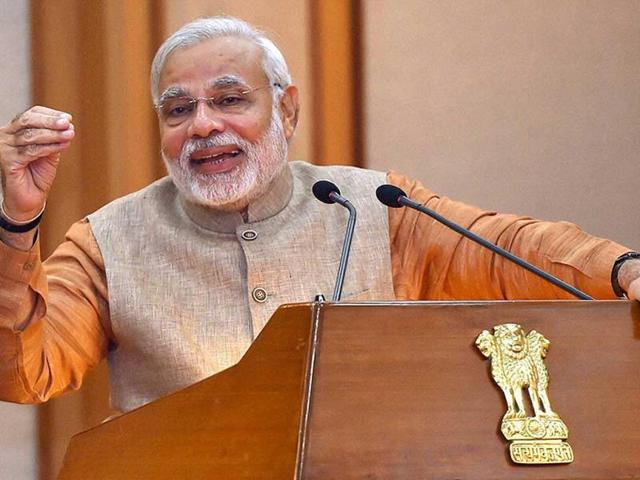
But that’s not all. Unlike his predecessor, Modi has not appointed any high-profile journalist as his press adviser. Instead, he relies on a public relations officer, Jagdish Thakkar, who has served him in an identical assignment when he was chief minister of Gujarat. Thakkar, 70, is known for his crisp press releases, and for not uttering a word that is not authorised. His low-profile approach and tendency to be away from the limelight is already becoming the stuff of legends in Delhi. In Thimphu, when a journalist accosted him during the PM’s visit and sought his phone number, he said he didn’t have a Delhi connection. The reporter persisted, asking for his old Gujarat number, which Thakkar did not hand out.
Read: Top British ministers to court PM Modi
If Modi’s reliance on a lean machine is one element of his approach, his decision to communicate directly, but only in doses, is another.
Moyukh Chatterjee, a Phd scholar at Emory University in Atlanta, who has worked extensively on politics in Gujarat, says, only half in jest, “I have stopped reading newspapers. I go straight to Modi’s Twitter account. That is where you journalists pick up your information. Who needs intermediaries now?”
Modi’s distance from such ‘intermediaries’— print and television media – was reflected when he told his ministers not to speak unnecessarily to journalists, and cautioned them against the urge to address the nation daily.
Otherwise accessible ministers have suddenly stopped responding to text messages or calls, and a common refrain in Delhi’s media circles is how difficult it is to get information out of this government.
Indeed, the departure from the UPA years – when each arm of the government was leaking information and ministers were planting stories against one another or even the PM – could not be starker.
In a prescient post on May 14, pro-Modi columnist Madhu Kishwar had predicted, “Modi will want to discipline his cabinet as well as BJP MPs that they don’t pamper and use select journalists by leaking information against each other. There is likely to be a set system of ministerial interaction with the press.”
Take it all together, and it reveals a striking paradox.
Modi, unarguably, used the media brilliantly in his Lok Sabha campaign. The media’s almost singular focus on him contributed to the NDA win to some extent. Public messaging is central to his political style. But despite this, Modi keeps the media at arm’s length. He communicates, but on his terms. He understands television’s hunger for news, and so feeds it with pictures and updates about his activities, but does not quite convey any substantive message.
The PMO does give out exclusive information to select journalists, but if there is any feature that defines the new administration, it is one of guardedness vis-à-vis the media. It is to be seen how this relationship evolves with time. Will Modi change, or will Delhi’s media have to adapt?


