
 E-Paper



Bleeding blue: All that we are looking to extract from the oceans

 Prefer HTon Google


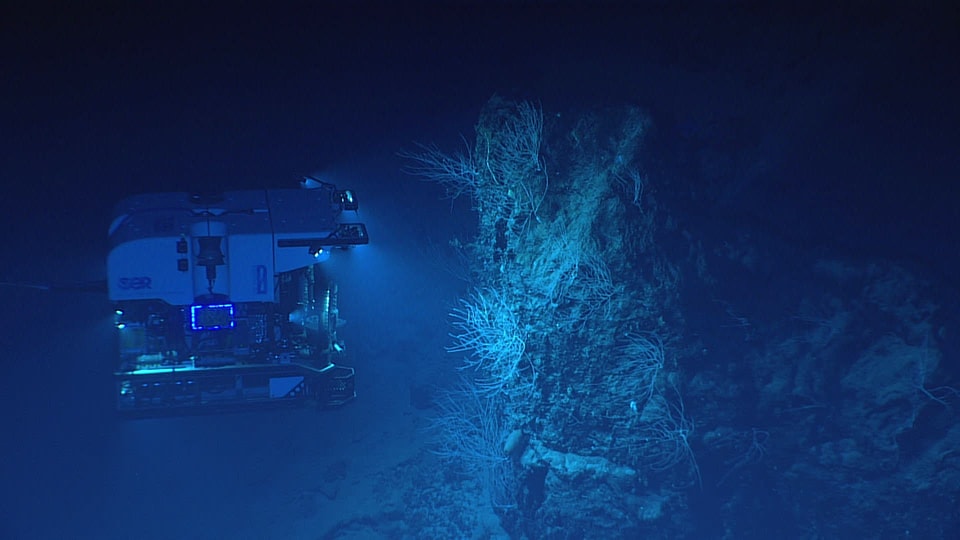
Countries are starting to work out how to exploit the deep seas. But we still don’t really know how they work.Is it already too late to ask the right questions?
We know the ocean covers over 70% of the planet. What most of us don’t really think about is that more than 60% of that vast expanse lies outside national boundaries, an unregulated immensity known as the high seas.
For most of human history, oceans have been mythologised rather than mapped. The dividing lines that do exist have been drawn in intriguing and somewhat arbitrary ways.
In the 18th century, for instance, a Dutch jurist proposed that a country’s sovereign waters should extend as far as a cannon could fire from its coast, which turned out to be about three nautical miles (about 5.5 km). It was a brilliantly pragmatic solution: state control where defence was plausible, and freedom beyond.
The so-called “cannon-shot rule” became law, and lived on until the 20th century. Then came oil rigs, trawlers and submarines, which called for upgrades in maritime monitoring.
In 1982, after years of Cold War-era wrangling, the United Nations Convention on the Law of the Sea was signed, dividing waters into zones of control. (UNCLOS was ratified in 1994.)
Territorial waters were now considered to extend 12 nautical miles (about 22 km) from the coast. Exclusive Economic Zones (EEZs) extended to 200 nautical miles (about 370 km).
Beyond that remain the high seas: vast, largely ungoverned, and increasingly contested.
Fruit of the sea?
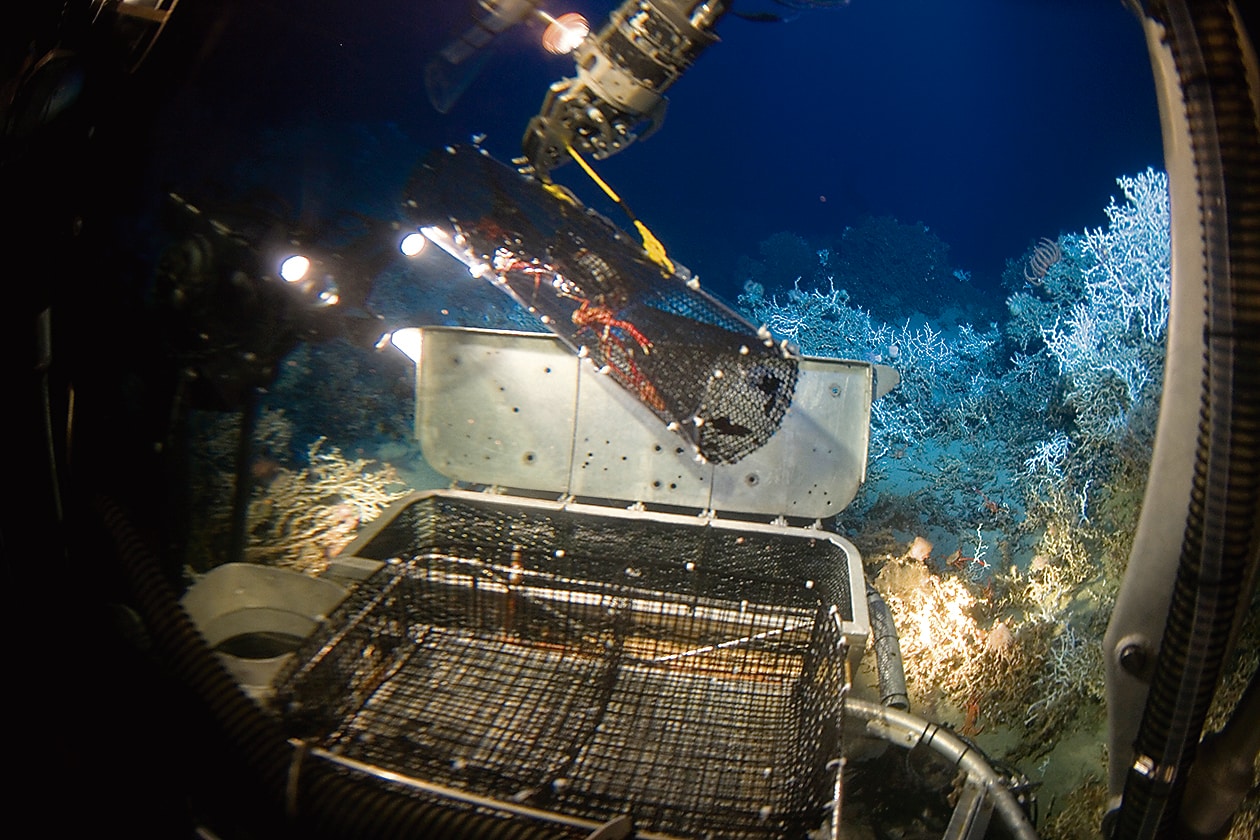
Meanwhile, we famously have better maps of Mars than we do of Earth’s oceans.
Despite efforts made with satellites, submersibles and robots, an estimated 80% of the ocean remains unexplored. It doesn’t help that light begins to dwindle rapidly beyond depths of 200 metres, and pressure builds. The Mariana Trench, for reference, sits at about 11,000 metres below sea level (deeper than Mount Everest is high).
It isn’t just mystery that lives in these deeps. It is priceless utility.
The ocean is our thermostat, our oxygen engine, our pantry and, increasingly, our vault.
We have been drilling for oil and gas reserves for decades. Now we are eyeing reserves of metals such as cobalt, nickel and manganese, vital to current green-energy technology.
With nodules of these metals just sitting on the floor, there is talk of robots gliding about beneath the seas, gathering them up like underwater fruit.
Except one must first determine whose nodules they are, and how to safely reach them.
That safety, of course, relates primarily to the marine ecosystems themselves.
Hidden treasure
In 2023, after years of diplomatic inertia, the UN brokered the High Seas Treaty (officially, the Agreement on Conservation and Sustainable Use of Marine Biological Diversity of Areas Beyond National Jurisdiction; it’s a good thing it has a nickname.)
The treaty aims to create protected marine areas, mandate environmental assessments, and determine how to share the benefits of marine resources.
This is a document born of rising anxiety: over vanishing species, collapsing ecosystems and the accelerating commodification of the deep. The treaty is not yet law. It has not been ratified and it is unclear how many countries will eventually sign on.
Meanwhile, the high seas are already being commercially explored. What lies beneath is considered too tempting.
Just one area, the 4.5-million-sq-km Clarion-Clipperton Zone between Hawaii and Mexico — an area larger than the European Union — is said to hold more battery-grade metals than all known land reserves.
UNCLOS also created the International Seabed Authority (ISA), to regulate mining in international waters. ISA, headquartered in Jamaica, has already issued 31 exploration licences worldwide. Its dual role, to regulate and promote, is an open contradiction. A new gold rush is underway.
Our final frontier
The biggest risk? That it is already too late to ask the right questions.
Unlike forests, the deep-sea floor has no history of human interference. Sediments settle over centuries. Scar them, and the wound may never heal.
In a study published in 2020, German researchers returned to a small patch of seabed off the coast of Peru, which they had disturbed 26 years earlier. Their tracks remained. Microbial life hadn’t returned. Time had not healed the area; it had simply fossilised the damage.
We have no idea how the ocean responds to disturbance.
Other recent findings suggest that the nodules that are the focus of our newest gold rush aren’t simply inert “fruit” waiting to be collected. They are biological scaffolds, hosting microbes that may play a crucial role in nutrient cycles and oxygen production.
Still, the push continues. Many deep-sea mining companies promise cleaner extraction than on land. Better this, they argue, than poisoned villages and jungles razed to stubble as a result of mining activity.
They are not entirely wrong. But the framing is false. The choice may not be a binary. There are other paths: battery innovation, material substitutes, recycling.
What we lack isn’t cobalt. It is patience, and perhaps humility.
And for what?
In research labs around the world, new battery chemistries are taking shape: sodium-ion systems that sidestep cobalt entirely, solid-state designs with safer materials. The very need driving seabed mining may disappear, not in decades but in years.
There is precedent. In the 1800s, whale oil was essential… for lamps, lubrication, industry. Then came electricity, the lightbulb and fossil fuels. Demand collapsed. Whales didn’t survive because we found compassion. They survived because we found something better.
What if we’re solving for the wrong scarcity?
Yet, the machines are already descending.
China, the US and the EU are testing new devices. India has secured two ISA exploration licences. Tiny Pacific Island countries are looking forward to profiting from holding the keys to the most accessible expanses, even as sea levels rise to what could be, for them, island-extinction levels.
There is a photograph that captures something of the conundrum: a deep-sea octopus guarding its eggs, nestled on a bed of manganese nodules.
It is a reminder that the sea isn’t a vault. It is a nursery. Our world’s wondrous balancing engine. And we don’t really know how it works.
Yet, our engines of extraction won’t wait, neither for innovation nor hindsight.
There is a pattern here, and it’s not a new one. We rush before we reckon.
This time, we are rushing into Earth’s oldest, largest, possibly most defining biome.
Is it more batteries we need, or more balance?
***
In Hindu myth, the gods and demons churned the cosmic ocean to retrieve amrit, the nectar of immortality. But before the amrit, this yielded halahala, a poison so potent it threatened to destroy all life. Shiva, the god of destruction, had to swallow it to save the world.
It is the oldest story we tell about extraction: treasure and terror, released together.
It is wise to fear the ocean. It has never cared for surface designs.
(Kashyap Kompella is an industry analyst and author of two books on AI)


