
 E-Paper



Delhi art diary: Fruits of Nietzsche’s garden

 Prefer HTon Google


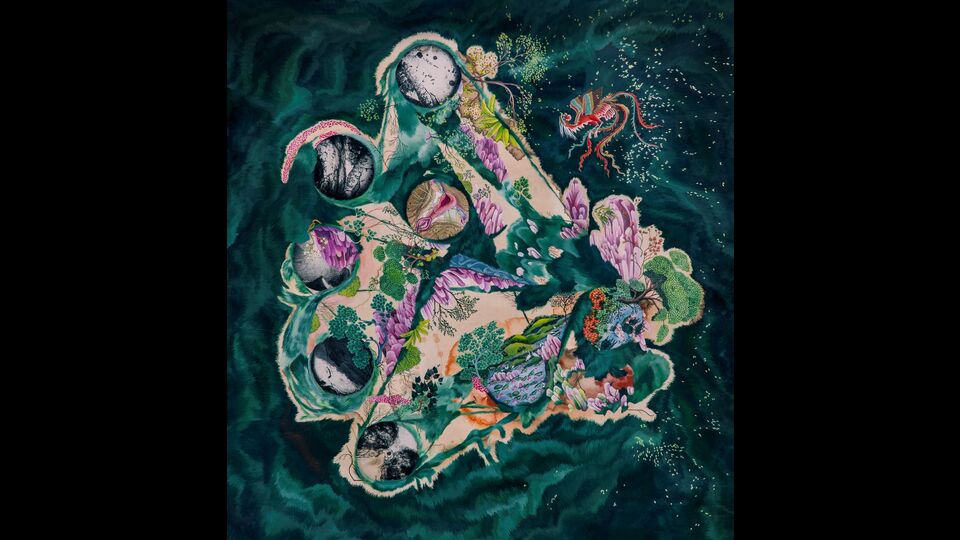
German philosopher Friedrich Nietzsche’s written work, Thus Spoke Zarathustra: A Book for All and None, has inspired five artists to come together to showcase their works at the exhibition titled The World Awaits You Like A Garden.
German philosopher Friedrich Nietzsche certainly believed that plants are those living beings that can provide inspiration for living to humans, who are often found stuck between the chaos of being. The garden, for Nietzsche, is therefore a kind of “geophilic space of sensorial engagement”, where the wind is rich with heavy fragrances and songbirds teach us to sing. Indeed it’s true that there is so much that one could learn from plants that are deeply rooted yet expressive. And thus inspired by Nietzsche’s written work, Thus Spoke Zarathustra: A Book for All and None, five artists come together to showcase art as part of an ongoing exhibition titled The World Awaits You Like A Garden.
The imaginative minds namely Gopa Trivedi, Manjot Kaur, Priyanka D’Souza, Radhika Agarwala and Wardha Shabbir, lead the viewer to Nietzsche’s garden. It’s here that one can be left with so much to deliberate, especially as Delhi continues to be one of the most polluted Capital cities, for the second consecutive year. “Everyone is experiencing it and a lot of artists are working on it. However, I don’t think my work is creating awareness about climate change specifically. On the other hand, it is something that is impacting everyone’s life, it does come out in my work unintentionally,” says Mumbai-based D’Souza, who uses satire and fiction to subvert and redress lacunae and exaggerations in mainstream history. She lets the viewer “to decode and take want they can” from her work, but believes that climate change has sure become the buzzword in the art world.
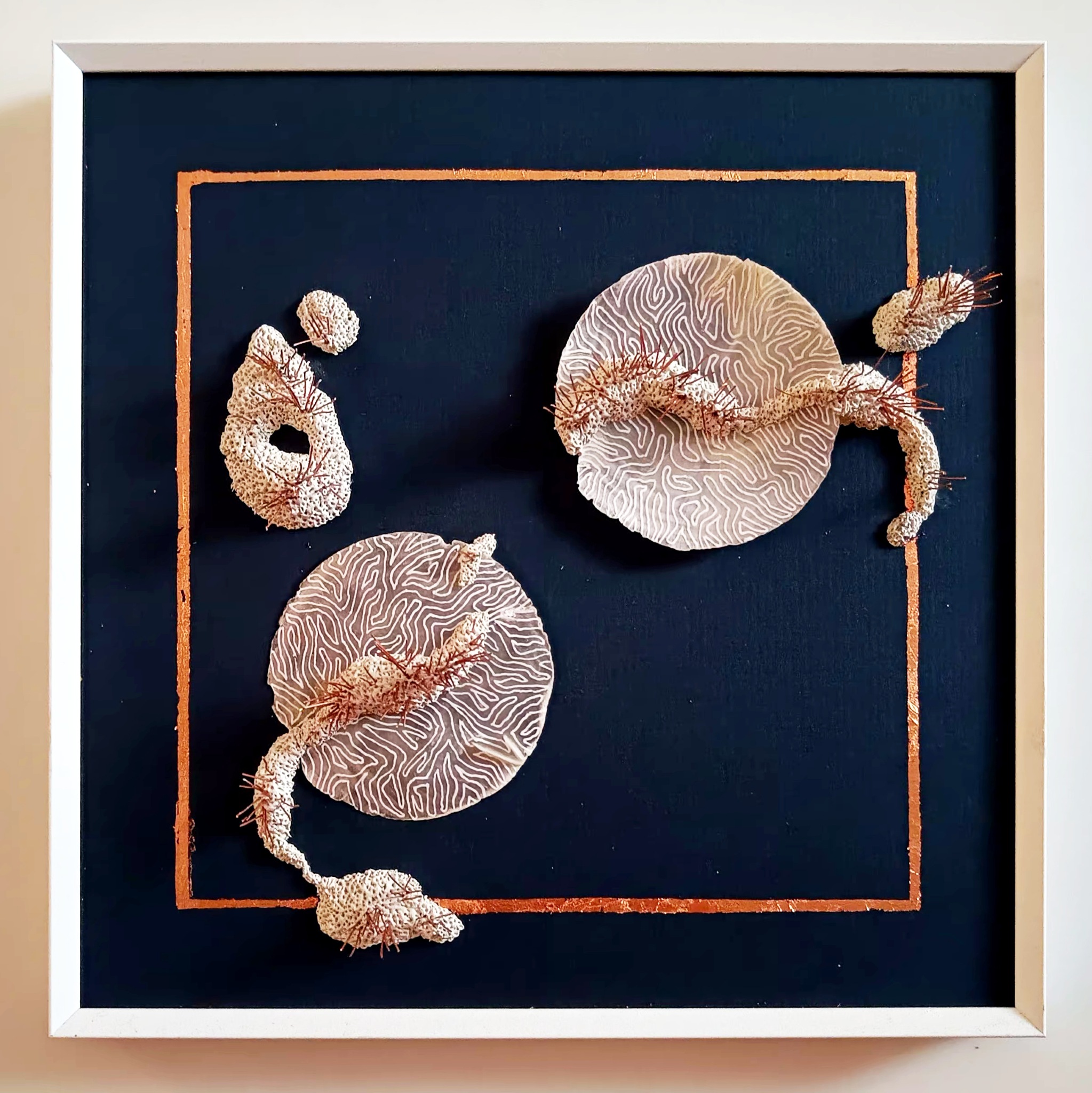
Artist Wardha Shabbir pays a homage to the struggle that is quintessential to women’s lives, through organic compositions that portray a plethora of women’s experiences. Her vivid hues illustrate the strength and vitality of feminine emotion. And Radhika Agarwala explores the concepts of fragility and permanence using material from both Nature and civilisation, to create a play between the uprooted trees and branches that share space with paper, epoxy resin, bronze and concrete. “I find inspiration from anywhere and everywhere including abandoned and overgrown environments, wastelands, mountain scapes, rocks, botanical gardens, burial grounds and caves. After studying and practising art in Chicago, Florida and London for two decades, moving back to India made me see my own city landscape and it’s destruction in a new light: that of being both my muse and material. I find my home town as a living museum,” says Kolkata-based Agarwala, who loves collecting, documenting and photographing specimens found in Nature. “Returning to my studio, I start studying and re-imagining, let them dry for years and begin to join different specimens collected from opposite climates and regions,” she adds. Trivedi’s work questions the parameters for being Indian; specifically referencing to the Colonial practice of documenting and studying local Indian plants by creating visual albums. And Kaur’s borrowed imagery and text bridge the past and present, to explore the interconnection between humans and more than humans. Curator Bhavna Kakar, who is planning a larger iteration of this exhibition, with Sugata Ray, the curatorial advisor at this show, says, “Unfortunately, there are still many who question the need for plantation and horticulture. We cannot ignore the impact of anthropocene (the period during which human activity has been the dominant influence on climate and environment) on Nature. We as humans are also a significant part of different ecosystems. When nature strikes back, it doesn’t discriminate. We need to acknowledge the much needed ecological turn to reconcile once again with the Nature.”
Catch It Live
What: The World Awaits You Like A Garden
Where: Latitude 28, F-208, First Floor, Lado Sarai
On till: June 30
Timing: 11am to 7pm (Sunday closed)
Nearest Metro Station: Saket on the Yellow Line
Author tweets @AngelaPaljor


