
 E-Paper



Flowing into the Blue zone: Rahul Bhattacharya on the World Cup final

 Prefer HTon Google


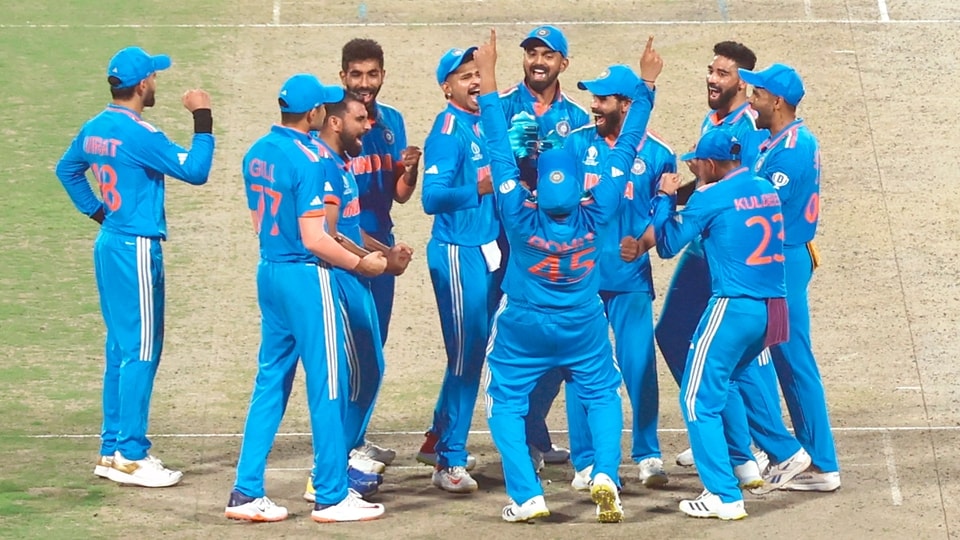
If anyone can recognise the level India's operating at, it's Australia. There are metaphors for the place our team is in. It is ‘flow state’. It is ‘Summertime’
Review blurbs on novel covers are not usually memorable, but I’ve always liked this one for Jennifer Egan’s A Visit from the Goon Squad from The New Republic. “It ends in the same place it starts, except that everything has changed, including you, the reader.”
This World Cup will finish as it started six weeks ago, for India and Australia: facing each other. In the interim, much World Cup life has passed. Pakistan, who were rumoured to be sacking loads of people halfway in, did eventually do so, just after their campaign finished. England sacked an innocent David Willey even before the tournament had started, and rid themselves of an equally innocent Dawid Malan after. The Sri Lankan government sacked everyone in sight and appointed a whole new bunch of people, who in turn got sort-of sacked by the ICC. New Zealander and South African hearts were broken again. As for Afghanistan, that match, that catch that wasn’t, don’t even go there.
Two standing at the end then. Six weeks ago, like now, India and Australia were leading contenders. Yet now, to our changed eyes, they are characters in the extended drama that long tournaments become.
India is pristine other than the one lock of hair tumbling on to the forehead, and a tiny spot missed on the chin, a dandy spring in his stride as he seeks life’s next wonderful adventure. Australia is bruised and bloodied, gashes on the cheekbones, cramps in the hams, yet in his eyes a wild energy, muscles defiantly popping through ripped T-shirt, screeching words from his beloved AC/DC: “I’m back in the ring for another swing.”
The two should be used to each other, although not in identical states of grooming. The pair have played, fought, abused, befriended and challenged each other to splendid heights over the past 25 years. It is the great cricket rivalry of this century.
If anyone could recognise the sublime level India has been operating at, it is Australia.
Some of you might remember a terrific game between Steve Waugh’s Australians and Wasim Akram’s Pakistanis in Leeds at the 1999 World Cup. Both captains fired, and Wasim’s four wickets won the day. Well, Australia next lost a World Cup match 11 years and nine months later, and in between collected three titles. More specifically, to have watched Ricky Ponting’s Australia dismantle India twice in the 2003 World Cup, the second time in the final, was to admire the power of a mighty team in the zone.
The artsier version of “the zone” is “flow state”. It is, to quote the progenitor of flow psychology Mihaly Csikszentmihalyi, “being completely involved in an activity for its own sake. The ego falls away. Time flies. Every action, movement, and thought follows inevitably from the previous one, like playing jazz. Your whole being is involved, and you’re using your skills to the utmost.”
For individual athletes to inhabit this rarefied state is difficult enough – imagine then for entire teams. The NBA’s San Antonio Spurs did in 2014, particularly in three storied games of the final described by the ESPN writer Jackie MacMullan as “a symphony of cutting and dribbling and passing and scoring… astonishing in both its elegance and its efficiency”.
They had a name for it: “Summertime,” Brett Brown, a Spurs coach, told ESPN. “It’s when you’re playing. Just playing. The ball’s moving, and the game’s flowing. You make a decision to shoot it, pass it, drive it. ‘Point five.’ That was the directive. You’ve got half a second. You’ve got a good shot, but he’s got a great one. So you pass him the ball, and there it is. It’s Summertime.”
Cricket, episodic, cumulative more than collaborative, cannot replicate the symphony of basketballers on the break. But there are elements that transfer.
Siddhartha Vaidyanathan, the Seattle-based writer and podcaster who pointed me to the article, mentioned the viewer’s experience of watching flow. “The thought process is so clear that games become highly predictable – to the extent that fans start to foresee what is going to happen because they have seen it so many times. The other day I was seeing Rohit bat and instinctively knew he was going to come down the ground and slam a six. And it happened a few balls later.”
To the Indian fan, this onset of inevitability has lit up the tournament. Six weeks in, they know that Rohit will try to hit a boundary in the first over of the innings (he has succeeded in seven of 10 games), and that it will most likely be flicked over or through the leg-side field. They can feel, almost like a pulse, the pace at which Virat will collect hard-run, low-risk scores through the middle. They know that Bumrah will hit a good length first ball, and Siraj will go further up for outswing; that Shami’s first, seam in perfect fizz, will make the batter play and might well fetch a wicket. They can intuit when Jadeja, who will come on before Kuldeep, might try darting one into middle stump to hit off; and when Kuldeep, whirling twirling, action ringlety like his hair, might give it a bit more air to tempt a swipe. Autumn-time, should we call it?
This is all getting out of hand. Better to say, perhaps, that India’s batters have been superb in all three phases of the game, their bowlers have shown exemplary control, the catching has (largely) been excellent, their assignment of roles has been top-notch, and all of it has been a pleasure to watch. There are in this team some generational talents, all in form together, in conditions they savour.
Yes, India is looking spiffy, but don’t forget the other guy. He is flexing now, and claims he can win World Cups from sheer muscle memory. Nobody disbelieves him.


