
 E-Paper



Independence Day Special: 11 cases that advanced the rights of citizens
Cases heard by the Supreme Court have helped protect privacy, decriminalise adultery, define limits for what can be amended within the Constitution. Take a look.


1. IC Golaknath vs State of Punjab (1967)
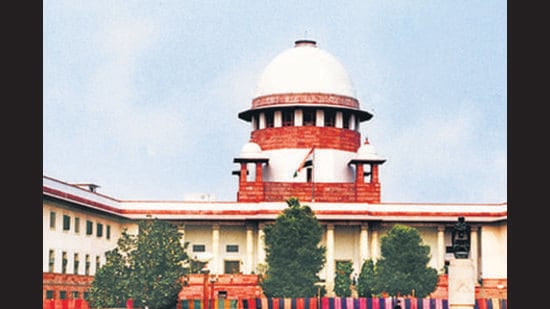
For the first time after Independence, in this verdict, the judiciary defined limits beyond which the Parliament could not amend the Constitution. An 11-judge bench by a 6:5 majority ruled that Parliament using its amending power under Article 368 cannot abridge or amend any of the fundamental rights.
2. His Holiness Kesavananda Bharati Sripadagalavaru vs State of Kerala (1973)
This judgment is credited for laying down the Basic Structure doctrine. A 13-judge bench held by a 7:6 majority that Parliament can amend any provision of the Constitution (including fundamental rights) so long as the basic structure of the Constitution remains the same. By basic structure, they meant broad ideals of the Preamble to the Constitution.
3. Maneka Gandhi vs Union of India (1978)
This marked the first authoritative pronouncement on the right to travel abroad as being part of a citizen’s fundamental right to life and liberty. The Court viewed the Government’s action to withhold Maneka Gandhi’s passport as falling foul of the fundamental freedoms of liberty, free movement and equality, as enshrined in the Constitution.
4. MC Mehta vs Union of India (1985-2020)
Through a slew of orders passed from time to time, the Supreme Court ensured that Delhi got the right to clean air. Connecting this right with the right to live (Article 21), all diesel-run private and public buses were directed to switch to compressed natural gas (CNG), followed by other commercial and public transport vehicles. The Court implemented better fuel emission standards, imposed a cess on registration of diesel vehicles, allowed only essential commercial vehicles to enter Delhi, and phased out old petrol and diesel private vehicles as part of its monitoring.
5. Supreme Court Advocates on Record Association vs Union of India (1993)
This marked a turning point in judicial independence, with the judiciary wresting control from the executive on the matter of appointing new judges. A nine-judge bench by majority introduced a collegium system where concurrence of the Chief Justice of India, sitting with senior-most judges, was held to be mandatory while recommending names to the government for appointment.
6. NALSA vs Union of India (2014)
This was a watershed moment when a two-judge bench recognised transgender persons as the “third gender”, entitling them to fundamental rights under the Constitution. A directive was issued to the Centre and states to make provisions for legal recognition of the “third gender” in all documents and in reservations in employment and admissions.
7. Shayara Bano vs Union of India (2017)
The practice of instant triple talaq under Muslim personal law was struck down as unconstitutional as it was found to discriminate against Muslim women. A five-judge bench by 3:2 majority ruled that this practice could not be considered an essential religious practice under Islamic law.
8. Justice KS Puttaswamy vs Union of India (2017)
Right to privacy was authoritatively declared to be a fundamental right by a nine-judge bench which held that this right permeates all other fundamental rights. The court held that liberty and privacy are integrally connected as privacy is essential to the exercise of personal liberty and any act of the state to infringe on privacy must satisfy the test of being fair, just and reasonable.
9. Joseph Shine vs Union of India (2018)
Decriminalising adultery, a five-judge bench read down Section 497 of the Indian Penal Code, claiming it to be a vestige of the Victorian era. The bench declared the law to be unconstitutional as it was antithetical to liberty, dignity and equality. The act of adultery thus remains a civil wrong but not a public wrong.
10. Jarnail Singh vs Lachmi Narain Gupta (2018)
By this decision, a five-judge bench of the Supreme Court required the creamy layer to be excluded while granting reservation in promotion to members of Scheduled Castes and Scheduled Tribes. This view, taken by an earlier Constitution bench in another case in 2006, was upheld in this judgment.
11. Secretary, Ministry of Defence vs Babita Puniya (2020)
Ending gender stereotyping prevalent within the Indian Army, a two-judge bench of the Supreme Court held women Short Service Commission officers to be eligible for permanent commission in 10 non-combat streams. A year later, passing another order, the bench accused the Army of adopting discriminatory standards towards women. The Court’s orders have helped over 440 officers get their due.


