
 E-Paper



‘It’s felt like starting a band’: Behind the scenes of the new magazine, Equator

 Prefer HTon Google


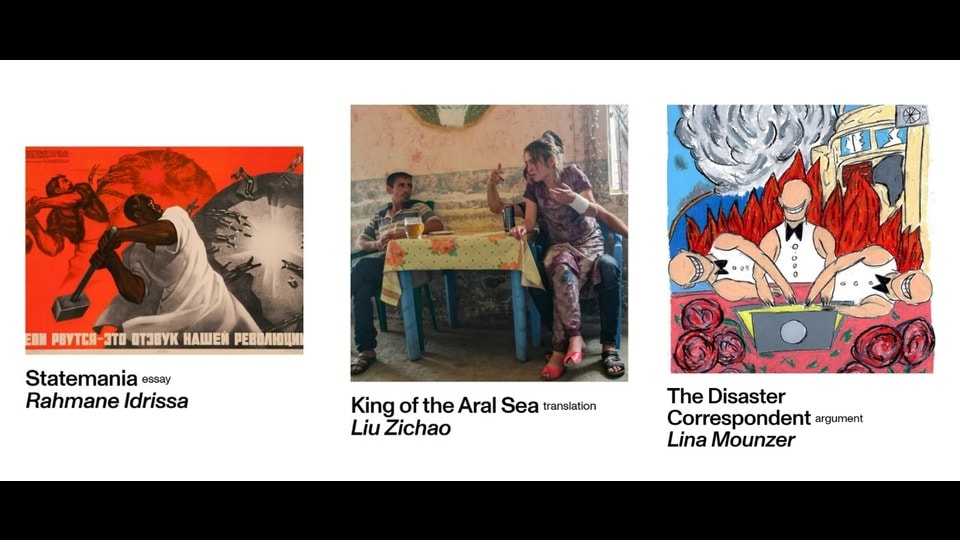
10 writers and journalists from around the world have come together to set it up, to look at the world with curiosity and replace the default Western lens.
A magazine can be a wondrous thing. It offers shelter to ideas and narratives that might otherwise scatter, furnishing an address where stories and perspectives live under one roof.
Unmoored from the compulsion to cater to the immediate and the local, it nurtures attention for subjects beyond our immediate horizons. It creates, in its recurring rhythm, a kind of permanent record.
Yet this vision can be hard to sustain.
As more readers migrate online and subscription models struggle against the expectation that content should be free, an audience that once patiently turned the pages now restlessly scrolls through endless feeds, their attention fragmented across competing platforms. Nowhere is this crisis more acute than in the West, home to many venerable publications that have been the vanguard (for better and worse) of prestige writing.
This is a difficult circle to square. Yet, a group of 10 writers, journalists and editors based around the world, including in London, Lahore, New York and Nairobi, took up exactly this challenge last month, when they launched Equator Magazine in London.
The founding team — Indian authors Pankaj Mishra and Samanth Subramanian among them — came together in 2024, over many conversations around the shared horrors at the humanitarian tragedy in Gaza and the collapse of both the notion of Western universalism and the moral core of the American idea.
“We’ve talked a lot about Gaza, which figures heavily in the opening pieces. One moment that made us think this magazine could work was the sense that watching events in Gaza brought together a global community with a shared feeling of horror and dismay. It wasn’t universal, but it was global. The magazine became a place to gather people who see the world similarly,” says co-founder Jonathan Shainin, formerly with The New Yorker and The Guardian. “We describe ourselves as a collective or a team. The early conversations were about identity — we had a worldview, some shared critiques of existing publications, and we talked about how to turn that critique into a functioning publication. It was slow, because there wasn’t much structure. It felt like starting a band.”
Launched on October 31 in London, the minimalist website, with its neon highlights and dashes of blood red and fuchsia, hosts an eclectic mix of writing, ranging from novelist Amitav Ghosh warning against bull-headed Western climate interventions in Bangladesh, to translator Na Zhong exploring the nuances of Chinese society using a grisly Silicon Valley murder, and a surrealist photo essay by Sohrab Hura.
The founders hope to launch a print product next year and meanwhile publish one or two pieces a week.
They are invested, they say, in the idea of building a community — the manifesto on the website calls the magazine a “movement” — of people who share curiosity for new perspectives and a dissatisfaction with the status quo of depictions that are too narrowly Western.
“In the manifesto, there’s a line: ‘The mission of Equator is to hold up a mirror to a global audience of readers and writers who don’t yet recognize themselves as belonging together.’ That’s the community. We’re in Delhi, London, etc, from different backgrounds, yet we share ways of seeing the world,” Shainin says.
Of course, the elephant in the room is the question of revenue.
“We envision revenue from three sources: grants, individual big donors and membership tiers already on the website. We hope to be self-sustaining through those three funding streams,” Subramanian says.
Equator’s challenges are manifold.
Others have tried to focus on the Global South, but only ended up featuring a narrow cross-section of local elites; in India, this has typically meant upper-caste, urban, English-speaking writers.
The founders are careful to underline that they are not interested in running an identitarian project, part of the reason the launch collection had no “India piece” in it. India, and caste, feature prominently in the line-up of stories to come, though. They include an article by Dalit activist Bhanwar Meghwanshi, an extract from a memoir by historian Chinnaiah Jangam, and a translation of writings by the Gujarati author Chandu Maheria.
“These are fascinating pieces in their own right… this is an example of how we want to get past the elite networks to access richer experiences in every country,” Subramanian says.
The global landscape, of receding internationalism and mounting nativism, hostility to outside cultures and internet-fuelled culture wars, is not the most conducive. But the founders of Equator are steadfast in their belief that there is a community of people with a hunger to read about the world as viewed from a more pluralistic and cosmopolitan lens.
“Practically speaking, it’s frightening to start any publication today, given attention spans, misinformation and changing revenue models. But this is the publication we believed in,” Subramanian says. “We think the aspiration for global solidarity shouldn’t be discarded along with declining American power.”


