
 E-Paper



On the horizon: Deepanjana Pal writes on India’s Venice winner, Songs of Forgotten Trees

 Prefer HTon Google


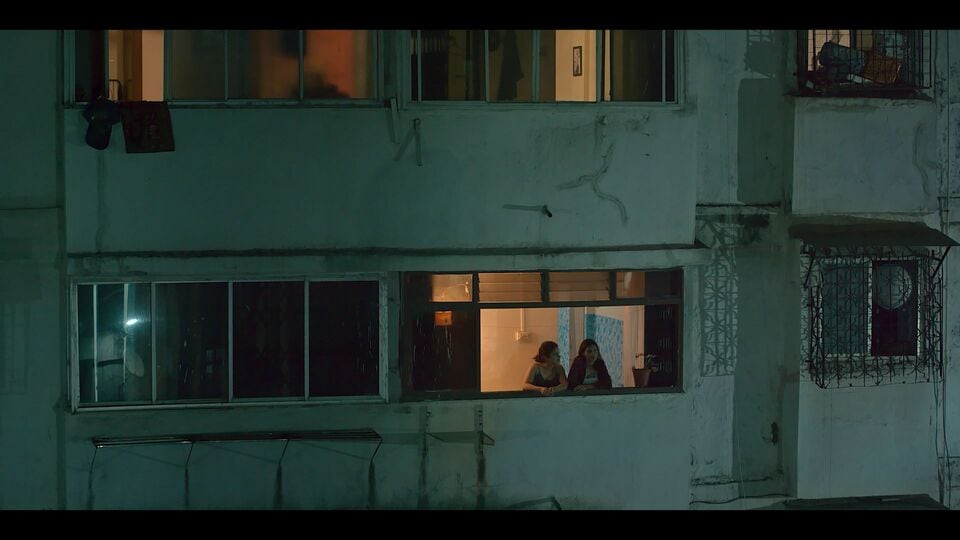
Anuparna Roy’s film and a new documentary by Paromita Vohra both spotlight femininity and freedom in a world that is changing, even if not fast enough.
Once upon a time, a young woman from West Bengal’s Purulia district dreamt of making a movie. Defying all odds, she brought to screen a story of two migrant women determined to survive in a big city.
That dream of a film is Songs of Forgotten Trees (SoFT). This week, it won Anuparna Roy the Orizzonti Award for Best Director at the Venice International Film Festival. (Orizzonti is Italian for Horizons; the section focuses on up-and-coming talent and debut films.)
For a first-timer who knew no one in the business and shot much of her film in her apartment, on a tiny budget, this is the stuff of fairy tales.
While SoFT has some clumsy edges, Roy is in her element as she traces the delicate relationship between her two protagonists, Thooya (Naaz Shaikh) and Shweta (Sumi Baghel). Thooya is an aspiring actress; Shweta works at a call centre. Both have come to Mumbai from elsewhere. They now live in a flat owned by Thooya’s sugar daddy.
Roy adds to the authenticity of her fictional world by scattering traces of her own life through SoFT. Like Shweta, she worked at a call centre. Like Thooya, she had a childhood friend named Jhuma, whom she lost touch with when Jhuma was married off as a teenager.
As the two women evolve from flatmates to friends, Roy uses a song to underline the shift: Thooya first sings the ditty to herself, later Shweta hums fragments with her, and finally the two sing in chorus. The tenderness they share is in sharp contrast to the crassness with which the wider world treats them, particularly as they serve male clients.

The idea of a woman’s work is also at the heart of Working Girls, the new documentary by Paromita Vohra. Developed as part of a research initiative (The Laws of Social Reproduction project) at King’s College London, the film spotlights women from different parts of India who earn a living as erotic dancers, sex workers, domestic labourers, healthcare workers and surrogates. Interspersed with their stories are animated sections that explore how our legal systems have disenfranchised certain classes of working women.
Vohra is that rare filmmaker who can navigate this dense terrain in ways that make her documentary not just informed but engaging, and even filled with laughter. Working Girls defies convention by being joyous.
Unlike Roy’s fictional Thooya, the real women in Vohra’s film suffer neither shame nor discomfort over their choices. They speak to the camera with unaffected candour. One describes the high of performing on stage as an erotic dancer. Another speaks of how sex work earned her financial independence.
Most of Vohra’s subjects have known suffering and trauma. Like the protagonists of SoFT, they are survivors, but the real women are more determined to laugh away their sorrows than the fictional ones.
This is likely why Vohra deliberately uses “girls” in the title. Her film reclaims girlhood by viewing it through a feminist lens, associating it with irrepressibility, adventurousness and insouciance. Vohra looks for and finds these traits in the women she spotlights, from young police aspirants and giggly surrogacy agents to weathered ASHA (Accredited Social Health Activist) workers on strike.
More than two decades ago, in Unlimited Girls (2002), Vohra asked activist Sonal Shukla what the goal of the women’s movement was in India. Shukla replied, “To change the world. Nothing less.”
The world hasn’t changed enough, but the girls are working on it.
(To reach Deepanjana Pal with feedback, write to @dpanjana on Instagram)


