
 E-Paper



Pentagrams, flames, runes: How come the same rules apply to all the demons?

 Prefer HTon Google


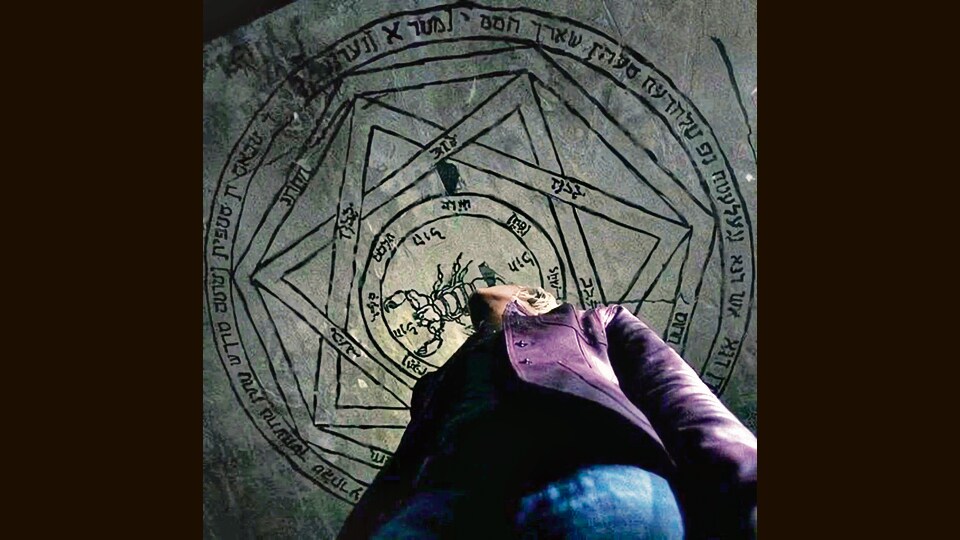
Well, they can be traced to a single tale involving the Biblical king Solomon and a stolen soul. Films, books, games still draw from lore that grew around it.
This is a story about demons.
They say, the people who say things, that when King Solomon — he of the cut-the-baby-in-half tale — was building his temple in Jerusalem, he developed a particular affection for a little boy who was often on site, the son of the head workman.
The boy also attracted the attention of Ornias, a demon who lived in the constellation Aquarius.
One day, at sundown, Ornias appeared before the boy and sucked his right thumb, and the boy’s soul with it. The boy grew thin and pale after this, and Solomon noticed. When the boy told the king what had happened, Solomon was horrified. He prayed to God, who sent the Archangel Michael down to help.
Michael gave Solomon a signet ring, saying it would forever give him control over demons. Solomon gave the ring to the boy. Throw it at the demon’s chest the next time you see him, he said, and tell him to come and meet the king. The boy did as he was told. Ornias met the king, and ended up cutting stone for the temple.
Solomon eventually returned to Ornias, gave him the ring and told him to hand it to Beelzebub, the prince of demons, and tell him to meet with Solomon too. Beelzebub laughed at Ornias, but he was soon working on Solomon’s temple too.
The king went on to subdue and enslave a whole army of demons.
You won’t find the story of Solomon and Ornias in the Bible. It comes from a text of a very different nature, one that dates to the 1st century CE, and was written in Greek and ascribed to the long-dead king.
Origin tale

Few people have read The Testament of Solomon. But almost everyone knows at least a little of what it says.
It is to this book that we can trace many of the rituals most commonly associated with asking demons for help.
The idea of such supplication is likely as old as prayer. But the specifics — the idea of circles drawn on the ground, preferably in human blood, with runes that have to be traced just so, for the smallest mistake would mean the summoned demon could turn on the summoner — have all accreted like layers of sediment around the original tale.
Interest in summoning demons was muted after The Testament of Solomon, but flared up again during the Renaissance in Italy, where the Key of Solomon, a grimoire or book of spells, made its first appearance in the 14th century.
It contained detailed instructions on the rites and rituals a summoner must perform before attempting any demon-binding, as well as the days and hours of day best suited to summoning specific demons.
Others took off from here. In the 17th or 18th century, a grimoire titled The Little Key of Solomon made an appearance. Its first part, Ars Goetia (Latin for Skill of Commanding the Spirits), became fairly well-recognised. It was a sort of Yellow Pages of Demon Lords: names, ranks, famous followers, and the kinds of purposes they best served. This book and others like it, circulated at the time, were popular within a limited circle of occultists, and were considered dangerous.
By the 20th century, the English occultist and magician Aleister Crowley was studying “Solomon’s demons” as manifestations of certain psychological aspects of human will. He and fellow occultist Samuel Liddell MacGregor Mathers translated The Little Key of Solomon into English in 1904, and it has been popular ever since.
Echoes through time
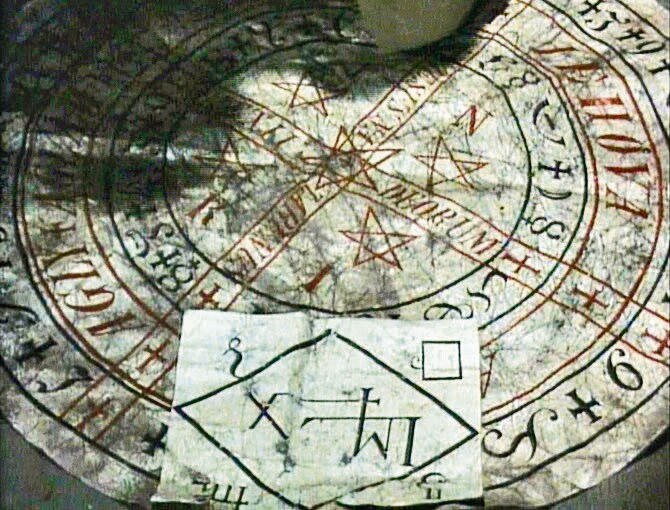
This is a story about demons, but it is also a story about plot devices, game mechanics, and names.
Any fantasy role-playing game that uses magic and summoning — whether it be the Arcane Gate spell in Baldur’s Gate, the spells to invoke Dremora Lords in The Elder Scrolls, or the Ashes used in Elden Ring — draws from the original story of Ornias and the boy, and the tales built around it.
The Sandman comics begin with a failed summoning. A nerdish villain summons demons to send after the titular vampire slayer in Buffy. The Key of Solomon is referred to as the “real deal” in the TV series Supernatural. It is one of the books Dr Strange borrows from the monastery library in the Marvel Comics Universe.
Meanwhile, Asmodeus, one of the demon kings listed in the Goetia, lives on as lord of the Ninth Hell in Dungeons & Dragons; as a Lawful Evil Deity in the Pathfinder tabletop and videogame universe; as one of the 13 Forsaken in The Wheel of Time; as a venomous snake in Brian Jacques’s novel series Redwall; and as the last Prime Evil and Lord of Sin in the Diablo videogames.
Other names from the first English translation by Crowley and Mathers crop up in the anime series Mobile Suit Gundam; the film The Rite; the Wheel of Time books; the games Diablo and Genshin Impact; the Korean drama series The Judge from Hell; the American series Sabrina the Teenage Witch; the 2011 Anthony Hopkins-starrer The Rite; and even in a Miss Marple tale by Agatha Christie.
Crowley, meanwhile, lives on in the Terry Pratchett-Neil Gaiman modern classic, Good Omens. The suave devil’s agent intent on doing ill was inspired by the English occultist.
Expect to see more of this. The word “grimoire” is more popular today than it has ever been, according to Google Ngram (which analyses how often a term appears in written bodies of work). It was almost 1,800 times more popular in 2022, Ngram says, than at its previous high, all the way back in 1673.
(K Narayanan writes on films, videogames, books and occasionally technology)


