
 E-Paper



Simmer down, don’t be the fire-starter: Swetha Sivakumar, on burnt food

 Prefer HTon Google


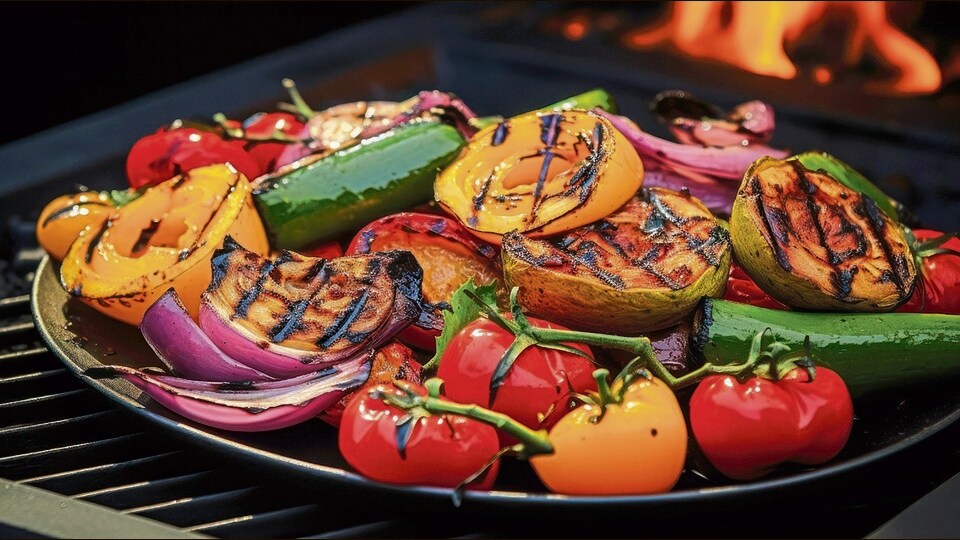
Why do some ingredients – like white sugar – burn almost instantly, going up in a puff of smoke, while others char deliciously, or remain entirely raw within?
When I was in my 20s, living away from home, my mother made all my sambar powder for me, in large batches. At some point, it struck me that this was lazy and unfair on my part. I needed to learn to do it myself.
So, I asked for the recipe, and was surprised to be handed a tiny note with a list of five ingredients on it: toor dal, coriander seeds, red chillies, fenugreek seeds and black pepper.
“Is this it,” I asked, squinting.
“Roast them on low heat, stirring continuously,” she said, tersely. “Don’t let them burn.”
“Well, obviously,” I thought to myself.
Ah, the impertinence of youth… I can stir for five minutes, I had thought to myself. How hard can it be?
As it turns out, it is about five minutes. Of stirring constantly. Per ingredient.
It was exasperating. I began to wonder, would it really be so bad if I turned the flame up, just a tiny bit? I turned the dial a tiny bit, and almost instantly, the spicy aroma wafting out of the pan switched to a bitter, angry smell. I had my answer.
Once I had unclenched my teeth, I remember thinking: That’s interesting. How exactly did that happen?
Let’s take a look at burning.
Most masalas made from scratch begin with a roasting stage. Controlled heat causes chemicals in the spices to combine and morph to form new volatile compounds, giving the mix the aromas and flavours we seek.
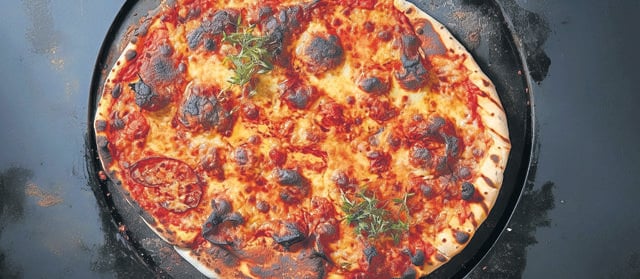
Too little heat, and there remains a rawness to the spices. But these ingredients also contain very little water — less than 10%. So they are especially vulnerable to burning. (Coincidentally, the low water content is also why spices have such a long shelf-life).
The stirring is vital, to ensure that no part of the mix is exposed to too much heat for too long. Because once their minuscule water content is gone, the internal temperature of spices shoots up fast. There is not much leeway before it all burns. One goes rather seamlessly, in fact, from “Oh, this is so boring” to “Oh my God, how did this happen?!”
Ladoos have been another trial by fire. Turn the flame up here, and there is an uneven transfer of heat that burns the outside of the rawa or besan mix while leaving the rest of it interestingly untouched, ie, raw. There is no way to salvage this. You have zoomed past the “zone of deliciousness” straight to the depot of “unusable”.
The tricky thing about heat is that we can’t see it. I like to visualise it as a thick liquid, like paint. Aim to coat every particle in the pan with it, evenly but not too thickly. Stir gently, but stir, stir, stir.
And give it time. As a chef once said to me, the key ingredient in the perfect fried egg, is patience.
Eggs, incidentally, are at the more forgiving end of the spectrum. Their high water and fat content mean that they can be subjected to relatively wide variations of heat and still end up edible.
At the other end, alongside the dry spices, is sugar. Apply heat to white sugar too quickly and much of it goes up in a puff of smoke; what’s left is now hard to separate from the pan. But control the heat, and the sucrose molecules eventually begin to break down into volatile ones such as maltol, diacetyl and guaiacol, which give caramel its complex, buttery flavour.
It is a fine line here too. Caramelisation in white sugar occurs at about 170 degrees Celsius; white sugar begins to burn at 178 degrees Celsius.
As a thumb rule, the breakdown of organic compounds, called pyrolysis, usually begins between 200 and 250 degrees Celsius. This is just a nugget of information; it is unlikely to help you in the kitchen.
Ace the patience, though, and your cooking will be transformed. For years now, for instance, my mother has nodded approvingly at my sambar powder. I like to think I know how Meryl Streep feels after every Oscar.
(To reach Swetha Sivakumar with questions or feedback, email upgrademyfood@gmail.com)


