
 E-Paper



The little Gaul that could: How Asterix creator Rene Goscinny changed the world of comics

 Prefer HTon Google


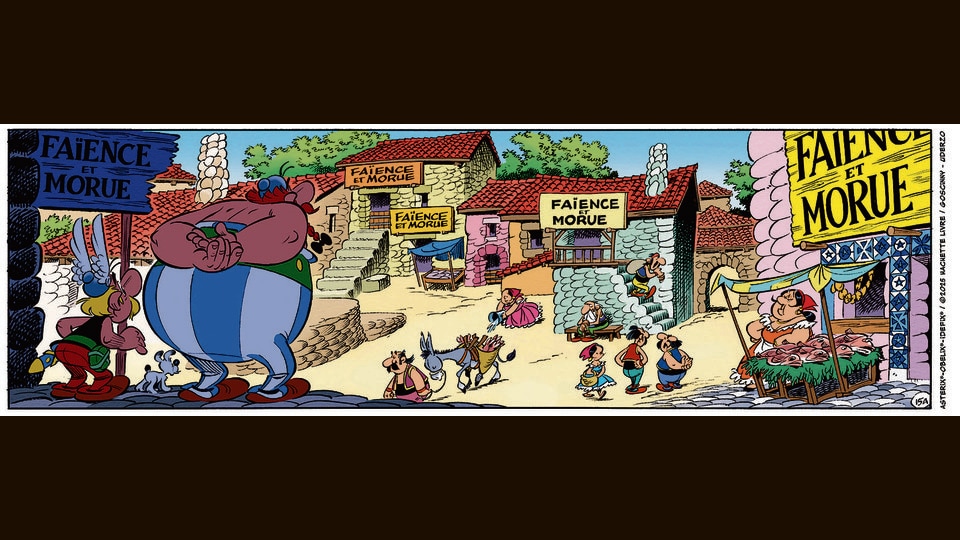
Why are we still glued to the layered, pun-laden, irreverent tales of two Gauls fighting off Romans? K Narayanan pays tribute to Goscinny in his centenary year.
When Rene Goscinny died in 1977, the French newspaper Le Monde carried an obituary on the front page. He was to comic books what the Eiffel Tower is to Paris, what Balzac is to the French novel—in a word, what Obelix is to Asterix, it said.
Goscinny had been working with long-time collaborator Albert Uderzo on Asterix in Belgium (1979). Open the album and one can tell exactly at what point he passed. The skies are dark in every panel after.
All Gaul was in mourning.
The man who repeatedly referred to himself as a mere entertainer had, in less than two decades, transformed the face of French comics, inspiring dozens of other great artists and writers.
Goscinny was born in Paris in 1926, to Polish Jewish immigrants Stanisław Goscinny, a chemical engineer, and homemaker Anna Beresniak-Goscinny. The family moved to Buenos Aires when he was two. He started working aged 17, after his father’s death, first as an accountant, then as a junior illustrator at an advertising agency.
Two years later, he moved to New York with his mother, to live with her brother. He then moved back to France to enlist in the army, where he reached the rank of senior corporal.
He returned to the US in 1947. He was unemployed and poor.
But this time, he made some good friends, including Harvey Kurtzman, Will Elder and John Severin, who would go on to create the frantic and satirical MAD magazine.
Goscinny and Kurtzman became especially close. At Kurtzman’s home, he met Maurice De Bevere, a Belgian cartoonist who had just created a cowboy character named Lucky Luke under the pseudonym Morris.
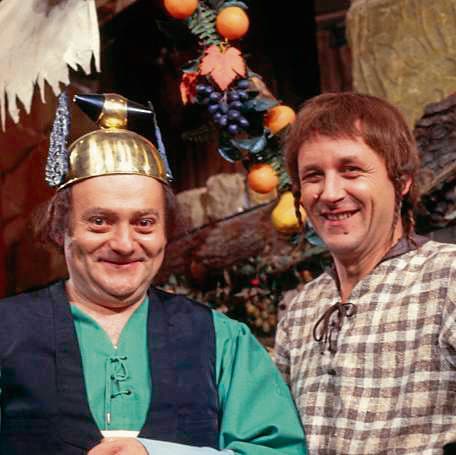
In 1950, aged 24, Goscinny returned to Paris, determined to focus on writing rather than illustration. There, at the Paris office of the Belgian publisher World Press, he met Uderzo, 23. It was the beginning of a relationship that would last beyond the deaths of the two men.
***
Their first collaboration was Jehan Pistolet (The Little-Known Pirate; 1952), and it had all the trademarks that would make Asterix such a success.
The series, which first appeared in a children’s magazine, featured a young waiter named Jehan who gives up his job at a Nantes tavern and buys a ship, determined to become a pirate.
Set in the 18th century, the series follows Jehan and his motley crew, and each adventure ends with a celebratory banquet.
In 1955, Morris returned to Belgium. He had been creating Lucky Luke comics since 1946, but was having difficulty writing longer stories. He reached out to his old friend Goscinny, who jumped at the chance. The two would collaborate on 40 Lucky Luke albums.
At the same time, Goscinny and Uderzo were working on a series of stories featuring a young aristocrat named Hubert Brussels Sprout and his Native American friend Oumpah-Pah, set in 17th-century America.
Amid it all, Goscinny and other comic artists became increasingly frustrated by the power the publishers at World Press held over them. “A publisher could fire an artist simply because he was sick... He could have someone else draw the artist’s series without paying him royalties,” he said in interviews.
These frustrations resulted in the creation of Pilote, a magazine created by artists for artists, in 1959.
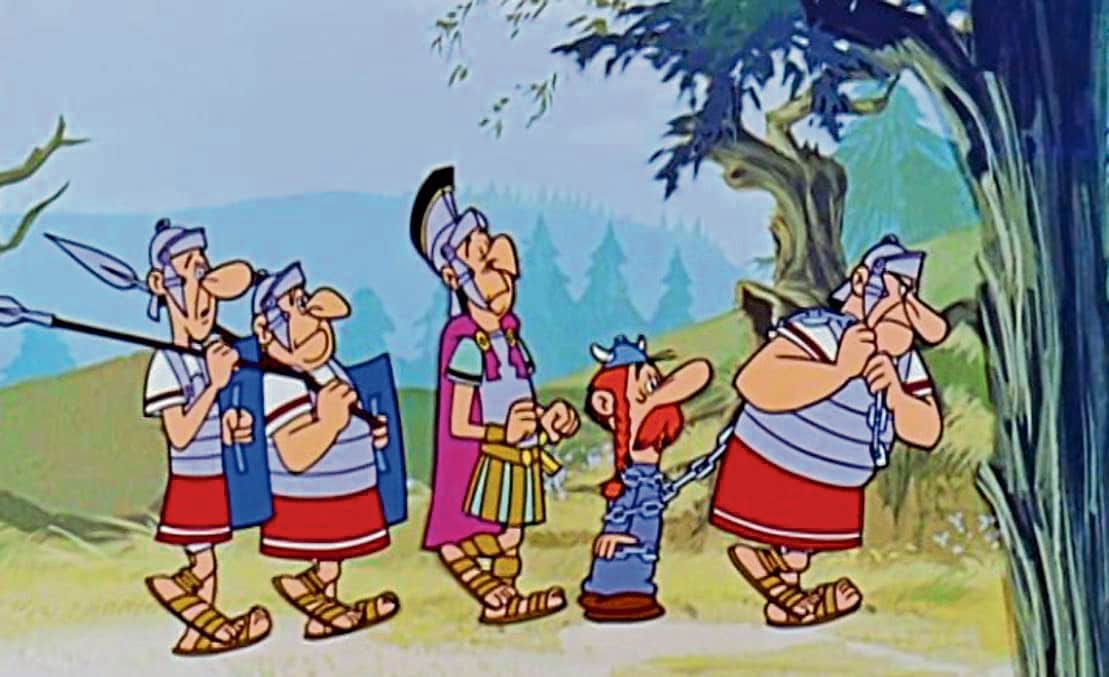
Goscinny and Uderzo wanted a new hero for it. They considered a series around Reynard the trickster fox of French folklore, but realised Benjamin Rabier had already beaten them to it. They went back to their schoolbooks looking for inspiration.
They found it in standard French history textbooks from the early 20th century, written by Ernest Lavisse. These books had more than a hint of nation-building about them, telling tales of grand victories, and tracing various elements of present-day French culture to ancient Gaul.
It is Lavisse’s language that is mocked in the first panel of Asterix the Gaul (1960): “In 50 BC, our ancestors the Gauls had been defeated by the Romans…”.
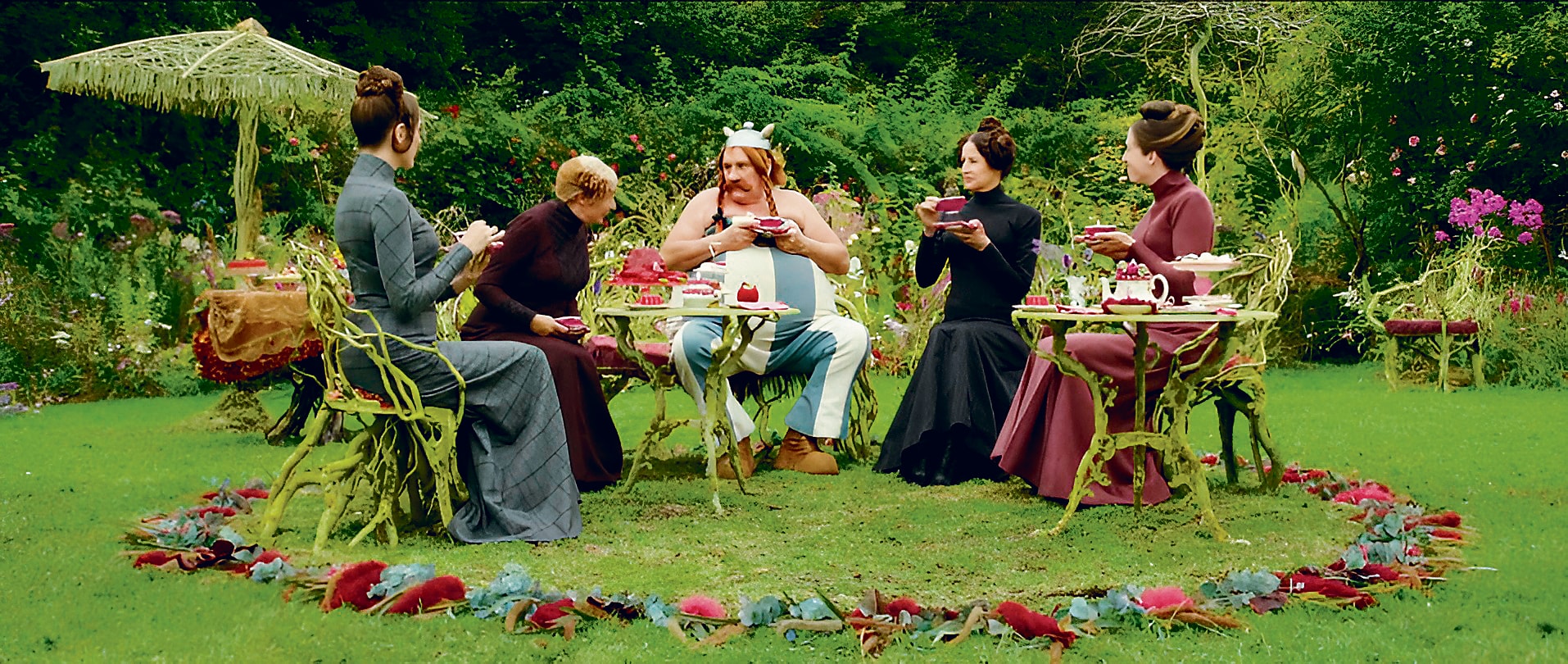
The stories that followed showcased the best of Goscinny: anachronisms (traffic jams, tea parties, roundabouts, journalists and contemporary politicians), visual puns (Egyptians arguing in panels of hieroglyphics), and historical references in such density that one would need a codex to get them all.
Take for example, a panel from Asterix at the Olympic Games (1968). It describes athletes entering the stadium: “Ceux de Milo sont venus aussi; ceux de Cythére viennent de débarquer ... ceux de Macédoine sont trés mélangés”. Those from Melos have arrived, those from Cythera have just disembarked, those from Macedonia are a very mixed group. But in doing so, it also references the Venus de Milo, Antoine Watteau’s 1717 painting L’Embarquement pour Cythére, and la macédoine, which is a type of French salad.
This is part of what has kept people in the love with the stories. By the time of Asterix at the Olympic Games, the comics were selling in the millions per album.
But before all that, there were hard times.
***
The first issue of Pilote, in 1959, carried a large group of smiling people on the cover, ostensibly the artists featured within. In reality, it was just the three founders — Goscinny, Uderzo and Jean-Michel Charlier — and their friends and relatives, gathered together to give the impression of a large group.
Over the next few years, attracted by the success of Asterix, many artists did flock to Pilote. Though the adventures of Asterix remained its biggest draw, the magazine provided a platform for artists such as Jean (Mœbius) Giraud, Enki Bilal, Jean-Claude Mézières, Marcel Gotlib and Annie Goetzinger. Morris even moved Lucky Luke to Pilote.
By the mid-1960s, the little Gaul had acquired a worldwide following. Goscinny had become an elder statesman of the European comics world. Any album written by him was a guarantee of wit and quality.
***
Old orders, however, are challenged by the new. By 1968, Pilote’s younger artists wanted something more transgressive and taboo-breaking. For Goscinny, this was unthinkable. Pilote was conceived as a family-friendly magazine.
The younger artists invited the founders to a Paris restaurant to negotiate. It was a disaster.
This was the year of student riots, and normal life had been disrupted. The latest issues of Pilote had been delayed. Goscinny didn’t know when production would resume.
For the rebels, this was proof that it was time for a change.
The meeting ended with Goscinny almost in tears. He distanced himself from people whom he had considered friends and colleagues. In 1972, a number of these artists left to set up L’Écho des Savanes (Echo of the Savannahs), a more transgressive magazine.
Amid continued resistance, Goscinny stepped down as editor of Pilote in 1973.
He died of a heart attack four years later, aged 51.
In that short life, he created characters and told stories that give pleasure to millions around the world. Movies based on Asterix are still being made. The most recent was the French live-action film Asterix & Obelix: The Middle Kingdom (2023).
At France’s amusement park dedicated to the little Gaul, one can take a log flume ride, cool off in rapids, or ride a rollercoaster through Egyptian ruins.
New albums are still being produced, and still sell in the millions. Asterix in Lusitania (2025) sold 1.65 million copies that year in France alone.
And why not? Why wouldn’t you go to a world where there is always adventure and a banquet to follow, where the forests are filled with wild boar to hunt and Romans to bash, where there are new countries and cultures to visit, new friends to make, and always time to marvel at the eccentricities of human nature?
As Obelix would say, “These humans are crazy!”. Goscinny made us love them all anyway.
(K Narayanan writes on films, videogames, books and, occasionally, technology)
.
BEYOND THE BANQUETS:
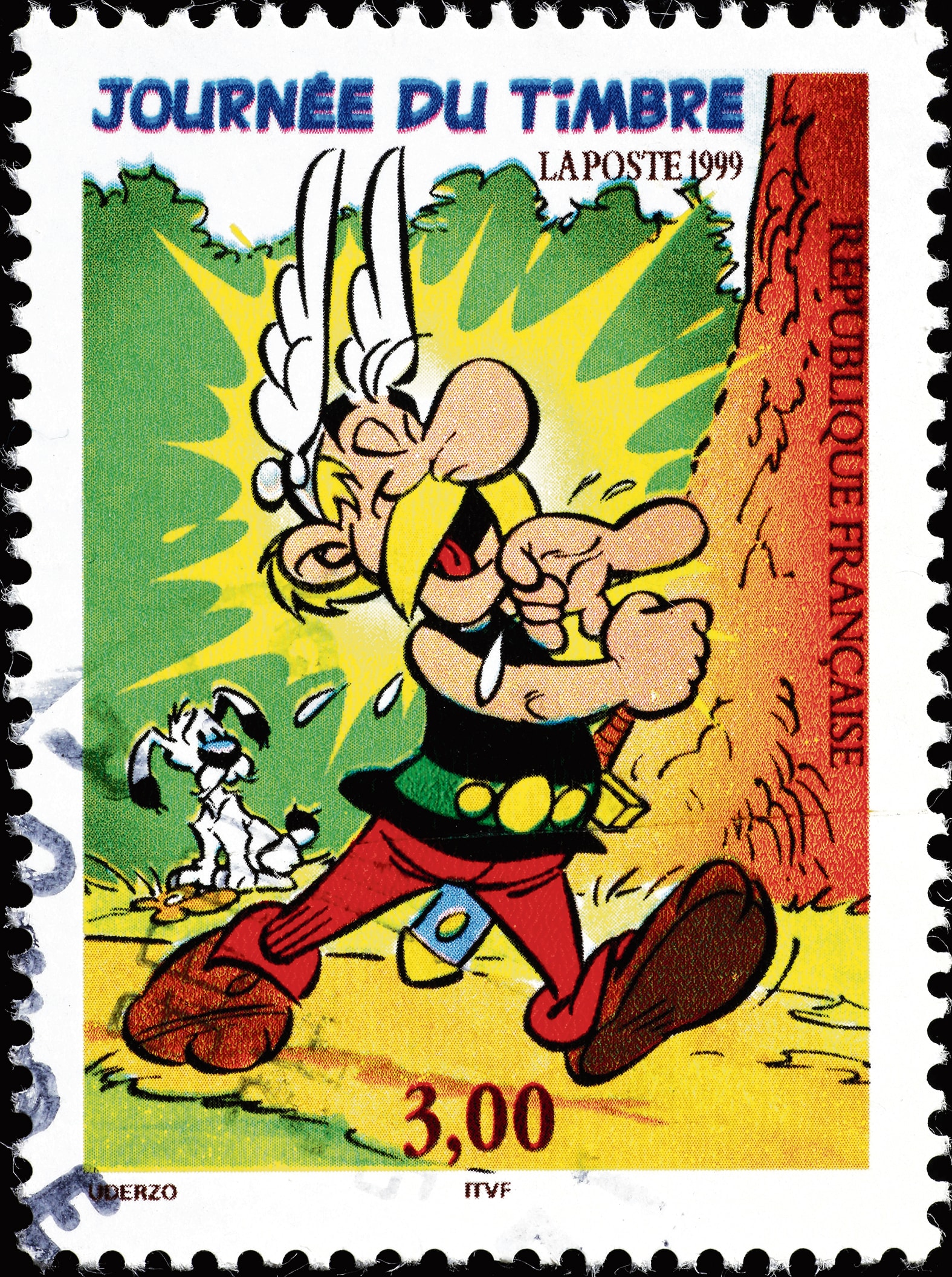
* In many ways, Asterix was meant to be a star. The word comes from the Ancient Greek “asteriskos”, for “little star”. Look closely and the little Gaul has a shape that is not dissimilar.
* The comics first appeared in the independent comics magazine Pilote, co-founded by Rene Goscinny (who wrote the Asterix stories) and Albert Uderzo (who created the art), among others, in Paris, in 1959. Goscinny died in 1977; Uderzo in 2020. The comics have since been carried forward by others.
* In these tales, set in 50 BCE, nearly all of Gaul has been conquered by Romans. One stubborn village holds out. They manage to ward off the Romans, time and again, with the help of a magic potion brewed by their druid, Getafix, that (temporarily) grants superhuman strength.
* The drink is made with mistletoe harvested using a golden sickle. To keep it palatable, Getafix uses added flavours, ranging from lobsters to strawberries and “rock oil” (think, petrol).
* The series was instantly popular, for its wordplay, gently irreverent plots and historical references, anachronisms (roundabouts, traffic jams, bureaucracy) and visual gags (references to classical art works; Egyptians arguing in hieroglyphic panels). It helped that each adventure ended, happily, in a banquet.
* The Asterix albums have since become some of the most-translated comics in the world, available in over 120 languages, including Icelandic, Norwegian and Urdu.
* In a tribute to this enduring element of French popular culture, that country’s first independently launched satellite was named the Asterix, in 1965. It served more as proof of concept than valiant campaign, though. A damaged nose meant it couldn’t transmit beyond two days, but the Asterix remains stubbornly in orbit.


