
 E-Paper



HT Brunch Cover Story: Hurdles and humour

 Prefer HTon Google



Comediennes and creators, Saloni Gaur and Sumaira Shaikh, get real about the highs and lows of being young women in comedy
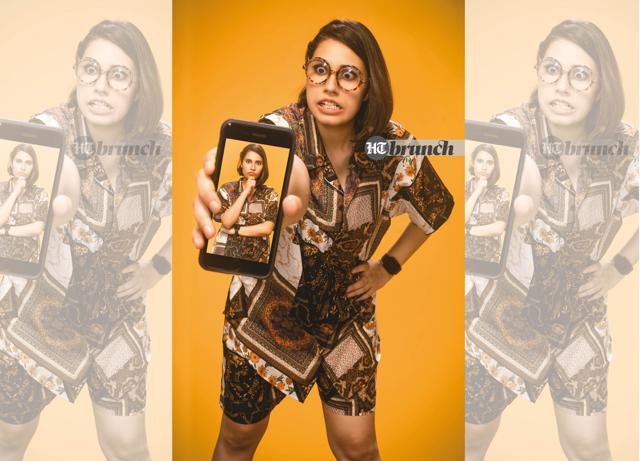
When I sit down for my Zoom call with Saloni Gaur and Sumaira Shaikh, I’m not quite prepared for what is about to happen. Both comediennes and both millennials, neither of them had met before the shoot with HT Brunch, but it is clear that they have bonded. And why not? Being a woman, a comedian and a millennial in India is a small space—a space each has managed to firmly establish themselves in.
Saloni, 22 years old, Bulandshahr-born and Noida-based, is more than well-known on social media as Salonayyy; her 1 million followers are testament to that. Her content is topical and her mimicry of different celebrities, which gave her her first taste of fame, continues to draw people to her account. Her grandmother also features in many of her Reels, and it is clear that she comes from a very close-knit family, all of whom have a sense of humour.
Sumaira Shaikh, 28, a Dongri-born and bred psychology graduate who gave up being a counsellor to focus on comedy, shares with Saloni a love of family. Sumaira used to work for the comedy company All India Bakchod, and was also a co-writer on Son of Abish, comedian Abish Mathew’s variety talk show. More recently, apart from stand-up, she also co-wrote two seasons of Pushpavalli (in which she had a cameo as well) and now has her own stand-up special on Amazon Prime, Dongri Danger, making her only the fifth Indian female comedienne to have one hour of material on a streaming platform.
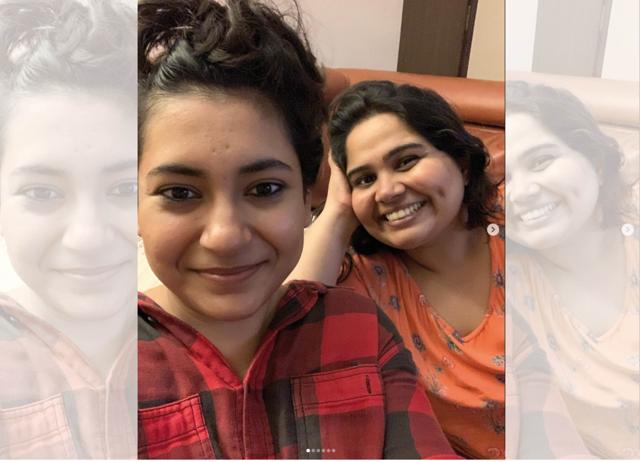
Between them, Saloni and Sumaira are smashing the glass ceiling in comedy, are equally unapologetic, effortlessly funny and, as we speak, they open up about their views on the future of comedy in India, audiences being easily offended and how their middle-class families are the best sources of content!
Growing up funny
When asked what their childhood years were like, Saloni says hers were amazing—her parents never really bothered either her or her brother, Shubham, to pursue anything they didn’t want to. In fact, Saloni’s tongue-in-cheek Instagram bio reads ‘Still can’t believe my parents allowed me to follow my passion without getting an MBA degree.’
“I grew up in Bulandshahr and it was a small town. I had a pretty normal childhood but it wasn’t anything like we hear nowadays about how every childhood was toxic. Mine definitely wasn’t,” she states.

On the other end is Sumaira who believes that her upbringing in Mumbai—more specifically, Dongri—was a blessing, especially for the profession that she’s in. Given that she had the spaces to perform in Mumbai, she found opportunities were more easily available for her. “I really think it genuinely helped me start as a comedian because I was in this city and open mics were happening every night and that platform was available,” she says. She also gives due credit to Dongri. “I was born and brought up in Dongri, which is famous for two things: the book Dongri to Dubai and Dawoodji,” she laughs. “People think that just because I’m from there, I know him... I don’t know him! I wish I did; I wish he was my grandfather,” she continues wistfully before switching to a slightly more serious vein.
“I was in college when I got some exposure and understood that this is a talking point—one wants to talk about Dongri, what life is like over there. It’s like, it’s normal, we don’t witness murder every day!” she ends, sarcastically.
All in the family
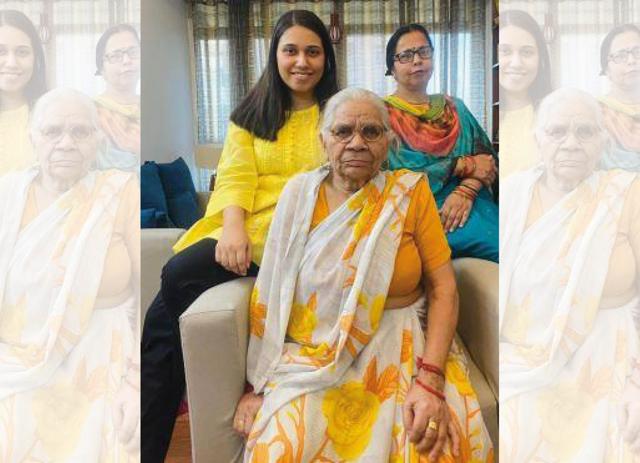
The axis of Mumbai and Bulandshahr may not have brought them closer but the fact that Saloni says “my dadi is very funny” and Sumaira explains that “humour runs in the family”, is definitely a strong point the two have in common.
Saloni says that she’s realised her grandmother is whom she gets her sense of humour from. “I feel like I got my humour from my grandmother. We discovered pretty late that she was really funny— although she always had her one-liners— maybe we never really noticed. I get a lot of wholesome messages from people who say that that they don’t have grandmothers anymore, and mine reminds them of theirs.”
Both Sumaira and Saloni have brothers who annoy them, but Sumaira unfortunately also had to deal with her elder brother passing away in 2017 which, she believes, changed the way she thought, professionally. “See, I was already a comedienne before he passed away, but it changed my comedy a lot,” she muses. “I wouldn’t say it became dark, but I used my humour to deal with what I was going through during that time.”
“I miss him a lot, but even that time everybody in my family was dealing with it using jokes and humour,” she remembers. “My mother, father and I had all lost weight because we were grieving, and we were all amused that we’d lost weight, but my younger brother hadn’t, so we used to bully him day and night: kya tu pyaar nahi karta tha apne bhai se? Wow, tera weight bad raha hai!” (Didn’t you love your brother? Wow, you’re putting on weight!)

She even wrote a bit about it but didn’t perform that for two years because she felt so vulnerable. She finally included it in her Amazon Prime special, in which, she says, “It has this whole bit about his mayyat [death] and how all of my relatives judged it tremendously.”
These ridiculous antics of her relatives make for more than just great content. As Sumaira says, this helped her grieve and process. But, she points out, humour has always been used as a tool, or coping mechanism in her family. “In my family, everybody likes to insult everybody. Nobody bullies me as much as my parents do, especially my mother. She’s very good at imitating people and she is very, very funny. The way we communicate in my family is through humour and if u get senti (sentimental) or cry over bullying—I know it sounds very toxic, but it is what it is—then you’re considered weak and the other person wins,” she shrugs it off.
Similarly, Saloni believes that in middle-class families, “the one advantage is that we can find half our content at home.” Surprisingly enough then, it wasn’t an immediate decision for both these ladies to start getting into comedy.
Starting off
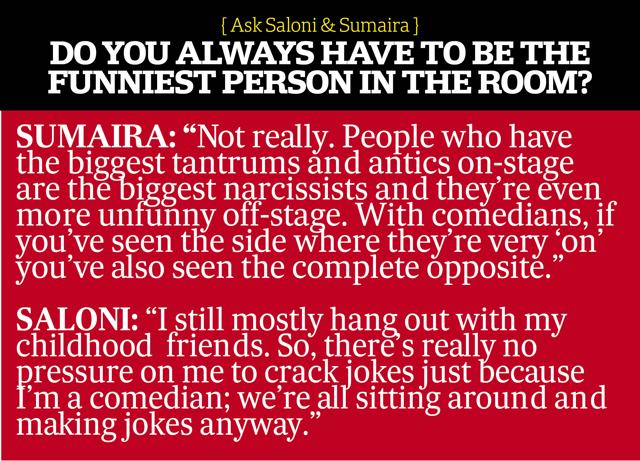
Neither Saloni nor Sumaira had contemplated making a career out of comedy when they were younger, and both thought it through for a while, before they took the leap.
Ask Saloni’s mother and she’ll tell you that Saloni’s comical side is a side-effect of some medicine she took as an ill third grader. Saloni confirms this when she says that, up until third grade, she was so naive, she was the type of kid who “would definitely have been kidnapped if the van didn’t drop me off right in front of the house.”
Before Kapil Sharma dominated “paarivaarik” comedy shows, Laughter Challenge had the monopoly. This was the impetus for Saloni’s foray into comedy. Having never taken humour seriously—she had been a great mimic even in school, imitating the principal for laughs—she claims that “I always wanted to become the thing I was watching on TV: commentator, if watching cricket, comediennne, if watching Laughter Challenge.
It was all fun and games until she went to college. “That’s when I saw videos of Zakir Khan and other comedians and understood that this is how it’s actually done,” Saloni says. “Then I realised that “I make these jokes anyway, so why should I waste my talent and do it for free?”
Some credit also goes to her hostel television. “We only had two TVs and eventually I realised that Big Boss, which ran on both those TVs, could actually also be a great source of comical content!” laughs Saloni. Her first viral video was with ‘Hostel ki Seelan Wali Deewar,’ which she says was authentic and relatable. From the gradual realisation of, “oh, this is how things go viral”, when her video started surfacing on her WhatsApp groups to “Hi, it’s me” to an aunty on Twitter, who was trying to find the girl in her viral video, Saloni has come a long way.
Meanwhile, Sumaira realised that doing stand-up was her cup of tea at her very first open mic in 2015. Now, Sumaira, even with her TV shows, writing gigs, stand-up special and YouTube clips says she still would like to hear the word ‘viral’ associated with her content. “I’d love to hear that word in my life; it would be a huge achievement,” she says. “I am a stand-up comic and also a writer—I started doing both these things together because there’s hardly any money in stand-up,” she confesses. “My mother said, either you make money or you get married. I didn’t want to get married, so I thought I should do just about anything... I started writing!”

Women on top
As is true with any content creator, do the two ladies fear their content becoming irrelevant at some point? They both respond in the affirmative. Saloni truly believes that her brother’s constant “aaj kya likhegi? (What are you writing today?)” helps her overcome her fear of irrelevance and Sumaira believes that selling her own tickets is actually important because “being consistent is very difficult”.
While they both continuously try and put themselves out there, Saloni believes that her brain now functions in tune with her career as she has become more observant with what would make good content even in her normal day-to-day chores. It helps, she says, that she really likes owning the social media space, the space where she started this journey. She says she can do whatever she feels like here and it’s hers to explore.
Sumaira thinks along the same lines. Courageously, she went to her first open mic, which she just wanted to do even though, “I had written one joke and the rest was rubbish”.

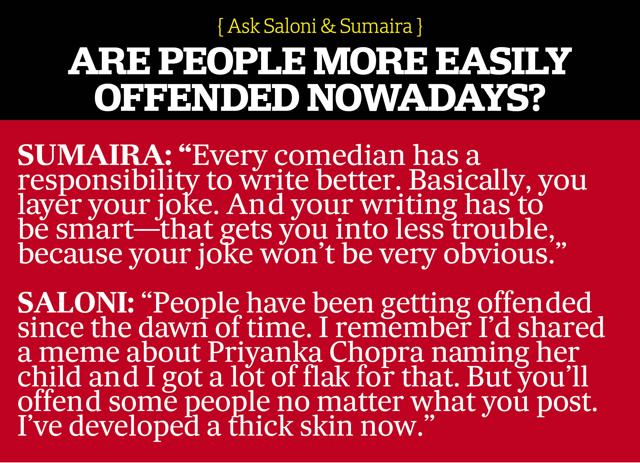
Is the industry sexist? When asked about this, both their responses are equally hilarious and, sadly, true. Saloni says that “I’ve noticed, on social media, both men and women in this space get trolled and insulted equally.” Sumaira agrees, observing that if she wasn’t female, she probably would be appreciated more.
“I think there are two reactions that people have towards women in comedy,” says Sumaira. “One is extreme hate and all sorts of colourful language, and the second is just pure neglect.”
Saloni chimes in, “I think the scene is changing a little bit now, and I think that’s because of women like Sumaira.”
This starts a lengthy discussion of mutual admiration between the two, ending with Sumaira complimenting Saloni: “It’s hard to be persistent on social media; all the numbers you do is crazy; it’s genuinely hard work and hats off to you!”
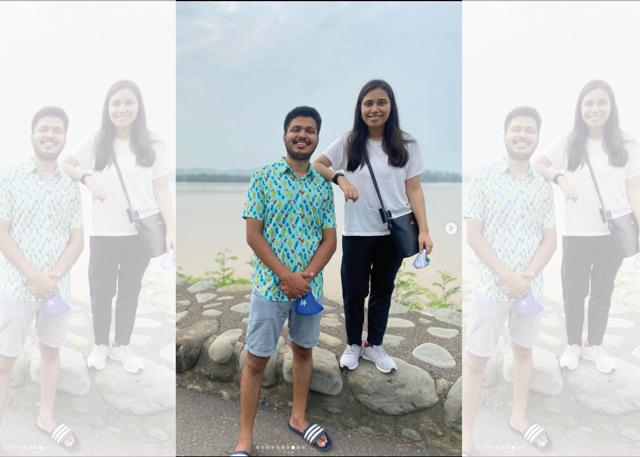
It hasn’t all been smooth sailing, though. “There were days when I was like, “f*** it yaar, I’ll get a job,” reveals Sumaira. “At least, there’s certainty in having a stable job. There’s a lot of uncertainty in a career like this; the lockdown was an eye-opener. Everything was at a standstill; it was very depressing.”
For Saloni, luckily, there have been no real low points like this in her career. The pandemic and lockdown were, in fact, beneficial for her since she got the time to create more content.
The two ladies agree that, in general, it’s time that people stopped believing that women aren’t funny. Ask them what they really want from the audience and they both respond “arre, troll karna hai toh ache se toh karo (if you want to troll us, do it properly)”, because like all good content creators, they believe that any publicity is good publicity!

Acceptance is key
Asked how their parents react to them taking up comedy as a profession, Saloni responds that they have come a long way from meekly answering questions from relatives and neighbours like “video banati hai, aapki beti?” (your daughter makes videos?) to proudly showing kirana shop uncles pictures of her newspaper interviews. She says that for some unknown relatives, she works in “FM” or is a “writer” and for others who are aware of the stand-up comedy scene, she’s an appreciated comedienne.
The future of the comedy scene is bright if you ask Sumaira, who believes that if you can spend two hours scrolling through Reels on Instagram, there are definitely great prospects for comedy. While it is uncertain who might or might not watch their content, they know that just writing everyday helps them sharpen their skills and comedy content will always be watched, sooner or later.
Follow @modwel on Instagram & @UrveeM on Twitter
From HT Brunch, October 8, 2022
Follow us on twitter.com/HTBrunch
Connect with us on facebook.com/hindustantimesbrunch


