
 E-Paper



Rude Food by Vir Sanghvi: How Dubai Chocolate took over the world

 Prefer HTon Google


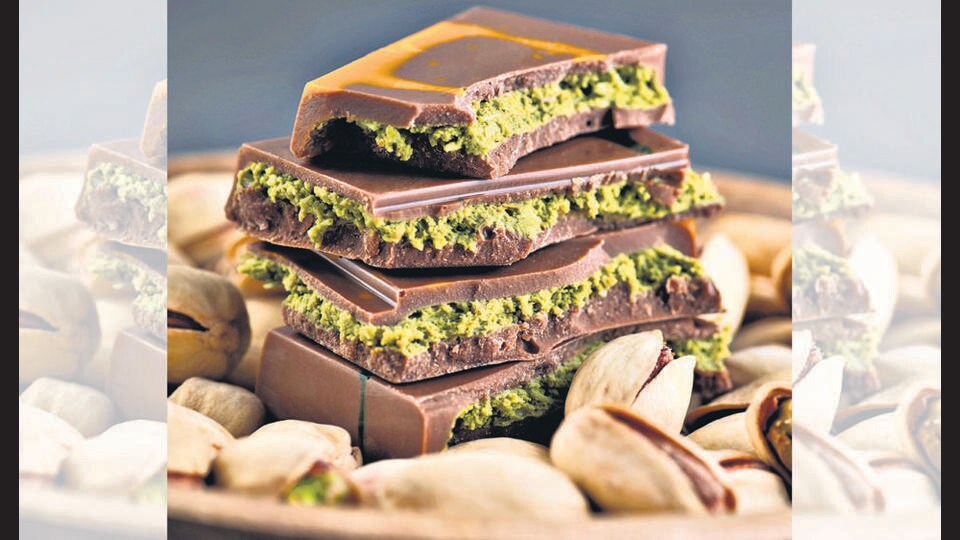
Dubai Chocolate’s success is the envy of the dessert industry. But within its pista-filled centre is a story of East and West, and a sweet nod to Palestine
There is a lot to be said for Dubai. It has become one of the world’s great cities and a global destination because of the vision and enterprise of its leadership.
But, as much as I admire Dubai, there is one thing I never thought it would become.
The home of the world’s trendiest chocolate.
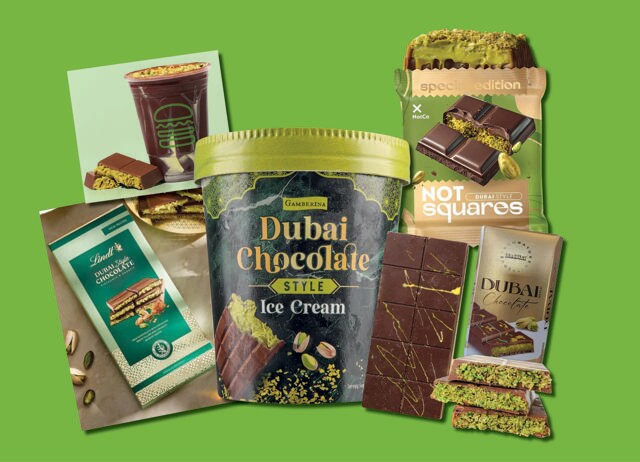
Yups. You read that right. Over the last six months, so-called Dubai Chocolate has become such an international craze that a black market has developed for bars of the handmade original. Other companies have been quick to make their own version of Dubai Chocolate. And while there have been lawsuits over the copies, a global trend is impossible to resist. Even Lindt, the well-known, upmarket, global chocolate brand, now makes its own version of Dubai Chocolate. In the UK, demand has reached such peak levels that supermarkets and chocolate stores impose a limit on how much a single customer can buy. (Around two bars is usually the cut-off.) Even the commodity market for pistachios has been shaken by the increased demand for Dubai Chocolate, of which pistas are a constituent.
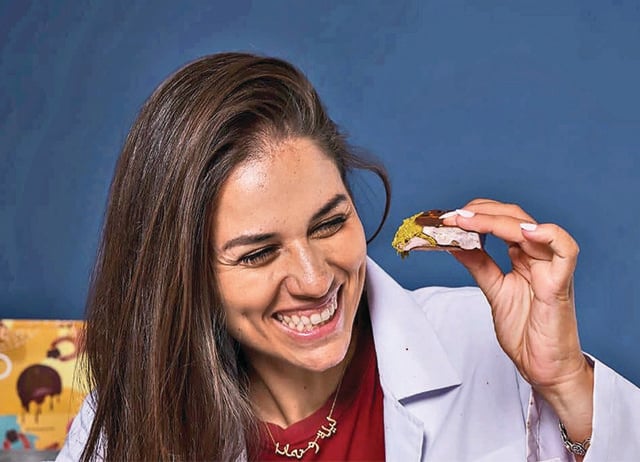
Like most good things in Dubai, the creation of Dubai Chocolate comes from a marriage between East and West. It was created by Sara Hamouda, a British-Egyptian woman who now lives in Dubai (she used to live in the UK), who knew very little about chocolate: Five years ago, she had never made chocolate in her life.
In 2021, she began longing for the Arab flavours of her childhood. She told a trained Filipino pastry chef in Dubai what kind of chocolate she was dreaming of and collaborated with him to create chocolate filled with Middle-Eastern pastry, pista cream and tahini.
They turned the chocolate into a bar, but it sank without a trace: They couldn’t give it away, let alone sell it.
Then, in 2023, Hamouda was advised to send bars of the chocolate to social-media influencers. They were lying unsold on the shelves anyway, so what did she have to lose?
To her surprise, Dubai-based Instagrammers liked her product and said that they liked it on their posts. As so often happens with social media phenomena, Dubai Chocolate suddenly became an Instagram sensation and everyone started posting about it.
Because Instagram is international and because Dubai is becoming the place where East meets West, the craze spread to Europe. Suddenly everyone wanted Dubai Chocolate. Because Hamouda only had a small team and could not make enough to keep up with the demand, a black market developed. Anyone who had access to a bar of Dubai Chocolate could make a 200 per cent profit by reselling it. Hamouda joked that it had become the Hermès Birkin bag of chocolate.
Inevitably, big companies started making their own versions of Dubai Chocolate. Even those ripoffs sold out, forcing shops in Europe to impose those limits on individual customer purchases.
Efforts to prevent Dubai Chocolate from becoming a generic category have met with little success so far and, I reckon, will fail in the long run. It is now a global craze, and where demand exists, supply will extend to fill it. Even Indian companies are making their own versions of Dubai Chocolate.
Why is it such a hit? Well, it is a true Dubai-style success story. It’s created by people of different national origins (British, Filipino, Egyptian) who came to Dubai to work. It has succeeded because of social media, bypassing the usual routes: No ad campaign, no marketing strategy and no reliance on traditional media. And, though I guess this is arguable, the Dubai name has made it exotic within acceptable limits. I doubt if it would have been as successful if it was called say, Gaza Chocolate or West Bank Chocolate.
But Palestine is integral to the taste of Dubai Chocolate.
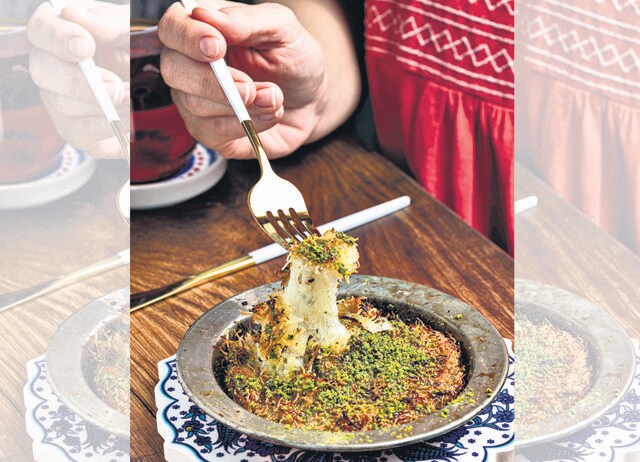
The flavour that Hamouda was longing for and which she wanted to integrate into the chocolate was the taste of kunafa, a Middle-Eastern pastry. (There are many spellings and name varies slightly depending on where in the Arab world you are.)
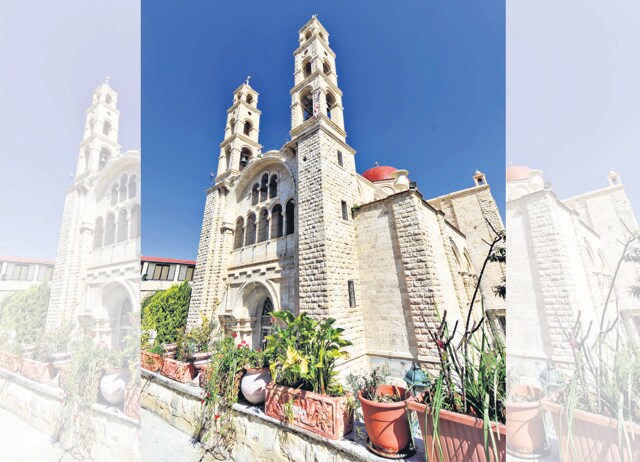
If you have travelled to Muslim countries, you will have come across kunafa: I found many places selling kunafa all over Kuala Lumpur, for instance. It is possibly one of the most common sweets in most Arab countries. It’s basically pastry with a stuffing (usually cheese) and nuts soaked in syrup.Despite its pan-Islamic ubiquity, its origins may be Palestinian, and it has become an important signifier of Palestinian identity.
Palestinians believe it was invented in the Palestinian city of Nablus, and the original version is still called Knafeh Nabulseyeh.
But so much of the Middle-Eastern pastry tradition is Syrian in origin. I asked Wasim Orfali, one of Dubai’s best pastry chefs, about kunafa. He pointed out that it is now also the signature dessert of the Syrian city of Aleppo, famous for its pistachios. Aleppo is the origin of many different kinds of pastry and the Syrian kunafa, often topped with crunchy pistachios, is among the best representations of the dessert.
I reckon Hamouda longed for the Egyptian variant, but kunafa is also very popular in Dubai. At the heart of kunafa is kadayif, which is a classic Middle-Eastern pastry made from strands of vermicelli-like dough. You find many kinds of dessert made with kadayif in Turkey and the Levant, but it is not that popular in the West. And kadayif probably predates kunafa.
Though everyone refers to Dubai Chocolate having Kunafa at its heart, what it really has is kadayif. And there is pista cream, an ingredient that Indians are familiar with. Frankly, the chocolate component is the least important part; you can use any kind of inexpensive industrial chocolate.
So, it’s not a difficult chocolate to replicate, which is why there are so many copies and rip-offs. But it does represent an important innovation in the chocolate bar world, because while nut creams are often used, as are biscuit-type centres in chocolate, a Middle-Eastern pastry has rarely found acceptance in the West as a component of chocolate products.
How does it taste? I have tried many versions and I quite like it. But if you had asked me when it was first introduced whether I thought it would become a global craze, I would have said no.
But that’s the wonderful thing about food trends. You never know what will take off or why. And there is something reassuring about a food phenomenon that originates with someone who was, essentially, an amateur with lots of imagination. As Wassim Orfali says, Hamouda has been a visionary, merging Middle-Eastern flavours with modern presentation. Dubai Chocolate, he explains, is not a gimmick. It is an evolution of an old tradition, as all the best innovations are.
And this innovation has swept the world.
From HT Brunch, June 07, 2025
Follow us on www.instagram.com/htbrunch


