
 E-Paper



Sound bites: Why crunchy foods are the food world’s latest obsession

 Prefer HTon Google


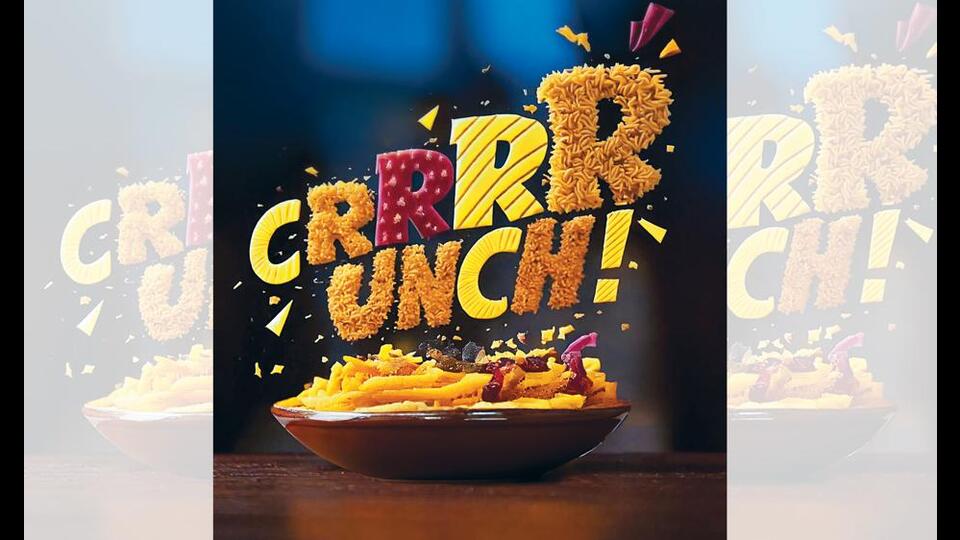
Crunchy textures are taking over soups, salads, sushi, even desserts. Chefs break down the hype around the crisp and crackle, and the trick to getting it right
Forget molecular foams and umami. The new food obsession is one you can both see and hear. Crunchy textures are everywhere. Soups are coming out of the kitchen topped with crispy-fried noodles. Sushi gets a dusting of crunchy batter bits. At Asian restaurants, there are rice crackers to start with, and fortune cookies at the end. And on the street, the top vada pao stalls add besan choora to the pao; dabeli is hidden under nylon sev; even a ragda pattice gets blessed with crushed pani-puri shells. It’s more than an Indian trick now. Israeli-British chef Yotam Ottolenghi serves butternut squash cooked with poppadom; and black chana and mango curry topped with namkeen Bombay mix.
Science says we’re hardwired to like crunchy foods. Biting into something that provides clear haptic feedback (we hear it inside our heads and feel it in our jaws) sends a signal that food is fresh. Plus, it‘s fun. So, when a chips brand says ‘No one can eat just one’, it has more to do with us than their wafers.
Around the world, local words for crispy-crunchy foods are onomatopoeic. Italians say croccante; the Japanese say pori-pori and kari-kari; the Russian term for crispy crust is khrustyashchaya korochka; north India loves karari bhindi; south India loves murukku; we literally have a snack brand called Kurkure. We asked Indian chefs how they’re making the most of our textural home advantage.
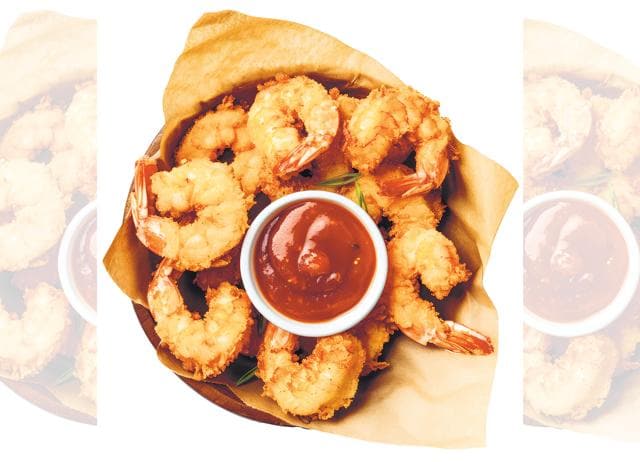
Tribal Gourmet, Delhi
Tanisha Phanbuh, founder of the North-Eastern pop-up kitchen, knows that traditional recipes from the region aren’t big on crunch. Most local food is mashed, steamed or tender. “But we have fresh salads to do the job,” she says, and adds generous portions to her preparations.
“I like to play around with my menus,” Phanbuh says. “I wanted small bites, so I do a filo pastry with mince rather than a chunky filling. It has layers and texture along with the crunch.”
The global crunch wave is largely led by cooking shows, she says. “All the contestants on MasterChef put something crunchy to give texture to a dish,” she says. “Having been on MasterChef India, I can vouch that they encourage us to add a crunch element.” And so, she adds one to her dishes at the pop-ups too.
She’s familiar with Ottolenghi’s famous butternut squash cooked with poppadom. “Papads in curries are popular among Gujarati and Marwari communities,” she says. But she takes here cue from Parsi cuisine and adds salli (slim crisp-fried potato sticks) to fusion curries.
Her favourite crunch: A flatbread with a super-thin crunchy base, mince and sauce at Urfa, a Turkish/Middle Eastern restaurant in Hamburg, Germany. “And knafeh, which is sweet and cheesy but needs to have golden brown crunch, to be perfect.”
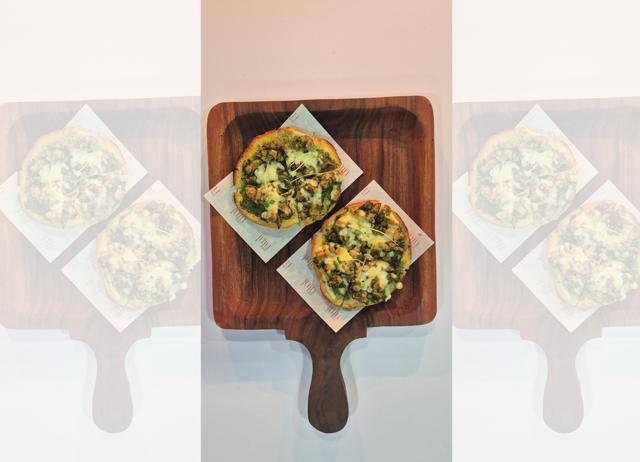
Juju Goa, Goa
Chef Abhijit Khandual has figured out that when people have fun during a meal, they’re more likely to return. So, while he has beetroot amaranth shammi and gunpowder calamari on the menu, the hero is the chicken cafreal pizza. He’s found a way to work crusty Goan poie into a pizza base, and use a drier version of the green cafreal curry on top.
“Each region of India has distinct foods and flavours, but to make modern food that works, you need more than just a mix of flavours,” he says. Crunch is a familiar texture. “Besides, everyone loves pizza.”
Part of the reason the world is into crunchy foods now is because they can see, and crucially hear, it all over Instagram, Khandual says. A person watching a video about vegan haleem with butternut squash nachos, and hearing its satisfying crunch, is less likely to think the combination is odd. His own favourite: A classic crème brûlée, made with rich coconut milk, at the Ministry of Crab in Sri Lanka. “It made the perfect sound when you cracked the surface.”
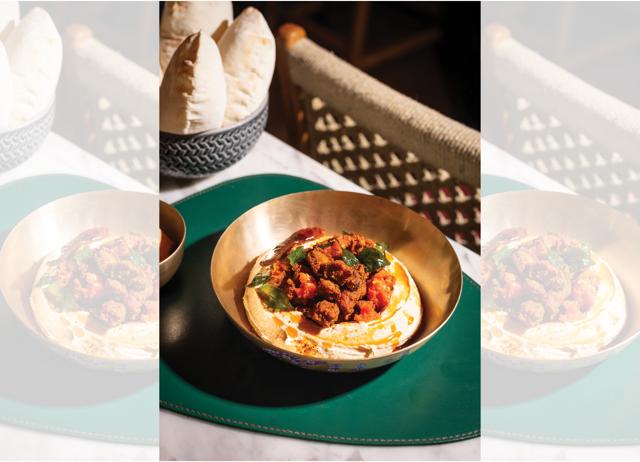
Mezze Mambo, Delhi
Megha Kohli’s menu is all kinds of crunchy: There are lavash chips, Indian papad with creamy dips, Asian chilli garlic crisps for garnish, and fried chicken. Mezze Mambo’s podi chicken hummus has crispy chicken topped with tempered mustard seeds, fried red chili and curry leaves to add another layer of crispiness. Even desserts are served garnished with brandy snaps, crunchy crumble or cookies.
Indians enjoy crunchy foods without thinking much about it, Kohli says. “Even our pickles have raw vegetables we can bite into, we use nuts and seeds in biryanis, we put roasted peanuts into veggie preparations.”
Her own crunchy go-to is mango curry with a tempering of mustard seeds, curry leaves, crispy garlic and fried whole red chillies, garnished with sev. She loved the delightful sound that sushi tacos made when she ate them in New York. “A crunchy element can create a beautiful contrast with softer textures. It can make a dish feel more dynamic and interesting.”
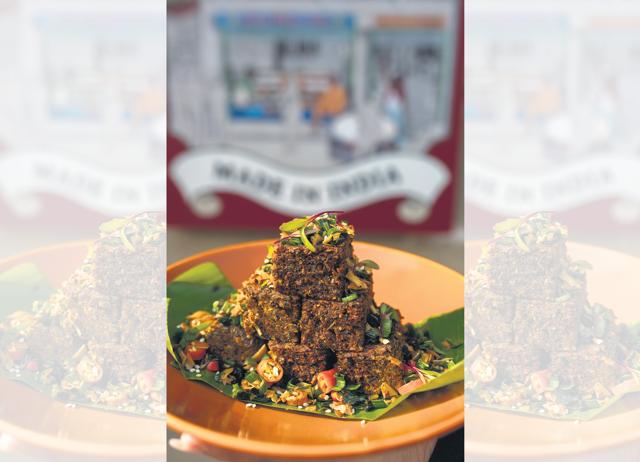
Bhawan, Gurugram
“Chefs all over the world create dishes keeping in mind the balance of textures,” says partner-chef Rahul Dua. “It is no surprise that chefs would consider our diverse range snacks to add crunch but also complexity to a dish.”
At Bhawan, Dua looked at regional recipes to come up with okra crisps, homemade nimki, karari aloo tikkis, double fried aloo tuk, and homemade papdis. For the wafer-thin palak patta chaat, they use a tempura-like batter for a longer lasting, more satisfying crunch.
Even India has much to learn about crunchy foods. Dua loves Thailand’s complex salad tradition, and how the people balance seemingly disparate flavours and textures in a single fresh dish. “From roasted peanuts, chilli, shallots, dried shrimp, beans and so much more, it is amazing how they create such deliciously crispy and crunchy salads.”
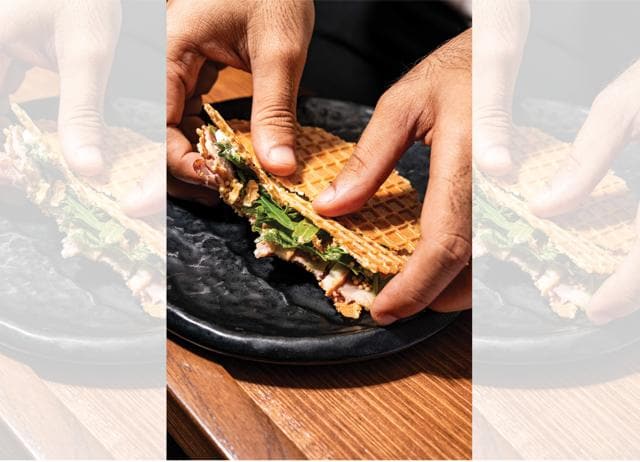
Bandra Born, Mumbai
Chef Gresham Fernandes loves how the world is crunching along. “People want something spicy, sweet, sour, crunchy etc, all in one bite,” he says. “It’s not a new phenomenon. Imagine having a fresh waffle cone with soft ice cream, biscotti with hot coffee.” What’s exciting now is how modern kitchens are experimenting with it. “They’re trying to add crunch to French onion soup – they’ll make the soup, cook it down, and bake it until it’s crisp. That’s innovation and it’s fun,” he says.
At his restaurant, the oxtail comes topped with fried chillies and toasted ginger. The mushroom dal has a puff base and crispy fried enoki mushrooms. A savoury stroopwafel is filled with sour plum, Sichuan jam, smoked duck, arugula and mustard seeds.
One dish that used crunch particularly well is a noodle soup topped with fried doughnuts that he tried when he was in Singapore recently. “It was a different style of making the doughnut. They were airy and light, which changed the way the dish turned out.”
Sound judgement: Is there a difference between crispy and crunchy?
Use your ears. The words themselves give it away. “Crisp” ends with an uplifting quick isp, like a chip snapping. “Crunch” comes out of the mouth with more energy, ready to rumble.
Make size matter. Cookbook author and chef, J Kenji López-Alt uses “crispy” for foods that are thin and easy to shatter: Thin batter for Korean fried chicken batter, potato chips, and pizza crust. He uses “crunchy” for foods that are slightly thicker and firmer: Toast, thick tortilla chips, and panko crumbs.
Give it time. Crispy food typically goes soft faster than crunchy food. Karari bhindi, for instance, is no fun after an hour. Fresh cabbage, on the other hand, will keep its crunch for longer.
Ask scientists. A 2013 paper in The International Review of Food Properties worked out standardised definitions for each term. If a food is attacked with the front teeth, is easy to break, and makes a higher-pitched sound and when it does, it’s crispy. If it needs molars to grind and is lower-pitched, it’s crunchy. So a potato chip is crispy, while iceberg lettuce is crunchy
Or, just make a mess. Crispy foods will leave more, finer crumbs than crunchy foods.
From HT Brunch, January 18, 2025
Follow us on www.instagram.com/htbrunch


