
 E-Paper



Birdwatching helps students reduce distress and improves mental health: Study

 Prefer HTon Google


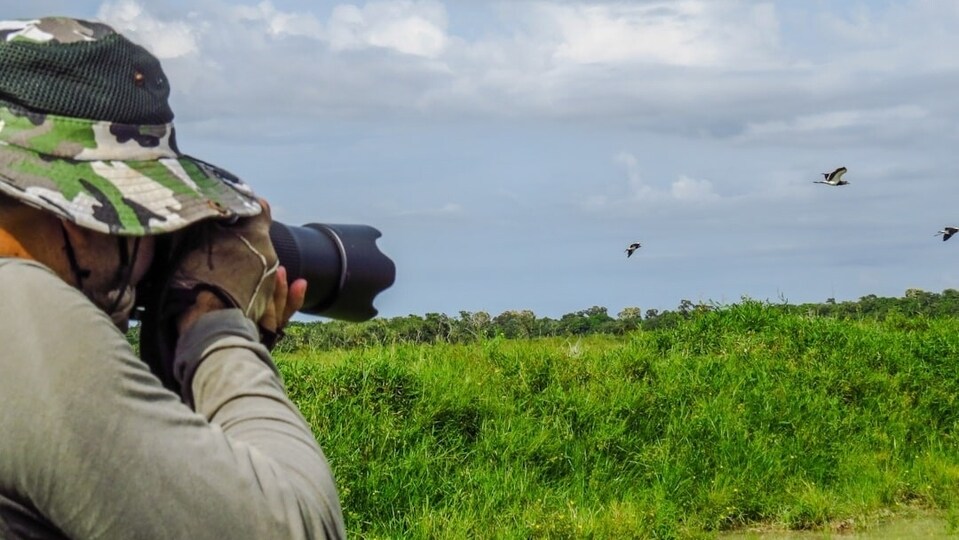
Birdwatching enhances mental health in college students, leading to higher well-being and lower psychological discomfort.
Birdwatching could be an option for college students looking to enhance their mental health. According to a recent study, persons who have nature-based experiences report higher levels of well-being and lower levels of psychological discomfort than those who do not. Birdwatching, in particular, produced encouraging effects, with bigger gains in subjective well-being and more distress reduction than more general nature exposure, such as walks. Because birdwatching is a simple sport, the findings are positive for college students, who are among those most likely to have mental health issues.
"There has been a lot of research about well-being coming out through the pandemic that suggests adolescents and college-aged kids are struggling the most," said Nils Peterson, corresponding author of the study and a professor of forestry and environmental resources at North Carolina State University. "Especially when you think about students and grad students, it seems like those are groups that are struggling in terms of access to nature and getting those benefits.
"Bird watching is among the most ubiquitous ways that human beings interact with wildlife globally, and college campuses provide a pocket where there's access to that activity even in more urban settings."
To quantitatively measure subjective well-being, researchers used a five-question survey known as the World Health Organization-Five Well-Being Index (WHO-5). This tool asks participants to assign a rating of zero through five to statements about well-being, depending on how often they have felt that way in the last two weeks. For example, given the prompt "I have felt calm and relaxed," a participant would mark a zero for "at no time" or a five for "all of the time." Researchers can calculate a raw well-being score by simply adding the five responses, with zero being the worst possible and 25 the best possible quality of life.
Researchers split the participants into three groups: a control group, a group assigned five nature walks and a group assigned five 30-minute birdwatching sessions. While all three groups had improved WHO-5 scores, the birdwatching group started lower and ended higher than the other two. Using STOP-D, a similar questionnaire designed to measure psychological distress, researchers also found that nature engagement performed better than the control, with participants in both birdwatching and nature walks showing declines in distress.
This study differed from some previous research, Peterson said, in that it compared the effects of birdwatching and nature engagement to a control group rather than a group experiencing more actively negative circumstances.
"One of the studies that we reviewed in our paper compared people who listen to birds to people who listened to the sounds of traffic, and that's not really a neutral comparison," Peterson said. “We had a neutral control where we just left people alone and compared that to something positive.” The study supports the idea that birdwatching helps improve mental health and opens up many avenues for future research. For example, future study could examine why birdwatching helps people feel better or the moderating effects of race, gender and other factors.
The paper, "Birdwatching linked to increased psychological well-being on college campuses: A pilot-scale experimental study," is published in Environmental Psychology. Co-authors include Lincoln Larson, Aaron Hipp, Justin M. Beall, Catherine Lerose, Hannah Desrochers, Summer Lauder, Sophia Torres, Nathan A. Tarr, Kayla Stukes, Kathryn Stevenson and Katherine L. Martin, all from NC State. (ANI)


