
 E-Paper



Can eating processed meats daily give you colon cancer? UK surgeon explains the link between the two

 Prefer HTon Google


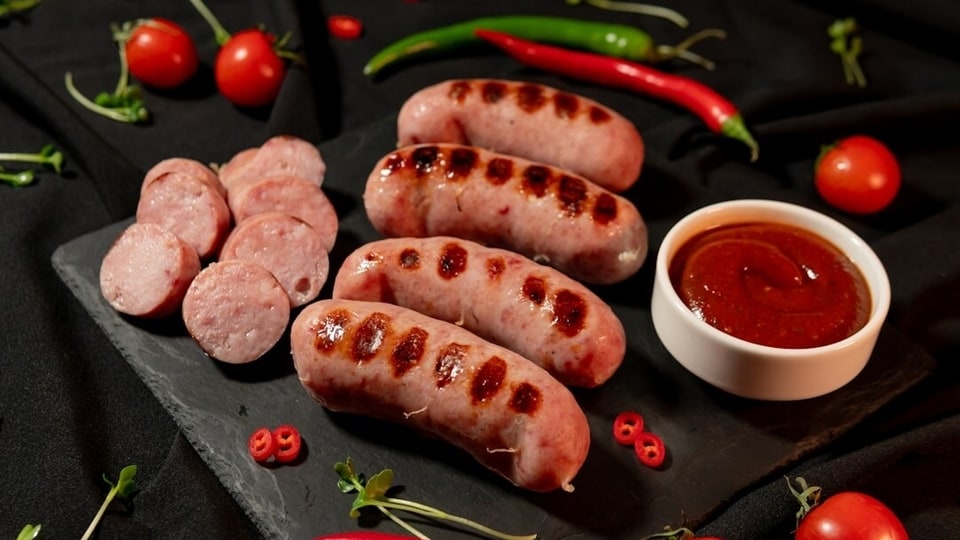
Processed meats are classified as Group 1 carcinogens, which increase you colon cancer risk. However, Dr Rajan explains that the risk is a bit more nuanced.
From sausages and smoked bacon to salamis and even certain types of meatballs, many everyday favourites fall under the category of processed meats – foods that have been preserved through curing, smoking, or adding chemicals. These meats have been classified as Group 1 carcinogens, but does this classification mean that eating processed meat daily will inevitably lead to colon cancer? Or is the risk more nuanced than it appears?
Dr Karan Rajan, a UK-based surgeon and popular health content creator, is breaking down the much-debated link between processed meats and cancer risk. In an Instagram video shared on April 4, the UK-based surgeon unpacks how serious the risk associated with cured meats really is, while also addressing whether you need to eliminate them from your diet altogether.
Breaking down the statistics
Dr Rajan highlights that cured and processed meats are classified as Group 1 carcinogens – but not quite in the way many people assume. He explains that consuming around 50 grams of processed meat daily is associated with an 18 percent increase in the risk of bowel cancer. However, this figure represents a relative increase in risk, not an absolute one.
He notes, “Eating 50 grams of processed meat daily, that's about two slices of bacon, increases your relative risk of bowel cancer by 18 percent. Your lifetime chance of developing bowel cancer is around six in 100. And if you eat processed meat daily, that goes to about seven in 100. So the 18 percent relative increase translates to about a one percent absolute increase.”
When compared to smoking, Dr Rajan points out that the scale of risk is vastly different – a smoker’s risk of developing lung cancer can be around 2,000 percent higher. To put this into perspective, far more cancer-related deaths are attributed to smoking than to the consumption of processed meats.
The surgeon explains, “Compare that to smoking. The smoker's lung cancer risk is about 2,000 percent higher. To put this in perspective, about one million cancer deaths per year are attributable to smoking versus 34,000 cancer deaths attributed to high processed meat intake. “
Other health risks
Despite the comparatively lower cancer risk, this does not make processed meats healthy or harmless. They are typically high in salt and saturated fats, which can negatively impact blood pressure, increase the risk of heart disease, and disrupt the balance of the gut microbiome.
Dr Rajan highlights, “High amounts of processed meat also brings salt and saturated fat. It's not doing your blood pressure, heart disease risk, or gut microbiome any favours. And we know the gut microbiome is a risk multiplier for many diseases.”
Do you need to cut out processed meat?
According to the surgeon, cutting out or at least minimising processed meat intake is the most sensible approach – not because it poses risks comparable to tobacco, but because it offers little to no health benefits while carrying several potential harms.
Dr Rajan explains, “Processed meat has been classified in the same category as other cancer causes like alcohol, tobacco, asbestos. But this does not mean they are equally dangerous. The IARC classifications describe the strength of the scientific evidence about an agent being the cause of cancer or hazard. It does not assess the level of risk.”
Note to readers: This article is for informational purposes only and not a substitute for professional medical advice. It is based on user-generated content from social media. HT.com has not independently verified the claims and does not endorse them.


Catch your daily dose of Fashion, Taylor Swift, Health, Festivals, Travel, Relationship, Recipe and all the other Latest Lifestyle News on Hindustan Times Website and APPs.


