
 E-Paper



Neurosurgeon explains rare brain condition linked to Japanese genes with stroke-like symptoms: ‘Looks like a puff of…’

 Prefer HTon Google


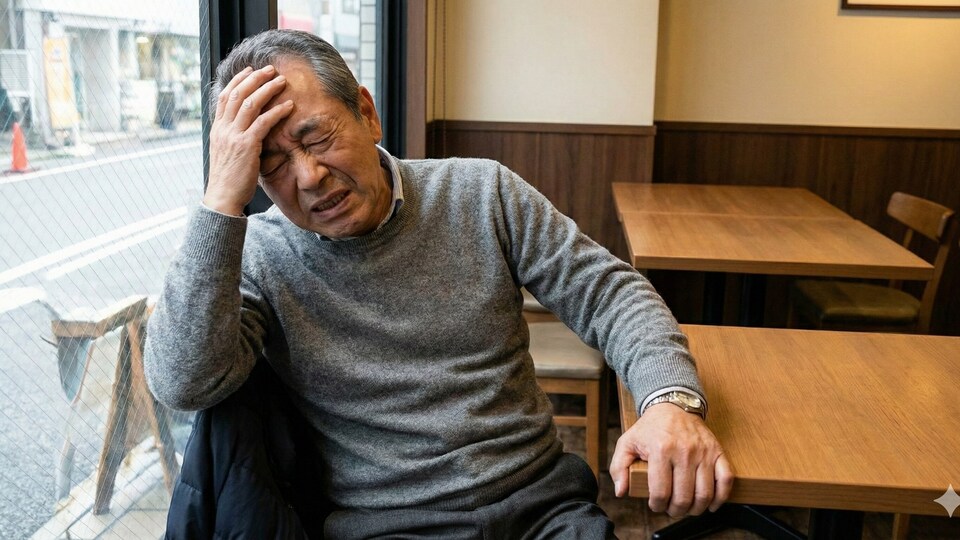
A Japanese brain disorder? Dr Grunch explains this rare neurological condition prevalent in Japan, that exhibits stroke-like symptoms but often goes overlooked.
If you’ve ever experienced sudden numbness, brief episodes of weakness, or stroke-like symptoms that vanish as quickly as they appear, you might assume it’s stress or fatigue - but in rare cases, the cause can be far more serious. A baffling neurological condition, seen most commonly in people of Japanese ancestry, can hide in plain sight and often goes undiagnosed for years. Now, neurosurgeon Dr Betsy Grunch is shedding light on this elusive disorder, sharing a patient’s story to illustrate how easily it’s overlooked and why early recognition can be lifesaving.
Dr Grunch, a board certified neurosurgeon specialising in minimally invasive spine surgery and neurotrauma, has brought attention to this rare but serious neurosurgical condition strongly linked to Japanese genes. In an Instagram video posted on December 1, the neurosurgeon recounts the case of a patient whose symptoms were repeatedly dismissed, detailing how the condition was ultimately diagnosed and the treatment she underwent.
Japanese brain mystery
Dr Grunch describes a neurological condition with the highest recorded prevalence in Japan - nearly ten times more common than in the US - noting that it’s a disorder in which “the brain literally creates backup plans in a way that you'd never expect.” She recounts the case of a 35-year-old woman who repeatedly rushed to the ER with brief, unexplained episodes that looked suspiciously similar to a stroke.
The neurosurgeon explains the woman’s condition, “She'd have numbness on one side of her face, sudden weakness, trouble getting her words out, and then everything suddenly was back to normal. She had no trauma, no infection, just these quiet neurological attacks.” Since these symptoms subsided after a short spell, she wasn’t taken seriously - and they were dismissed as effects of stress, anxiety, or a possible migraine.
What advanced imaging revealed
Once her symptoms were finally taken seriously, Dr Grunch notes that doctors proceeded with a CT angiography as part of the stroke protocol, followed by a cerebral angiography. She continues, “The imaging was the moment that everything clicked, when we pulled up the angio. It wasn't a tumor. It wasn't a clot. It wasn't a typical vasculopathy. It had a pattern so specific that any neurosurgeon who's seen it before will instantly recognise it.”
What is the mystery disease?
In her December 2 Instagram post, Dr Grunch reveals the woman’s actual diagnosis - Moyamoya disease - a rare but serious cerebrovascular disorder that demands prompt recognition and specialised surgical care. She explains, “Moyamoya occurs when the internal carotid arteries and their major branches gradually narrow, reducing blood flow to critical areas of the brain. In response, the brain tries to protect itself by forming a fragile web of tiny collateral vessels. In angiography, these look like a “moyamoya” - Japanese for “a puff of smoke.”
The neurosurgeon explains that these blood vessels are too weak to carry normal blood flow and hence, are prone to ischemic strokes and haemorrhages. She adds that the patient ultimately underwent surgical revascularisation, restoring a safer long-term blood supply to the brain and greatly reducing her future stroke risk.
Check out Dr Grunch’s full video below!
Key facts about Moyamoya disease
Dr Grunch outlines some key facts to know about this unique condition:
- Most commonly seen in children between ages five to 10 and in adults in their 30s and 40s.
- More prevalent in people of East Asian descent, especially Japan, with women being affected twice as often as men.
- Genetically, it’s strongly linked to the RNF213 variant - specifically PR4810K - found in roughly one in 70 healthy Japanese people, which explains its high prevalence in Japan.
- Can present with strokes, Transient Ischemic Attacks (TIAs), headaches, cognitive changes, or seizures.
- MRI/MRA may show chronic ischemia; angiography confirms the classic pattern.
- Best treatment is revascularization surgery (EDAS, STA-MCA bypass) to restore blood flow.
- Untreated, the risk of recurrent strokes is high.
Note to readers: This article is for informational purposes only and not a substitute for professional medical advice. It is based on user-generated content from social media. HT.com has not independently verified the claims and does not endorse them.


Catch your daily dose of Fashion, Taylor Swift, Health, Festivals, Travel, Relationship, Recipe and all the other Latest Lifestyle News on Hindustan Times Website and APPs.


