
 E-Paper



Bhopal's best-kept wildlife secret lies just an hour from the city: 100 bird species, 18 mammals and not a single TV

 Prefer HTon Google


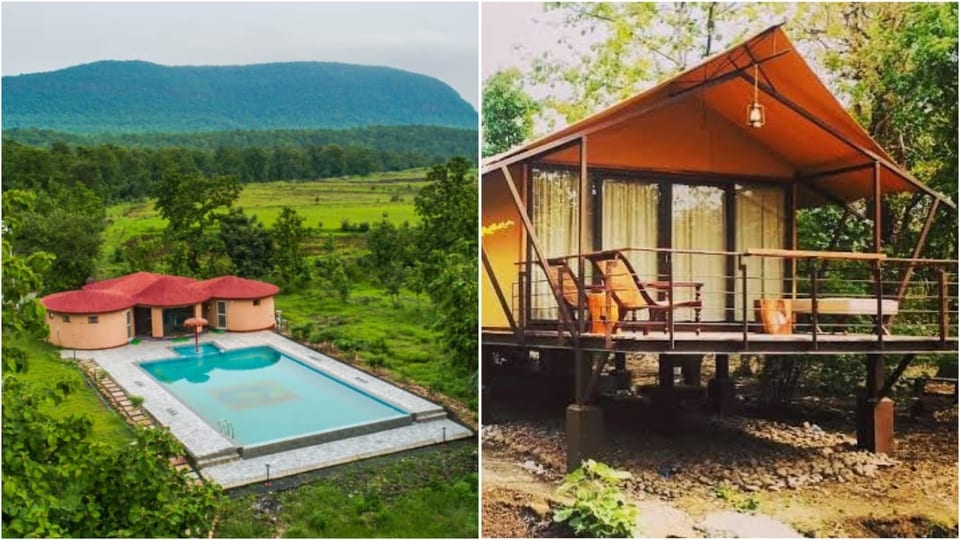
Just 60 km from Bhopal, Madhuban Eco Retreat offers a quiet forest escape with rich wildlife, birdsong, and an experience rooted in nature and sustainability.
Most people know Bhopal, the capital city nestled in the heart of India, for its lakes, biryani, and the weight of its history. But beyond its bustling streets lies a quieter, wilder side, one that many travellers overlook. Fewer know that 60 kilometres from its traffic and noise, the forest begins, quietly, almost without announcement.
Madhya Pradesh is often called India’s Tiger State, and not without reason. It holds 24 wildlife sanctuaries within its borders. Ratapani is one of the lesser-known ones, younger and less trafficked than the famous Pench or Kanha, which is precisely what makes it worth the detour. (Also read: Discovering Bandhavgarh National Park: Where roaring wildlife meets whispers of nature )
A scenic drive from Bhopal into the heart of the forest
An hour’s drive from Bhopal brings you to Madhuban Eco Retreat, though the journey itself is half the experience. The road winds through thickening green, the Vindhya mountains rising slowly on the horizon. As we drove through the jungle, our cab driver Suraj shared stories of encountering tigers at night, explaining that sightings tend to increase during summer months when tigers move closer to the city in search of water.
Stepping out of the car, I was met by the sound of birds and the smell of earth after rain. The retreat doesn’t announce itself; it simply exists within the forest, built from sustainable materials, its architecture low and earthy, as if it grew here rather than was constructed.

My cottage was modelled on Gond tribal architecture: thick mud walls that breathe with the seasons, cool in summer and warm in winter, eliminating the need for air conditioning. Across the property, Gond paintings adorned walls and quiet corners, their intricate dots and lines depicting wildlife, nature, and folklore. Created by artists from communities that have lived alongside this forest for centuries, these artworks felt less like decoration and more like storytelling.

Life inside the forest: birds, silence and sustainable living
The next morning began with a symphony of birds, a refreshing contrast to the city’s noise. As I stepped outside, the birdwatcher in me came alive. I spotted peacocks, ashy prinia, purple sunbirds, plum-headed parakeets, and Asian flycatchers among others, each sighting adding to the quiet thrill of being immersed in an untouched landscape.
One noticeable absence in the rooms was a television. The manager, Shibajee Mitra, explained it simply: no TVs, no alcohol, no loud music, and no non-vegetarian food. Eco-tourism, he said, rests on three pillars—conservation, community, and communication. The retreat exists to help guests genuinely reconnect with nature, not just be near it.

He also shared how the land was once barren, with restoration and livelihood generation forming the core vision. Families from nearby villages like Bori Dumbi and Kerry now work here, native species have been replanted, and solar panels generate 25 KW of power. After dark, lighting is kept deliberately minimal so that the forest’s original inhabitants remain undisturbed.
Stories of vision, roots and sustainable growth
The retreat has roots that go back further than the land itself. I spoke with Samir Somaiya, Chairman of the Somaiya Group, about what brought Madhuban into being, and the answer, as it turned out, began in childhood:
“This journey goes back to my grandfather, K J Somaiya, who believed in building something meaningful in the heart of India. As a child, I remember visiting Bandipur with my father and being deeply moved by the forest. When I later saw our land at the edge of the Ratapani forest, it felt like an opportunity to bring that inspiration to life. Madhuban is envisioned as more than a retreat it is a space to engage with the wilderness, while working with local communities to support livelihoods, education, and conservation, creating something meaningful today and sustainable for the future.”

Food, forest and slow living
The food follows the same philosophy, unhurried, honest, and rooted in the land around it. Cooked on a traditional chulha, every meal is fresh and organic, sourced directly from the retreat’s own farm. Local delicacies arrive at the table like small introductions to the region: mahua chila, seasonal mushrooms, sarson ka saag with makka roti, and the deeply satisfying dal baati churma. Nothing here performs for the guest; it is simply good food, made the way it has always been, tasting exactly of where you are.

Exploring the surrounding forest is an experience in itself. On an early morning bird walk with naturalist Anup Mourya, I learned about the region’s rich biodiversity. The sanctuary is home to nearly 100 species of birds and around 18 mammals, including tiger, leopard, sloth bear, nilgai, and chinkara, along with several reptiles, amphibians, butterflies, and dragonflies.
Though we weren’t lucky enough to spot a tiger, we did come across pugmarks and claw scratches on trees, clear signs of their presence. The dry deciduous forest, with its muted tones, was occasionally lit up by the striking red of blooming palash flowers, adding bursts of colour to the landscape.
How nature and history shape the Ratapani experience
As we walked deeper, we spotted birds like drongos, warblers, popularly called the ‘seven sisters’ and the Indian pitta, also known as navranga. At one point, I came across a fascinating fan-throated lizard with snake-like patterns, known for the fan-shaped structure on its throat, a reminder of the forest’s quieter yet equally captivating inhabitants.

The forest is equally rich in plant life, each with its own significance. Tendu leaves are used to make bidis, teak trees are often referred to as the gold of the jungle, and several plants serve medicinal or practical purposes for local communities. One particularly striking tree had a trunk resembling crocodile skin and is known for its ability to store water, making it a vital resource in dry conditions.
Beyond the sanctuary, the region offers several offbeat attractions such as Bhimbetka Rock Shelters, Ginnorgarh Fort, Salkanpur Temple, Saru-Maru caves, and Bhojeshwar Mahadev Temple, ideal for those seeking history and culture without the crowds.

As evening fell, the retreat became a different kind of orchestra, crickets, insects, the occasional unidentifiable call from deep in the trees. Above it all, a sky genuinely dark enough to show its stars. I stood there longer than I meant to.
The last morning, I sat with the Vindhya mountains in front of me and the forest at my back. The city would reassemble itself around me soon enough, the noise, the pace, the thousand small urgencies. But for that hour, there was only the stillness that comes when you've genuinely stopped.
Ratapani won't give you the theatrical wildlife experience of the famous reserves. What it offers is subtler, and maybe more lasting, the sense that the forest is indifferent to whether you notice it, and more alive for that.
This article was produced following a two-night stay by the author at Madhuban Eco Retreat, on an editorial invitation.


Catch your daily dose of Fashion, Taylor Swift, Health, Festivals, Travel, Relationship, Recipe and all the other Latest Lifestyle News on Hindustan Times Website and APPs.


