
 E-Paper



Featherweight champions: What it takes to map India’s birds
Bird Count India works with over 70 organisations and citizen science groups to collect, collate and interpret bird sighting data. Even in the pandemic year, they say, there have been interesting finds.


The common rosefinch winters almost entirely on the Indian subcontinent. It spends the rest of the year spread across Asia and Europe, but from November to February, hunkers down here, waiting for the weather to improve before it sets off on its travels again.
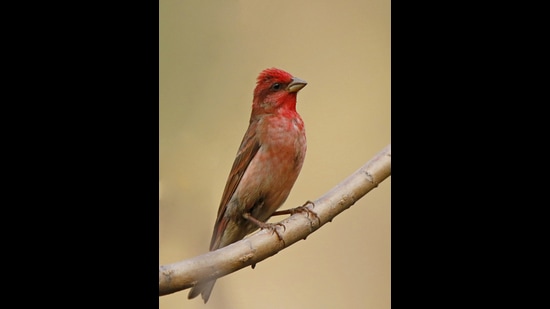
An animated map put together by Bird Count India (BCI), using data collected globally and from numerous bird counts in India, shows the massive journeys undertaken by this little bird (it’s smaller than a house sparrow).
Such maps, for a range of species, are now available on the revamped website birdcount.in, as part of BCI’s grand effort to collect, consolidate and represent data from across the country. As more data comes in from India’s growing number of birders, and more ways of representing it become available, BCI aims to create interactive and accessible ways to show how many of which species are found where and when, where they go when they’re not in your backyard, and how a species reacts to changes in its habitat.
Already, it draws on millions of birding observations from over 70 organisations and citizen science groups in India that conduct sighting and counting excursions through the year.
“We work with them to increase collective knowledge about bird distributions and populations,” says Mittal Gala, a coordinator with this Bengaluru-based initiative founded in 2013. Gala works alongside Suhel Quader, a conservation scientist, and Ashwin Vishwanathan, a research associate.
BCI also conducts the Great Backyard Bird Count in India every February, a four-day event in which birders spend 15 minutes per day recording on a checklist the birds they see and hear. The 2021 edition concludes on February 15.
BCI collaborated on the first global GBBC, launched by the Cornell Lab of Ornithology, in 2013. Two hundred birders from India took part that year, 438 checklists were submitted and 537 species recorded. For a sense of how interest in birding is growing in India, GBBC 2020 had over 2,000 birders from 309 districts who uploaded 24,966 checklists and recorded a total of 924 species, accounting for about 70% of all bird species known to occur in India.
Cornell’s popular eBird website and app are used to record this data. BCI manages the eBird platform in India, coordinating the collection of data from India, interpreting it (as with the common rosefinch map), and spreading awareness through its websites and social media pages.
So which are the most commonly occurring birds in the country? Surprise, surprise, the common myna beats out the cunning crow and pesky pigeon for top spot across the country. Except in western India, where pigeon rules the roost.
“This is just a small example of what we can learn from the data collected from the four-day events,” says Gala.
One challenge BCI still struggles with is finding birders in regions of data deficiency. Uttar Pradesh, Bihar and Haryana usually see the least representation.
But even through 2020, Bird Count India was busy. “Birdwatchers who generally like being outdoors, some who even travel to watch migrants and rare birds, spent a lot of time listing in their balconies, on rooftops, in gardens and backyard or local patches of green,” says Gala. “And they made some cool sightings.”
Highlights from last year included a few firsts for the eBird portal: a willow warbler in Kerala; a Japanese thrush and a Sichuan leaf warbler in Arunachal Pradesh; and a Eurasian oystercatcher in Uttar Pradesh.
Catch your daily dose of Fashion, Taylor Swift, Health, Festivals, Travel, Relationship, Recipe and all the other Latest Lifestyle News on Hindustan Times Website and APPs.


