
 E-Paper



To develop an eye for quality images takes time, says photographer Aarzoo Khurana

 Prefer HTon Google


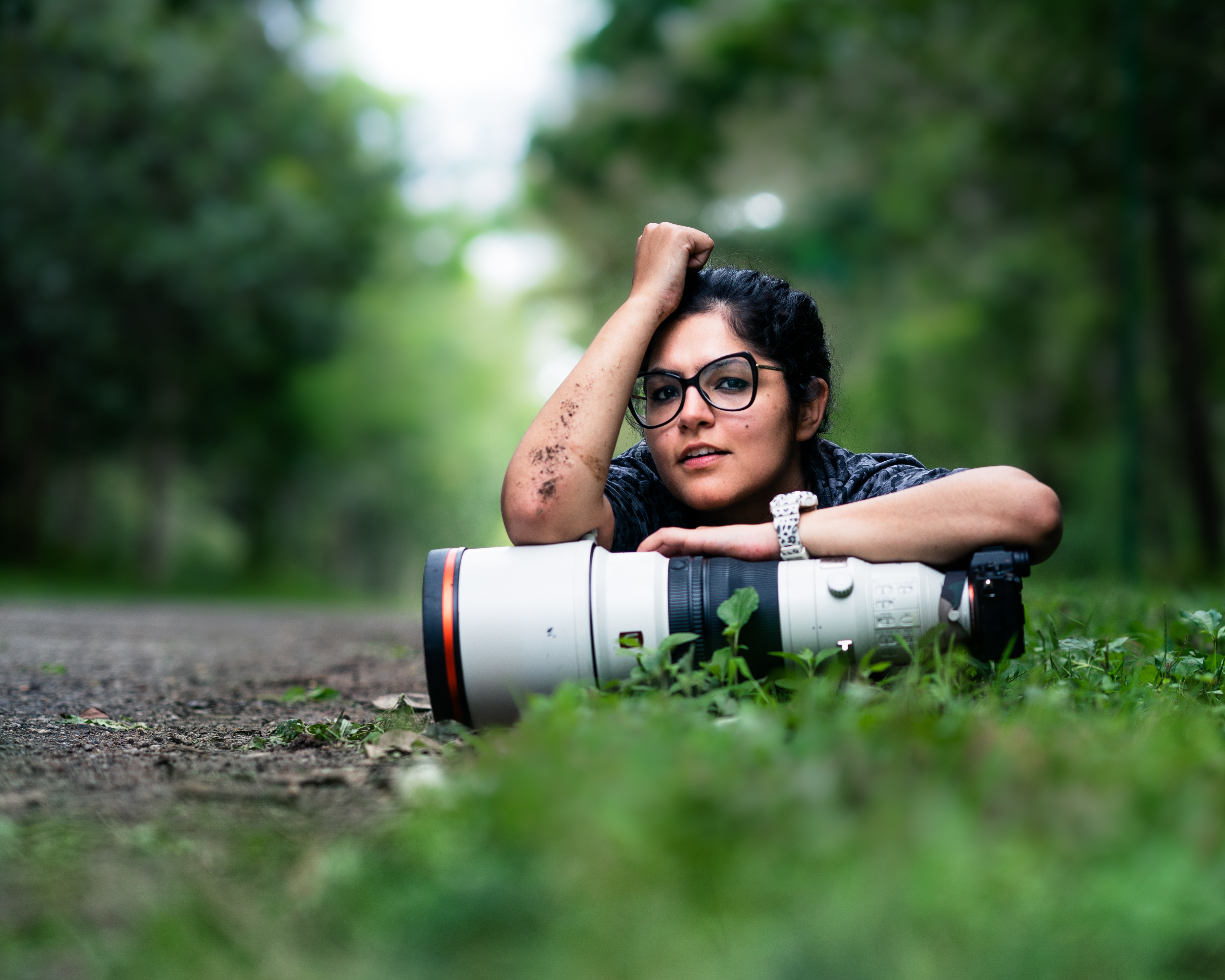
What started as an occasional hobby, turned into a career in wildlife photography after a holiday in the wild, for Aarzoo Khurana. “I went on my first wildlife trip and have found no reason to shift my attention elsewhere since,” recalls the shutterbug, who has travelled to national parks across India.
What started as an occasional hobby, turned into a career in wildlife photography after a holiday in the wild, for Aarzoo Khurana. “I went on my first wildlife trip and have found no reason to shift my attention elsewhere since,” recalls the shutterbug, who has travelled to national parks across India.
She starts talking to us about her journey and busts a few myths around photography.
Question: Trace your journey in to the world of photography. What was the starting point of your career? How did you approach it to become the fine photographer that you are today?
Answer: As a child, I was fascinated by the camera. When I turned 10, I asked my father to get me a camera. Cameras back then were super expensive, even the basic bodies. It took a while but I managed to convince him that I could handle a piece of such expensive equipment, and he gave me his old camera. Gradually, the film camera was replaced by a point-and-shoot, which was later replaced by a basic Digital SLR (DSLR) when I was in college. I began with street photography, but birds, especially in flight, used to catch my attention. Soon I turned to wildlife after I went on my first wildlife trip, and have found no reason to shift my attention elsewhere since. I used to click common subjects like domestic cats and eagles in flight -- a fascinating sight to behold. And then turned to the baby monkeys -- the cute, curious, and remarkably articulate creatures in their own little-monkey ways. Those were the three best subjects that I could easily find around my place because traveling wasn’t much of an option in the beginning for usual reasons. A female and wildlife photography don’t go together that easy. So, there were discussions, a lot of them actually, with a lot of voice modulation, as and when required. Besides the usual struggle, my father always wanted me to prepare for the judiciary. I came halfway. I finished LL.B. and started practicing. Time was an issue too. However, all this while, photography became a part of me.
I can’t quite look back and put my finger at the precise moment when I realized that it was wildlife photography that I wanted to do principally. It just happened although I do recall a moment of realization in Bharatpur. It was peak winter, and we were freezing as we went to shoot Sarus Cranes early morning. When I was carrying my gear (which was pretty heavy) and walking towards that spot, for a few moments I thought wildlife photography was not for me. It felt too demanding, both physically and mentally. But after spending a couple of hours there, I started looking at the images I had managed to click. In those photos, I came across an image of Sarus Cranes looking up and calling with mist in the background -- it looked heavenly. In that moment, I felt I needed to be that connection between the wildlife and the outer world, I needed to be the storyteller of the woods.
Question: Where all have you travelled for photography? Which locations are paradise for photographers and why?
Answer: I have been to a number of national parks. Corbett, Ranthambore, Kaziranga, Great Himalayan National Park, Nagarhole, Kanha, Pench etc.
All these forests are extremely beautiful. From a photographer’s point of view, the preference depends upon the kind of image you are looking to create. Two of the places I am always open to visiting are Corbett and Kanha. Besides these two, there is a bird sanctuary called Keoladeo National Park in Rajasthan, which is a must-visit for every photographer. It offers picturesque landscapes, beautiful lighting conditions, and innumerable opportunities for some breathtaking photographs.
Question: How important is research on a photography subject?
Answer: If you have an image in mind, some research does go into getting that image. It is important to know the behaviour of the subject as well as the place you are visiting.
For instance, if you want to shoot a backlit image of an elephant mud bathing in the golden hour, a Corbett tour in November or January, or February will not get you the shot. You need to go to Corbett in March and April for such images because, well, elephants mud bath to protect themselves from the scorching heat. Besides, it also protects them from insects. So, what they do is bathe in the river first and then come out to bathe in the mud. And that won’t happen in the winters.
Apart from understanding animal behaviour, you also need to know a bit about the place you are visiting. For this image of elephants here, you need to know that elephants take mud baths in summers, the image was shot in Corbett because there are elephants in Corbett and to experience summers, April and May are the months to visit Corbett. So, yes, some research is very important.
Question: Is it important to have right equipment for your subject or you think that passion for the art is enough to create a visual?
Answer: It is the balance between the two. There are images that are equipment-centric. There are a lot of action shots that are extremely difficult to manage on the basic equipment. Besides, the right equipment saves you the disappointment of a failed attempt at the shot you had in mind. As of now, I am using a camera that gives me 20 frames per second, which means 20 options to choose from in one second. I can pick the best frame from the 20 options I have. If I were on a gear with, say, 6 fps, you can imagine how restricted the choice would have been. And in wildlife, a fraction of a second can literally make or break an image.
Question: Any difficulties you have faced in photography? How did you overcome that?
Answer: Wildlife photography is extremely challenging both physically and mentally. We leave for safaris early in the morning, and the temperature inside the forest is usually extreme. During the winters, mornings are freezing and the summer noons are scorching. Besides, you have to work with heavy gear for long hours. Those are some of the general difficulties that one faces on all wildlife photography projects.
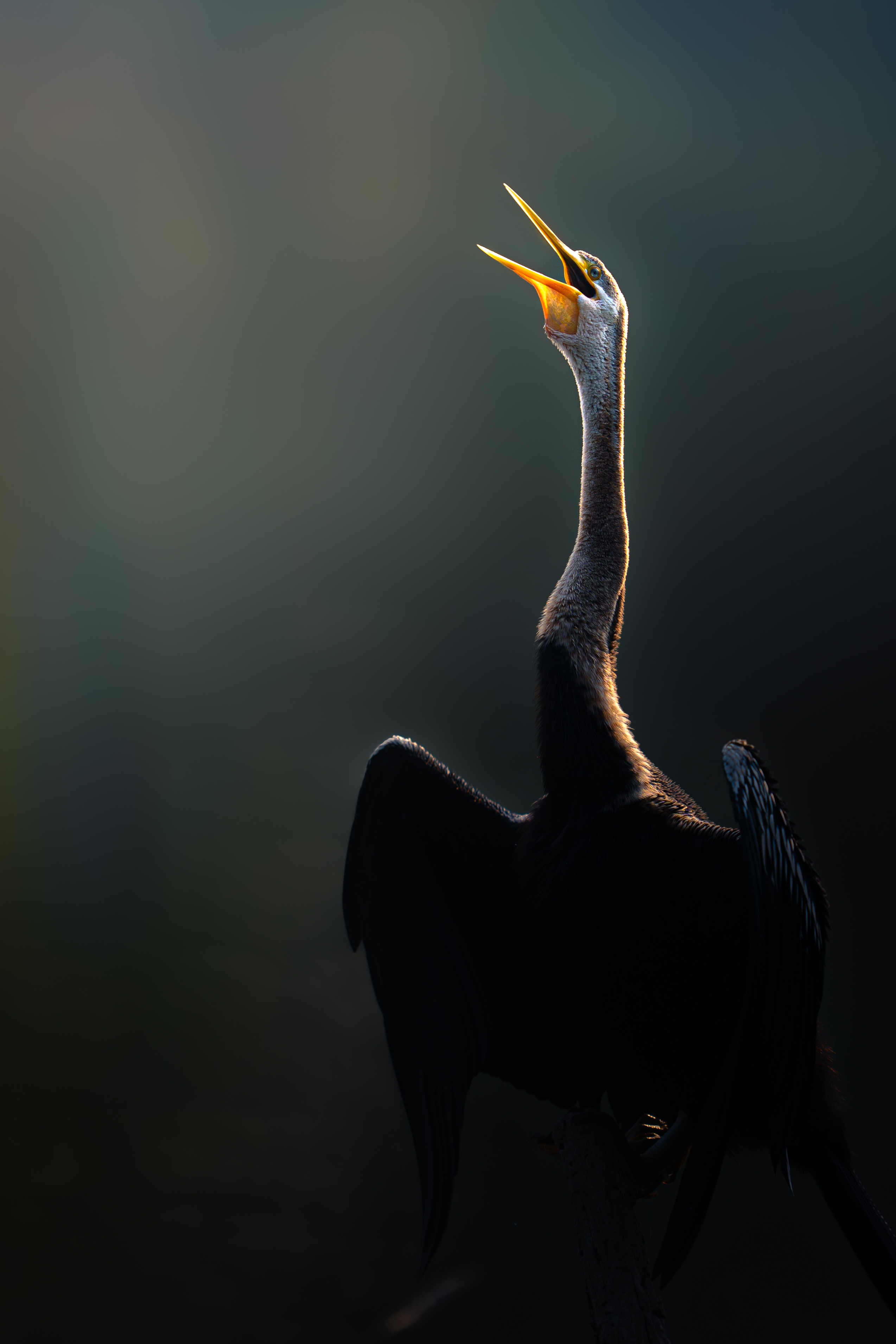
And then there are those that you encounter when you want to get a specific image, but circumstances make it difficult. Like, I always wanted to capture an Indian Darter tossing a fish, which is not an easy image to get, for the neck of a Darter is pretty thin and it gives you only a few seconds when it tosses a fish, which it does pretty quick. It is extremely difficult to maintain focus on the bird, which is precisely what is required to get the image I wanted. I had been trying to capture that image for four years with little success before I finally got it this February. I used to travel to Bharatpur, sit in front of a Darter and keep trying the shot, but it wasn’t happening. In February 2021, I managed to release the shutter at just the right time without losing focus, and there it was. Perseverance had paid.
There are still shots that I am still looking for, and have not been able to manage so far, like those of Western Tragopan and Monal. I went on a trek to the Great Himalayan National Park to capture the birds, but couldn’t get the shot although I saw the Monal many times. Every time the situation made the shot impossible. Sometimes it was a little too windy, sometimes the subject wasn’t cooperative and sometimes the terrain was such that I could not really stand and manage to operate the camera. But that’s how wildlife photography goes.
Question: Your take on some photography myths?
Being a photographer is so easy.
Well, I can’t really talk about other genres but wildlife photography is physically and financially draining. Being a female makes things more complicated. First, it is a little difficult to make your family understand your passion, and second, it is anyway difficult to bag projects, if you want to make a profession of it.
Great photos require expensive gear.
Not really. A Ferrari can’t win you the race if you don’t know how to drive.
Shoot as many photos as you can.
Initially, this might work. However, the aim is always to increase the keeper rate by cutting down the images that need to be eventually deleted for lack of quality. It’s not like a subject in every lighting condition can fetch you a good image. The idea is to develop an eye for the right kind of image and anticipate the right moment, and not just pick up the camera and go clicking indiscriminately in the fond hope of landing a good picture eventually. You might, but that would be after loads of useless ones.
You need a huge portfolio.
Not huge, but big enough for people to give an idea of your work.
Manual mode is the best mode.
Ah! That’s the most common question. Well, manual mode can certainly help you a great deal in polishing the fundamentals of photography to some extent, but calling it the best mode is reading too much into it. Most of the time I am on aperture priority (a semi-automatic mode), which for me is one of the perfect modes for wildlife photography. Can’t really talk about other genres but in wildlife photography, manual mode is sometimes a lot of unnecessary work.
Avoid shooting in bad lighting.
Yes, if it is not good enough for the picture you want to click, but bad lighting is not the same thing as low light because wonderful images can be and have been clicked in low light as well. However, if you want to click a brightly lit picture and you have low light, then low light is bad light for you for that kind of picture. Obviously, it goes the other way round, too, if you want a lowlight image.
Always keep the horizon straight.
Straight lines and levelled alignments are generally preferred by human eyes; however, there are times when the horizon is intentionally tilted as part of the composition or to tell a story.
Don’t put the subject in the middle.
It is believed that our eyes read an image from left to right and if the elements are placed off the centre, we can play with visual balance a great deal. Besides, if the elements are off centre, our eyes automatically look for a relationship between the elements due to some sense of tension created. This helps a lot in conveying feelings like harmony or uneasiness or whatever the photographer wishes to convey. However, there are times when we wish to place the subject right at the center of gravity which in a photograph is the dead center. Usually, eyes travel to the area of the highest pull, and hence placing subjects in the dead center is pretty helpful in portraits.
Question: Any advice you want to share for other photographers out there?
Answer: Don’t think too much; creativity comes later and takes time. To start with, just pick whichever camera you have, or rent or borrow one, and look for a visual that might make a good picture, and click. Be patient, give it time, and don’t start showcasing your work too soon.
Begin by working on the fundamentals of photography, and develop an eye for quality images, which would happen only gradually. Keep practicing. It takes time, and there are no shortcuts. And if you want to step into the forests for your images, respect nature. More importantly, don’t disrespect it, for we need it, and not the other way round. Besides, it can make us pay both individually and collectively without a hitch. Also, it’s not very forgiving. Exercise due caution and restraint in your interaction with nature and wildlife.
Question: Your favourite photography quote?
Answer: “When people look at my pictures, I want them to feel the way they do when they want to read a line of a poem twice.” -- Robert Frank


