
 E-Paper



Caste, not religion, at centre stage between Congress and JD(U) candidates in Katihar
Sitting MP Anwar, who is seeking re-election for the sixth time from the seat, having won it first in 1980, appears to be in an uncomfortable electoral position, banking heavily on his own vote base among minorities and OBCs as well as senior ally RJD’s “Muslim-Yadav’ combination.


Known as a constituency where religious polarisation has sealed the fate of winning candidates in Lok Sabha polls in recent years, Katihar faces different poll dynamics this time.
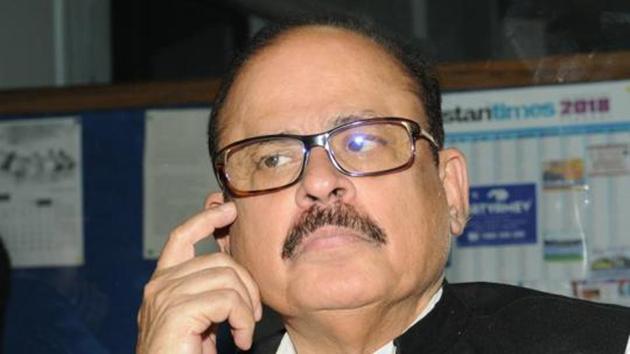
It’s the caste element that has come to centrestage and religious passions have taken a backseat in the electoral battle, which is a straight contest between Grand Alliance backed Congress candidate Tariq Anwar and Janata Dal (United) candidate Dulal Chandra Goswami this time.
Sitting MP Anwar, who is seeking re-election for the sixth time from the seat, having won it first in 1980, appears to be in an uncomfortable electoral position, banking heavily on his own vote base among minorities and OBCs as well as senior ally RJD’s “Muslim-Yadav’ combination. Anwar had switched to Congress last year by leaving the Nationalist Congress Party( NCP).
But Anwar is not alone, who is banking on the OBC and minority vote bank. Goswami, the JD(U) nominee who is making his Lok Sabha election debut, is also banking on OBCs, Muslims and scheduled castes to secure a victory. Muslims alone account for 37-38% of the electoral population, while 40% are OBCs, 14% are SCs/STs and 9% belong to forward castes.
“This time, the voting would be on caste lines. The voting pattern would not be confined to religious lines alone and OBCs, including Yadav votes, would be influencing the poll win of any candidate,” said, Babloo Kumar, a local in Katihar, belonging to the EBC category. He said Tariq having the won the seat last time could face challenge from Goswami, who belongs to the EBC caste.
Traditionally, a BJP seat where the poll narrative has been focused on ‘secularism vs communalism,’ the seat is not witnessing a fervent saffron upsurge this time owing to BJP’s bid to allot the seat to JD(U). This is seen more as a calculated gameplan by the NDA to play inclusive politics by showcasing chief minister Nitish Kumar’s secular credentials in entire Seemanchal belt dominated by Muslims.
All the four Seemanchal seats- Kishanganj, Araria , Purnia and Katihar- are being contested by JD(U). In the 2014 Lok Sabha polls, Tariq as a NCP candidate had clinched the Katihar seat by a comfortable margin of 1.14 lakh votes, defeating his nearest rival BJP’s Nikhil Kumar Choudhary.
Development and Caste
A constituency where poverty and migration are rampant, Congress and JD(U) nominees are talking of development of the region but people’s reaction on performance of the local MP is mixed. “ We have not seen the local MP visit Katihar much in last five years. Yes, roads have come up and the power situation is good. But issues like clean drinking water, traffic congestion in the city and better healthcare should be addressed,” said Anwar, a resident of Katihar town, who felt the local MP had a fair chance of winning.
In Manshahi, 10 km form Katihar town, Kurhan Ali does not seem to mind about MP’s performance much, saying he wants to change the dispensation at the centre because of the pains he underwent during the demonetisation exercise in 2016. At Manihari, 26 kms from Katihar and considered one of the backward areas of the district dominated by Yadavs and EBCs, the locals are not happy with the delay in construction of the Manihari bridge connecting Sahebganj (in Jharkhand) despite the foundation stone laid two years back
Vote split
Poll observers feel the election outcome in Katihar would depend on how both Tariq Anwar and Goswami manage to overcome the vote split in their base votes due to various political factors. While Tariq, having switched to Congress, now has the backing of RJD and small allies to cobble up votes of OBCs and Muslims, the sitting MP is facing trouble from his previous party NCP.
NCP has fielded its own candidate and former MLA Mohammed Shakur, who is trying to win support of section of Muslims,especially SherShahbadis( a section of Muslims who have settled from neighbouring West Bengal).
“If Shakur manages to split the Muslim votes, it could impact the poll fortunes of Tariq Anwar.Last time, Anwar had a comfortable win because of Ram Prakash Mahto of JD(U) bagged 1.07 lakh votes,” said Rajesh Thakur, a local businessman in Katihar. Many feel, the support of CPI-ML( Liberation) to Congress, especially in Balrampur constituency which has a good number of Muslim voters, could give an edge to Anwar.
Similiarly, the NDA camp too is facing its own challenges with speculation rife that local BJP cadres are not happy with the party having allotted the seat to a JD(U) candidate. This was quite evident when BJP’s MLC and influential local politician Ashok Agrawal had threatened to file his candidature from the seat as an independent but was mollified by the BJP brass, prompting Agrawal to withdraw from the race. “There is a bit of dissension in local BJP camp and if the workers do not show much participation in poll canvassing, it could have an adverse impact,” said a local JD(U) leader, wishing not to be quoted.
Candidate speak
With only four days left for the polling in Katihar, campaigning has gained a feverish pitch .While Anwar is seeking support promising development and Congress’ fight against BJP’s divisive agenda, Goswami is relying on sentiments of him being the son of the soil and banking on CM Nitish Kumar’s development initiatives.


