
 E-Paper



Lok Sabha elections 2019| Day 1: Long queues but lower turnout
The Election Commission of India (ECI) said the first phase of elections, in which 140 million voters had been eligible to participate, was largely peaceful and the voter turnout varied.


Tens of millions of people voted on Thursday to choose 91 members of the Lok Sabha in the first phase of the 17th Lok Sabha elections , marred by stray incidents of violence, clashes between rival party workers, and complaints of faulty electoral rolls, electronic voting machines (EVMs) and indelible ink.
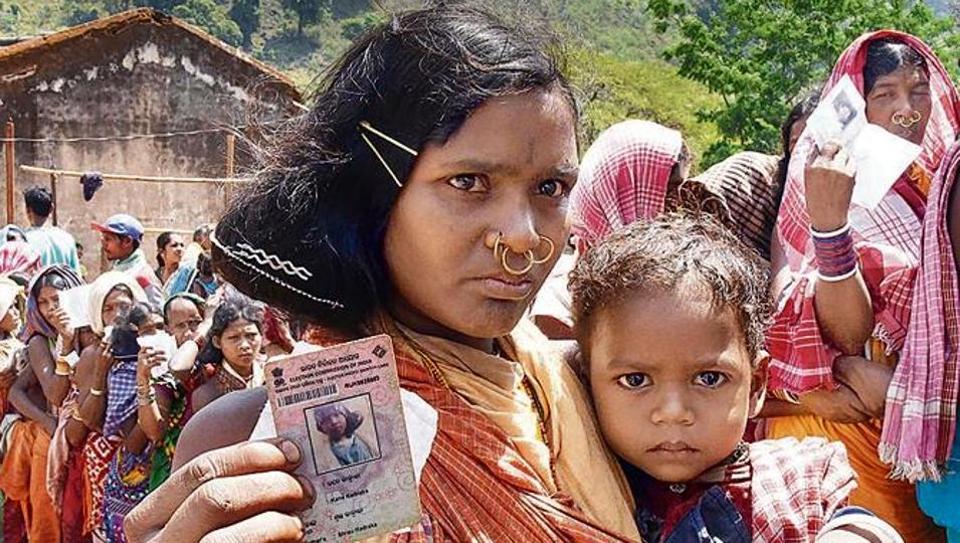
The Election Commission of India (ECI) said the first phase of elections, in which 140 million voters had been eligible to participate, was largely peaceful and the voter turnout varied. Eighteen states and two Union territories were covered by the first phase of the seven-phase general election,
Voting also took place on Thursday to elect representatives to all 175 assembly seats in Andhra Pradesh, 32 in Sikkim, 57 in Arunachal Pradesh (where the Bharatiya Janata Party has already won three seats unopposed) and 28 of 147 seats in Odisha.
The last day of polling is on May 19, and the counting of votes for all 543 Lok Sabha seats will be taken up and results declared on May 23. A total of nearly 900 million people are eligible to exercise their franchise in the seven-phase general election.
Voter turnout varied from state to state. It was 60% in Telangana and 66% in neighbouring Andhra Pradesh.
Turnout was 69%, 60% and 78% , respectively, in Sikkim, Mizoram and Nagaland, in which the elections were concluded in one phase, deputy election commissioner Umesh Sinha said. In Baramulla in the Kashmir valley and the Jammu region, it was 32.29% and 67.39%.
In Manipur, the voter turnout was 78.2% and Tripura recorded the highest polling at 81.8%. Assam recorded a voter turnout of 68% and West Bengal 81%
Two political activists, one each belonging to the Telugu Desam Party and YSR Congress Party, died in election-related clashes in Andhra Pradesh, where polling took place in all 25 Lok Sabha wards simultaneously with the assembly polls. At least two others were injured in clashes between the two parties, which are engaged in a bitter for power in the southern state. In neighbouring Telangana, voting in all 17 Lok Sabha wards was peaceful.
Prime Minister Narendra Modi, the star campaigner for the ruling Bharatiya Janata Party (BJP), and his principal challenger, Congress president Rahul Gandhi, voiced confidence that their parties would emerge victorious, before polling ended in the first phase.
At an election rally in Silchar in southern Assam, Modi said the mood of the country could be gauged from the size of the crowds at his rallies. “There is a strong wave in favour of us,” he said. “The people of India have made up their mind. The opposition has no way out....These elections will decide which direction will India move,” he said.
In Uttar Pradesh’s Rae Bareli, where he accompanied his mother and United Progressive Alliance chairperson Sonia Gandhi for her to file her nomination papers, Congress president Rahul Gandhi was combative. “There have been many people in Indian history who had the arrogance to believe that they are invincible and bigger than the people of India. Narendra Modi has done nothing for the people of India in the last five years. His invincibility will be in view after the election results.”
The BJP has made nationalism and national security its main election plank following the February 14 terrorist attack on a bus carrying Central Reserve Police Force (CRPF) troopers that left at least 40 dead. It was followed by an Indian Air Force strike on a terrorist camp run by the Jaish-e-Mohammed in Pakistan’s Balkot.
The Congress, in it manifesto, has promised a minimum guaranteed income of Rs 72,000 a year to the poorest 20% of India’s population. It has promised a more liberal political order that would include dropping the sedition law and reviewing the Armed Forces Special Powers Act (AFSPA).
Amid reports that EVMs had malfunctioned in several parts of the state and delayed polling, Andhra Pradesh chief minister and TDP president N Chandrababu Naidu said he was considering approaching the Supreme Court seeking a directive to the ECI for a voter verifiable paper audit trail (VVPAT) of at least 25% of votes cast through the machines.
“I have been advocating the usage of ballot papers instead of EVMs, which can be tampered with. But the Election Commission has not bothered. At least now, it should have a rethink on conducting the polls with ballot papers,” Naidu said.


