
 E-Paper



Lok Sabha elections 2019: Muslims hope their vote will translate into better facillities
Concentrated in constituencies such as Chandni Chowk, North East Delhi and East Delhi, Muslim voters said their neighbourhoods are the most deprived segments of the national capital, lacking basic civic amenities.

 Prefer HTon Google


Muslim voters, whose votes play a decisive role in at least three parliamentary constituencies in the national capital, on Sunday said they hoped that the winning candidates address issues that can improve their lives and not just treat them as a vote bank.
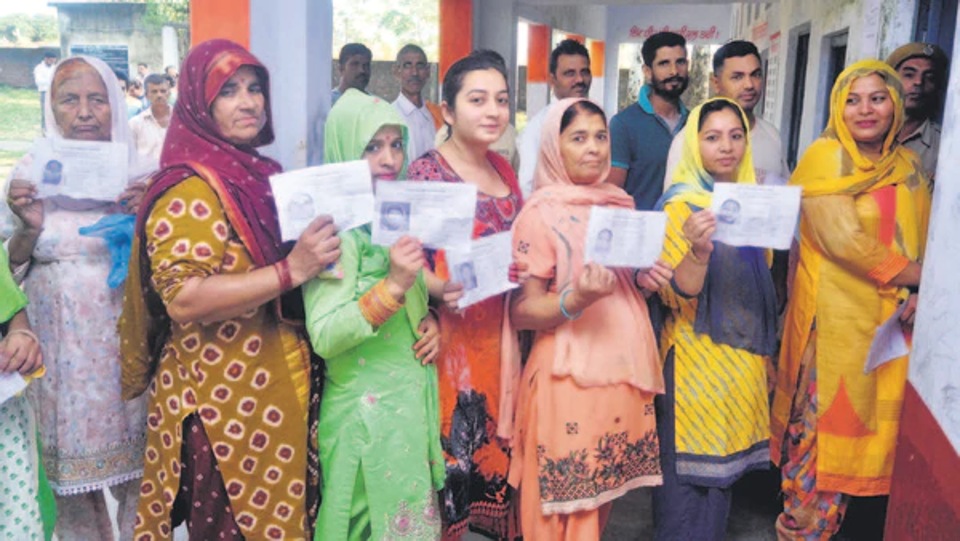
Concentrated in constituencies such as Chandni Chowk, North East Delhi and East Delhi, Muslim voters said their neighbourhoods are the most deprived segments of the national capital, lacking basic civic amenities.
“We do not even have basic facilities like proper roads, sufficient number of schools, hospitals and colleges in areas where Muslim are concentrated. The politicians seek Muslim votes every election, but when it comes to delivering work, they forget our issues,” Bilal Ahmed, a resident of Seelampur, said.
Muslims residing in Jafrabad and Mustafabad, the areas dotted with unauthorised colonies, said that there are very few schools in their area as compared with the dense population in these neighbourhoods.
“The population here is very high. There is only one government senior secondary school in Mustafabad. There is no government hospital in near our locality. But nobody is concerned about our issues,” Shabnam Khatoon, an anganwadi worker and a resident of Mustafabad, said.
The Muslim community comprises approximately 20% of the Delhi’s total population. The highest number of Muslims is in North East Delhi (23%) followed by East Delhi (16%) and Chandni Chowk (14%).
Mohammad Urooj, 25, a resident of Jamia Nagar in the East Delhi constituency, said education and employment are his main electoral voting issues.
“We need better schools, colleges and job opportunities in these areas, on par with other parts of the city,” he said.
For Farhan Shabana, a homemaker from old Delhi’s Sadar Bazar locality, jobs for her two sons is a major concern.
“Every time elections are around, political parties promise jobs, education and so many other things. The community has remained behind in these sectors. I just hope my sons who are about to complete their graduation get good jobs soon and help the family,” Shabana, whose husband works at a cloth store, said.
Old-timers said the vote this time will, however, be split between the Congress and the Aam Aadmi Party (AAP).
“This time, both the AAP and the Congress have tried to garner the support of the community after their alliance did not work out. The parties have aggressively campaigned against each other. The fight will be fierce during these elections,” Mohammad Nazeer, 65, a resident of Okhla’s Batla House, said.


