
 E-Paper



UP hikes electricity tariff, increased rates to affect domestic consumers most
The last tariff increase was in November 2017, when the commission had announced a 12% average hike. No tariff revision was made in 2018 since government-owned discoms had sought no change in view of Lok Sabha polls in the state.


The Uttar Pradesh government increased electricity rates in the state on Tuesday when the UP Electricity Regulatory Commission (UPERC) announced its retail distribution tariff order for the current financial year, bringing about an average increase of 11.69% in power tariffs charged by the state government. The increased tariff, expected to affect domestic consumers the most, is expected to fetch an additional revenue of ₹3,000 crore.
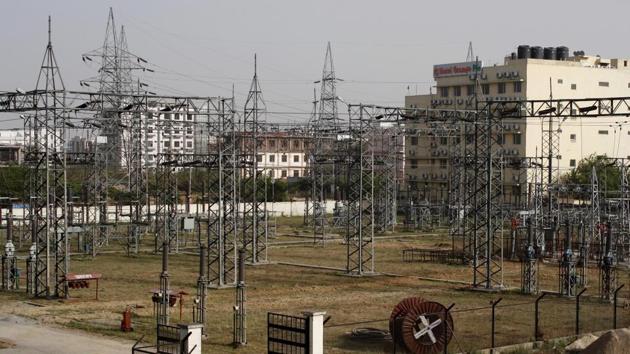
The hike for the domestic metered category consumer is in the range of 8% to 12% while industrial (heavy) consumer category has been given a tariff hike in the range of 5% to 10%. For agricultural metered consumers, the increase is of 9%. The BPL or lifeline consumers using upto 100 units have been spared the hike.
The last tariff increase was in November 2017, when the commission had announced a 12% average hike. No tariff revision was made in 2018 since government-owned discoms had sought no change in view of Lok Sabha polls in the state. The UP Power Corporation Ltd (UPPCL) has sought an average increase of around 20% for 2019-20 to bring in the expected revenue of ₹8,337.74 crore for the fiscal.
The highest increase this time, like in 2017, is made for unmetered rural domestic consumers to encourage them to switch to meters. Though the commission’s order did not specify, in percentage terms the hike for this category comes to around 25%.
The UPERC, has, however, abolished the regulatory surcharge for consumers of all categories. Till now, consumers had to pay regulatory surcharge at 4.28% of the total bill amount.
The tariff for urban domestic consumers has been increased from ₹4.90 per unit to ₹5.50 per unit up to first 150 units, from ₹5.40 per unit to ₹6 per unit on 151-300 units, from ₹6.20 to ₹6.50 per unit on 301-500 units and from ₹6.50 to ₹7 per units for units consumed above 500. Their monthly fixed charges too have been increased from ₹100 per kw to ₹110 per kw.
The rate of power supplied at single point in apartment has been increased from ₹6.10 to ₹7 per unit and the fixed charges have been upped from ₹95 per kw per month to ₹110 per kw per month. But the tariff for buildings getting multi-point supply will remain the same as for other urban domestic consumers.
The rural metered domestic consumers have fixed charges, which have been increased from ₹80 per kw a month to ₹90 per kw a month. Their energy charges have been revised from ₹3 per unit to ₹3.35 for initial 101-150 units, from ₹4.50 to ₹5 per unit for 151-300 units, from ₹5-5.50 for 301-500 units and from ₹5.50 ₹6 per units for above 500 units a month.
The tariff of rural unmetered consumers has been increased from ₹400 per kw a month to ₹500 per kw a month.
The single point supply in the system is one in which there is one centralised meter and the builder realises tariff from residents while in multiple points system each flat has its own independent meter. The UPERC had last year done away with the system of single-point supply. “We have retained and revised the single point tariff as not many single point connections have been converted into multi-point connections,” UPERC chairman RP Singh said.
The new tariff will remain in force till March 31, 2020 after it becomes effective within 10 days of the UPPCL notifying the same in newspapers within next three days.
Giving reasons that necessitated a tariff increase, the commission in its order signed by chairman RP Singh and member KK Sharma said: “The commission has observed that there has been an increase in the expenditure/cost and decrease in revenue, thus widening the gap of discoms due to reasons like migration of many of discoms’ big consumers to open access, increase in coal prices, increase in railway freight and transportation charges and hike in transmission charges, among others.”
The commission also said that the lowest tariff hike had been approved for industries among all consumer categories to spur consumption, which in turn, it claimed, would reduce the overall power purchase cost due to stranded cost and induce economic growth in the state.
The commission has also retained the Time of the Day (ToD) structure for industries that will continue to get a concession while using electricity in morning hours in summers and night hours in winter.
The commission has sought to increase tariff concession for people using prepaid meters. “Any consumer having prepaid meters shall also be entitled to a discount of 2% on the rate as defined in the tariff order.
Earlier, a 1.25% rebate was provided to such consumers,” the commission said. This, the commission said, would promote usage of pre-paid meters and thereby improve cash flow of Licensees (discoms) 4.6 Metering.
The Commission has also given direction to the state discoms that the number of unmetered domestic consumers at the end of FY 2018-19 is 31,14,155, may be reduced to 9,00,000 at the end of FY 2019-20 and complete the conversion from unmetered to metered by FY 2020-21.


