
 E-Paper



Life as a runaway: One boy’s account of his two months on the road


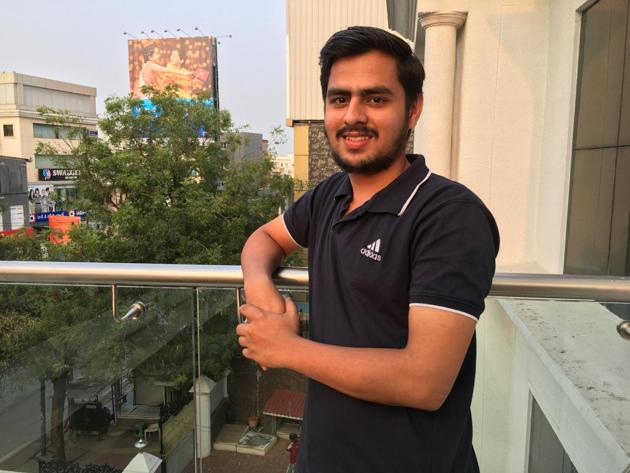
Over 1 lakh children are reported missing in India every year; the real number is estimated to be twice as high. This is one boy’s story.
What is it like to be a runaway, far from home, a child fending for yourself? Prathmesh Tripathi, now with a political consultancy in Hyderabad, lived this life for two months in 2011. No one knew where he was from, few knew his name; he was bald and loved cricket, so they called him Pietersen.
On a sultry afternoon, 14 boys were playing cricket outside a factory canteen in Thane. Their T-shirts of red, blue, yellow and green livened up the otherwise dull area, an industrial neighbourhood of buildings all in grey.
A pale, lean boy, forehead beaded with sweat, all set to bat, watched the bowler stride forward. It was 2011; the midst of an India-England Test season. At the crack of the bat, his team shouted, “Sixer, Pietersen! Sixer, Pietersen!” He just stood there. Prathmesh Tripathi had forgotten that that was his name now. “’Get used to this,’ I remember saying to myself. ‘Don’t leave any clues behind’.”
Tripathi had run away from home 20 days earlier. He was 17, an average student in a school in Bhilai, Chhattisgarh. His father wanted him to try out for an IIT. He didn’t think he could.
So after school one afternoon, he ditched the path that led to his house and took the road to the railway station. He had made the preparations a day earlier — his Class 10 certificate, the only ID he had, and a change of clothes rolled up in his schoolbag.
He hopped into an unreserved compartment on a train to Mumbai. It was 5 pm and he was hungry. “But I remember feeling full of glee. I was free,” he says.
***
Prathmesh lied to the first stranger he spoke to. “What do you do?” the man asked, offering the boy his seat for a while. “I am going to look for work,” Prathmesh replied. “My family needs me to help out.”
Looking back on this today, he says, it’s terrifying to think that anything could have happened. “I knew nothing of the real world.” “I’ll try to get you some work,” the man replied
Sitting by the window, Prathmesh thought of his father, who had moved him to an English-medium school as soon as he could afford it, at age 11. He thought of his mother, his first teacher, who would spread the ash of the chulha on the floor and, using her index finger, draw the letters of the Hindi alphabet.
His father was a mechanical engineer fluent in English but usually away from home on work. For his first two weeks at the English school, Prathmesh understood nothing. But his father was determined. When the boy failed Class 6, he shifted him to a CBSE school.
“I began to do well. It felt like I was catching up,” Prathmesh says. Through Classes 9 and 10, he was near the top of his class. He began participating in debates and elocution contests. He won prizes for his school. And his father began to dream of having a son in an IIT.
***
Morning came and it was time to alight. But alight and go where? He saw the stranger who had offered to help, and hurried after him. The man ignored him but Prathmesh persisted. “I ran after him, pleading, ‘I’ll do anything. Help me’,” he says.
The stranger turned out to be an agent for migrant workers. There was a group of 25 waiting for him from West Bengal and Jharkhand. Prathmesh could join them, he said.
They headed a factory in Thane. Prathmesh’s sole document revealed that he was too young to work at the plant. He could work at the canteen, the supervisors said.
“I didn’t even know to cut vegetables,” Prathmesh remembers. “And it was endless work — breakfast ran into lunch ran into dinner. I realised why they had given me the job. No one else wanted it.”
Work began at 3 am. “I was the only one cooking for about 60 people.” From a first dish that was a disaster — boiled masala that tasted like lava — he began to learn how to balance ingredients, and the days flew by.
At night, the teenager would feel sick with longing for home. “I would think of Maa and cry, but fear of my father kept me from returning. And guilt. I knew I had hurt them. I knew they were terrified. Their fear loomed large at night, and for nights and nights I couldn’t asleep.”
His mother, Neelam, couldn’t sleep either. “I would hear him calling out for me. I dreamt of horrible things happening to him,” she says.
***
And so the boys were cheering Pietersen. The cricket team had become his salvation, a sliver of normalcy. His days continued to unfold — cook, cook, cricket, night, cook again.
One day, a worker from the original group of 25 announced that he had unlimited call time for two days on his SIM and everyone could call their family. “I was so scared. They didn’t know my story. How could I say no? I had to call.”
Tripathi walked a few metres away and dialled his home landline. “My father answered. I used a fake voice and asked for a random person. I said I was calling from Aurangabad.”
His father replied, ‘Wrong number’. But before disconnecting, he asked, ‘Do you know a boy named Prathmesh?’ “Tears welled up in my eyes. I said no and disconnected.”
It had been two-and-a-half months since he left home and it felt like the burden was just getting heavier. He called back. “My dad knew I was afraid of him. So he only asked, ‘How are you?’ When I said ‘I’m coming home’, he said ‘I’ll pick you up’. That was all.”
It turned out to be really hard to leave. “These people had been my friends when I had no one. I said bye, and promised to keep in touch. But my parents threw away everything I went home with, and I can’t blame them,” Tripathi says. “I still look at the faces of the canteen workers in my office and wonder if I’ll see one of them. I never do.”
Back home, Tripathi graduated in mass communication from a Raipur college, moved to Bangalore for a post-graduate degree, got a job at a TV news channel and now works at a political consultancy in Hyderabad. “Today, I can’t believe what I did… what I put my family through; the danger I put myself in,” says the 24-year-old.
His mother speaks haltingly of that time. “I love my son very much but to do this without a word to me. It felt like the worst, most unjust punishment.”


