
 E-Paper



Maharashtra’s Wild West: Wolves, hyenas, leopards share space with humans
A high probability of all three species existing together was estimated in over 22,896 sq km or 25% of the study site that supports human densities ranging from 59.32 to 1,169.26 persons per square kilometre.

 Prefer HTon Google


Three large carnivores — leopards, wolves and hyenas — share space with humans in semi-arid landscapes of western Maharashtra that are outside national parks and wildlife sanctuaries, reveals a new study led by Wildlife Conservation Society (WCS), Bengaluru. The WCS recommends conservation of these “wasteland” terrains even though they do not fall under the category of protected areas.
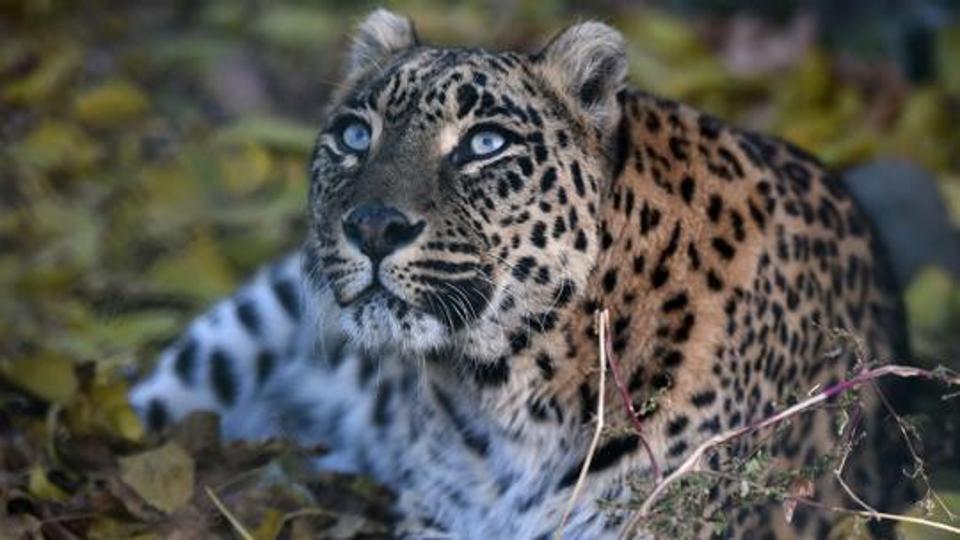
Based on field surveys across 89,000 sq km area — of which only 2,500 sq km (2.6%) falls under 11 protected areas — and statistical models to map the distribution of the species, a six-member team from WCS found that striped hyenas occupied 75% of the semi-arid landscape followed by Indian grey wolves (64%) and leopards (57%).
A high probability of all three species existing together was estimated in over 22,896 sq km or 25% of the study site that supports human densities ranging from 59.32 to 1,169.26 persons per square kilometre.
“Right now, all conservation policy and approach is centred on protected areas. Hence, we are not even thinking of tools to deal with situations where there is wildlife in human-used landscapes,” said Vidya Athreya, wildlife biologist, WCS. “All we are saying is that wildlife and people share the same space, and we therefore need to think outside the protected-areas box.”
The study, published on April 12 in the international journal Conservation Science and Practice, attributed agricultural land-use, built-up areas, domestic livestock and presence of wild prey species as factors influencing the distribution patterns of the carnivores.
Researchers said that as opposed to forests, which are designated as ecologically important, semi-arid lands are gradually converting from rain-fed systems to intensively irrigation-fed permanently cropped lands, or being given away for infrastructure development and industrial use resulting in their fragmentation.
“The historic political reason for calling these lands degraded wastelands by the British administration was because they have no vegetation and therefore could not support taxable livelihoods like livestock grazing. Therefore semi-arid landscapes, unlike forests, are not the focus of conservation interventions in India,” said Iravatee Majgaonkar, lead author, WCS-India. “We wanted to establish that these landscapes are quite bio-diverse that will help attract conservation attention in the long term.”
The study area was spread over seven districts – Nashik, Ahmednagar, Pune, Satara, Sangli, Solapur and Kolhapur – comprising semi-arid and agricultural landscape with a population density ranging from 266.48 to 602.63 persons /km2.
Wildlife experts said there are high chances of conflict in areas where the landscape is shared by humans and large carnivores. For instance, between 2016 and 2016, western Maharashtra had 91 officially documented incidents of human attacks, most of which (93%) were by leopards.
“Protected areas are not the only places marked for wildlife. In many villages these animals have the ability to adjust and stay alongside humans,” said Sunil Limaye, additional principal chief conservator of forest (wildlife). “To avoid conflict, we need to identify wildlife corridors, be it agriculture or arid lands, where animals can move from one forest to another without human interference.”


