
 E-Paper



Malavika’s Mumbaistan: A way of life
More than two decades later, we know that if it were required for us to do the same once again, we would do it, not only in our parents’ memory – but in the quiet wisdom also, that this is the only way to live.


We had been in our mid-twenties and already married, when we realised that there was a difference between Indian Muslims and their countrymen of other faiths.
It had been at a glamorous dinner party in the lap of Lutyens’ Delhi, which had featured – not one, or two – but three of its most formidable women. In that noisy boisterous evening (how loudly and passionately they all spoke, we remember the Bandra convent-school educated girl in us thinking that evening.)
We forget if it had been the princess from the political clan, or her best friend the fiery journalist, or the voluble cultural czarina who’d said something about the ‘M’. “What is M,” we’d asked naively.
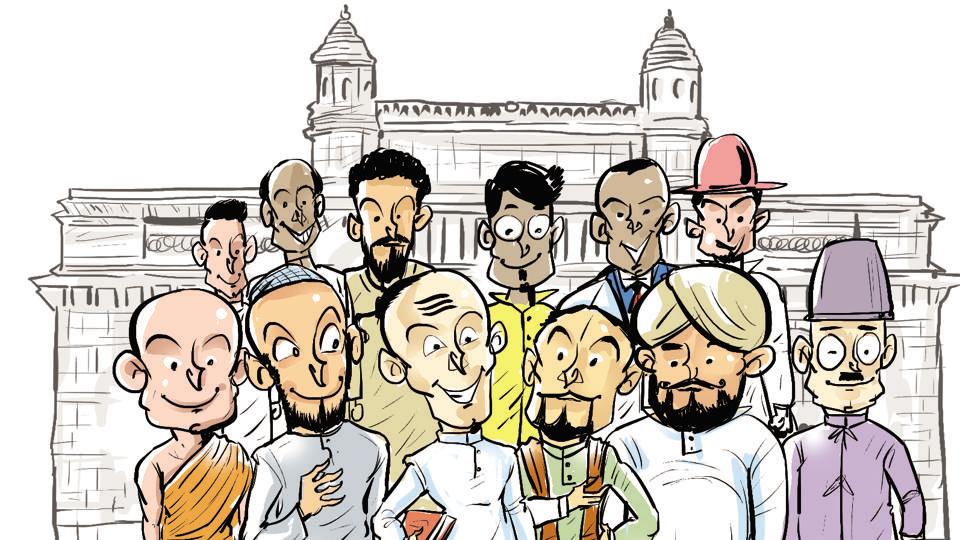
“Muslims,” we were informed, in a hushed whisper. The frisson the alphabet had carried was unmistakable and had intrigued us: after all, growing up in the melting pot of Mumbai’s apartment blocks and colonies, its residential complexes and neighborhoods living cheek-by-jowl with Hindus , Christians, Parsis, Jews, Anglo Indians, as well as Muslims, this separate attention given to any one community, had struck as peculiar. In the homes and schools and drawing rooms and playfields of our youth, such discrimination would not only have been absent, but unthinkable.
And when you consider that many of us had been the children of refugees from across the border, who’d left behind or lost their homeland during Partition, this deep, unwavering secularism and strident respect for all religions and communities, demonstrated by our parents, is all the more commendable.
Perhaps it could not have been any other way. The house we lived in, for instance, a compact, rented apartment in an old style up-down structure, housed three other families besides ours, and was owned by Catholic landlords. Below us had lived a famous Muslim intellectual and the other two apartments in the block had seen Sikhs, Parsis and Hindu families come and go.
Expectedly, and like most other families in Mumbai, there had been an unwavering ‘give and take’ and ‘live and let live’: Christmas trees twinkling with fairy lights lit up the garden in December; we relished biryani and kheer on Eid and celebrated Diwali and Holi with our neighbours with gusto. What’s more, this bonhomie was not only about ‘ho ho ho’ and a bottle of rum; when wars had raged with Pakistan, we recall surviving blackouts and air drills with our Muslim neighbours; when Mumbai went through a spate of earthquakes, we recall how it had been in the basement of our Christian neighbours that the building had converged all night, the elders keeping vigil as we kids slept on mats. Indeed you could say that the only thing communal about those times were the evening TV watching sessions in whoever’s home owned a TV set!
In schools it was no different. Yes, once a week when our Catholic classmates attended ‘Catechism’ class, the non-Christians amongst us were shepherded in to its temporal equivalent: ‘moral science’; and though it was often conducted by Christian teachers – never can we recall a single attempt to proselytize or convert, even the most ardent amongst us wanna be singing nuns, neither do we recall our parents showing the least bit of concern about what we were being taught in ‘moral science’ class each week.
Such had been the inherent trust and sanguine approach of our elders, many of them who’d been victims of Partition themselves and had borne witness to horrific communal violence personally; there had been no baying for revenge, nor a single non-secular thought or phrase; our parents had gone about their lives in the quiet knowledge that it was only love peace and respect that would heal those terrible wounds of Partition.
One story bears elaborating: When she was in her early seventies, our mother had the privilege of visiting her childhood home in Rawalpindi, Pakistan, which she had not seen since her early teens. It had been the home she was born in and where she’d spent her most cherished years, now occupied by a family of Muslim professors, who had crossed over from India and had been allocated the house.
It seems my mother had arrived unannounced one morning, after feverishly tracing her footsteps through the warren of broken down neighborhoods and had won the family’s trust at the door itself, by describing accurately and in great detail, the geography of their home.
What happened then we’d enquired. “When the family realized who I was, all the women of the house hugged me as their own, insisted I take a meal with them and showered me with love; I was so moved, that in that instance I removed the jewelry I was wearing and gave it to them – and they did the same with theirs – and then for a long time we held on to each other and wept over the strange history that had made us meet under those circumstances,” my mother had said.
Around that period when the Mumbai riots of the nineties had broken out, my mother would walk alone and straight backed to the Muslim shop owners in her neighborhood to let them know that her home would be open to them in case they faced any trouble or harassment whatsoever.
She did this not as a political statement or act of heroism, but in the quiet wisdom that this was the only way to live.
More than two decades later, we know that if it were required for us to do the same once again, we would do it, not only in our parents’ memory – but in the quiet wisdom also, that this is the only way to live.

Stay updated with all the Breaking News and Latest News from Mumbai. Click here for comprehensive coverage of top Cities including Bengaluru, Delhi, Hyderabad, and more across India along with Stay informed on the latest happenings in World News.


