
 E-Paper



Mumbai got highest August rain since 1983, says IMD
Mumbai is 57.6 mm short of the 3,000mm mark this season, with 2,942.4 mm rain between June 1 and August 25. The monsoon is expected to continue into September.

 Prefer HTon Google


With 1,044 mm rain between August 1 and August 25, the city has received its highest August rainfall this year since 1983 and recorded the second-highest monthly rain since 1959, as per data from the India Meteorological Department (IMD).
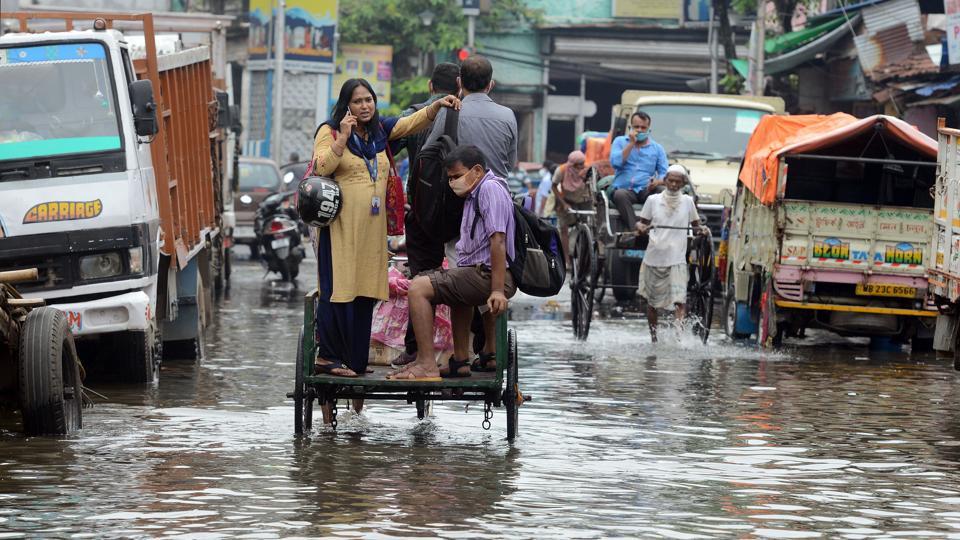
On Tuesday, the Santacruz weather observatory, representative of the suburbs and Mumbai, recorded 1,044 mm rain so far in August, crossing the August 2010 rain record of 1036.5mm. In August 1983, Mumbai had recorded 1,243.8mm while the all-time highest August rain of 1,254mm was recorded in 1958.
The Colaba weather observatory, representative of south Mumbai, has recorded its highest August rain since 1991, with 934.1mm. During August 1990, it had recorded 1,041.2mm rain in the entire month, while the all-time high was recorded in August 1983 (1,187.6mm).
Between 8.30am on Monday and 8.30am on Tuesday, the suburbs recorded 13.4 mm rain while 1.8mm rain was recorded in south Mumbai. So far, the excess rain has been 64% and 63% for Mumbai suburbs and south Mumbai respectively. Maharashtra has recorded 17% excess rain this monsoon.
Mumbai is 57.6 mm short of the 3,000mm mark this season, with 2,942.4 mm rain between June 1 and August 25. The monsoon is expected to continue into September.
“After no low pressure weather system formed over Bay of Bengal in July, five well-marked systems were witnessed in August. Combined with this, recurring occurrence of a mid-tropospheric circulation over south Gujarat and north Konkan coast simultaneously led to active monsoon conditions for Mumbai,” said Mrutyunjay Mohapatra, director general, IMD.
The city surpassed 50% of its August average of rain (585.2mm) in the first four days of the month, with 293mm rain. The bulk of this (271mm) was recorded over 28 hours between August 3 and August 4. The monthly mean rain mark was crossed on August 9.
In July, Mumbai witnessed its highest monthly rain (1,502.7 mm) since 1944, when IMD began collating readings. However, June saw the lowest monthly rain in five years after monsoon onset was declared on June 14. The city recorded 395mm rain, against the monthly average of 493.1mm.
“The monsoon trough was active over central and north India for most of August, resulting in good rain for the west coast and interior Maharashtra. This helped bring all the lakes to optimum levels,” said professor Sridhar Balasubramanian, department of mechanical engineering and IDP Climate Studies, Indian Institute of Technology, Bombay (IIT-B). He said Mumbai may witness a few heavy spells in September. “The break phase with subdued rain for the last six days in August is needed. By the first week of September, active rain will be back for Mumbai, owing to weak La Nina [cold ocean temperatures in the equatorial Pacific, which is opposite to El Niño] likely to emerge during September. This will result in slightly above-normal rain,” said Balasubramanian.
IMD has predicted occasional spells of light to moderate rain till the end of August.


