
 E-Paper



The Shor of Chor Bazaar
Lack of customers and redevelopment seem to have muffled the shor of this once popular bazaar

 Prefer HTon Google


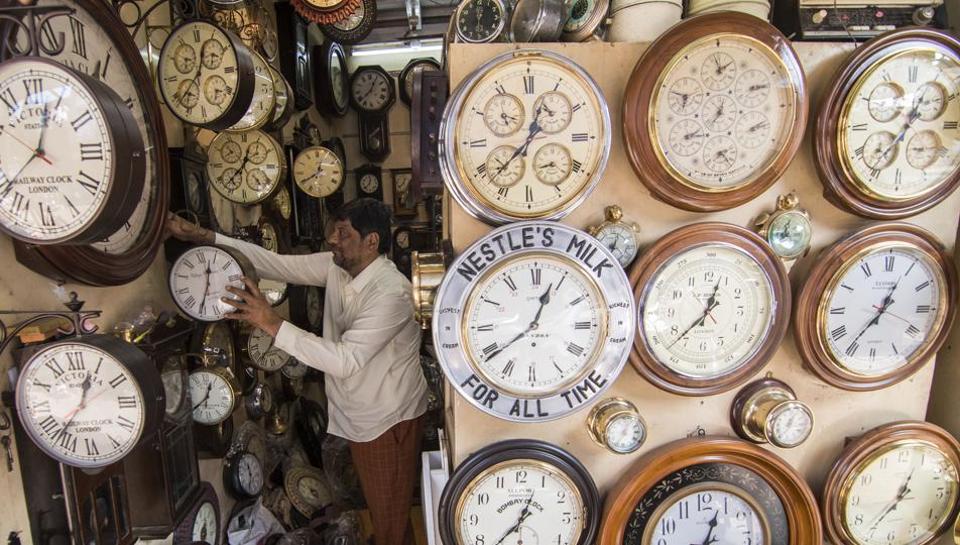
On a hot Wednesday morning, the narrow alleys of Mutton Street, sandwiched between SV Patel Road and Moulana Shaukat Ali Road in South Mumbai, are rather quiet. Chor Bazaar was once considered an antique lover’s go-to place for all sorts of items ranging from lamps, chandeliers, gramophones, cameras, limited edition old movie posters to clocks, century-old decorative objects and spare automobile parts. Now, as crumbling old buildings serve as a backdrop to this iconic market, does the market live up to its former glory?
WHAT’S IN A NAME?
Chor Bazaar (Thieves’ Market) is one of the largest flea markets in India, and is a major tourist attraction of Maximum City. Though, in author Rohinton Mistry’s popular novel — Such a Long Journey, the market has been written as “not a nice place”. As you speak to shop owners in the market, all of them will tell you the same story that Chor Bazaar earned its name because the British overlords couldn’t pronounce its original name — Shor (commotion) Bazaar. Outside the confines of the market, it is a popular belief that it makes way for “stolen goods”.
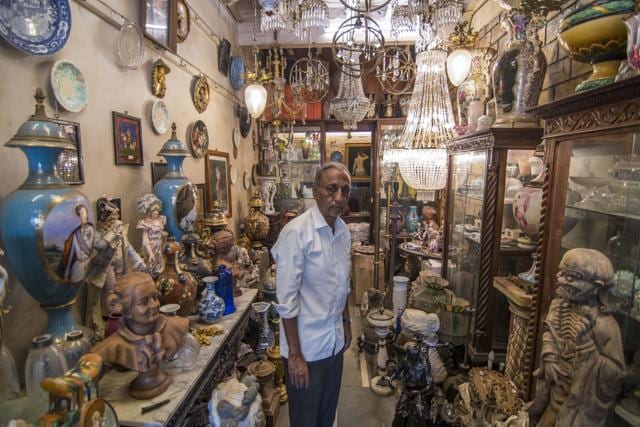
Ask 77-year-old Sayed Usman, who has a shop that sells lamps and lights, if this infamous narrative about stolen goods being found at Chor Bazaar is indeed true, and he says the market is a source for discarded antique items and “nothing that is found here is stolen”.
‘REPLICATION’ NOT DUPLICATION
Syed’s shop has stood tall since 1941. After his father, Sayed took over the business in 1961. Post 1994, he says, his sons have been carrying the legacy forward. “Earlier, it was easier to get antique items from nearby cities such as Hyderabad, Pune, etc, because royal families were around and a lot of their unused and discarded items would be brought here by hawkers. But how much antique can you collect and sell? After a point, it is going to get over. So, now, many shop owners from the market have entered the business of replication,” says Sayed.
But Sayed insists that replication isn’t similar to duplication. Pointing towards every item in his shop, he says, they’re all new as the design has been replicated keeping the aesthetics of the original antique items. “That’s how it is going to be; we have to move along with the times. My sons have taken over the business and they want to remain active in this field. They enjoy this process of replicating older items,” Sayed says, adding that, “there are some original antiques that come to us once in six months. But, instead of waiting for those, we go ahead with replication.” The replication process, he says, mostly happens in countries such as China, Hong Kong, etc.
Another shop owner, Shaukat Mansuri, 52, whose shop, he claims is often frequented by Bollywood celebrities, sells vintage enamel and brass lunch boxes that are imported from, as well as exported to, many places. Age-old switch boards that adorn resorts and heritage hotels could also be found in his shop. But, he says, antique switches are now hard to find. So, he too, gets them replicated. “Replication has to be done, how else will we run our business?” asks Shaukat, who is also the secretary of the Antique Market Dealers’ Association.

FOR DEVELOPMENT’S SAKE
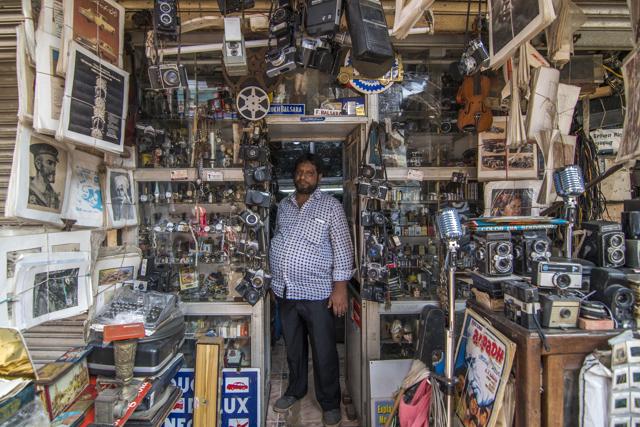
Iqbal Camerawala sits inside his 40-year-old shop that sells vintage cameras. He says, “Earlier, we used to repair parts of cameras. Then, we began selling cameras. But, now, nothing’s left in this market.”
Since the Saifee Burhani Upliftment Trust (SBUT) started the cluster redevelopment of Bhendi Bazaar, which also includes the 150-year-old Chor Bazaar, Iqbal says, a lot of shop owners have had to shut their shops and move base. The upliftment project was initiated in 2009 and construction work began in 2016. The idea was to improve the living conditions and facilitate the neighbourhood with modern amenities while keeping in mind the interests of the people.
While shop owners such as Iqbal are not happy with the SBUT’s development programme and feel that it will lead to the end of the market, Sayed and Shaukat, however, believe that redevelopment will help better the image of the area. “Over the years, our customer base has decreased because the alleys are too cluttered, and there is no parking space. Hopefully, the roads will be wider and there will be underground parking,” Shaukat says.
Sayed, who has seen the market evolve for over four decades now, recounts how earlier, trade and the market vibe was “smooth”. Now everyone’s on the move and the competition to stay afloat is rather cut-throat. He says, “It requires time to get used to any kind of development. But once it happens, it is always for the better.” He also believes that the SBUT has compensated the shop owners well by paying them three years’ rent in advance and by providing them with Maharashtra Housing and Area Development Authority (MHADA) houses.
HAVE FAITH
Even though the streets aren’t as bustling as they used to be and the loyal customer base may have reduced, people from the market still believe Chor Bazaar’s popularity will not completely fade away, and it will be able to live on its past glory.
Sartaj Qureshi, 37, who has a small shop that repairs and sells old wrist watches, moved from Chandni Chowk, New Delhi, to Chor Bazaar, Mumbai, to get into the business of selling antique wrist watches. Business, he says, is slow and “50% of the market no longer exists because of the redevelopment work”.

He says, “People outside are spreading rumours that the market is completely dead, so customers have stopped coming.” However, Sartaj is among the few, who are adamant that this is where the antique business thrives.


