
 E-Paper



Densely populated urban villages of Noida may affect civic facilities
Noida’s 82 urban villages are mostly home to migrant workers and daily wagers such as factory workers. Planners said that issues in these thickly populated villages must be addressed soon.


Urban planners are concerned that unchecked population growth in Noida’s urban villages will overburden planned infrastructure and civic amenities.
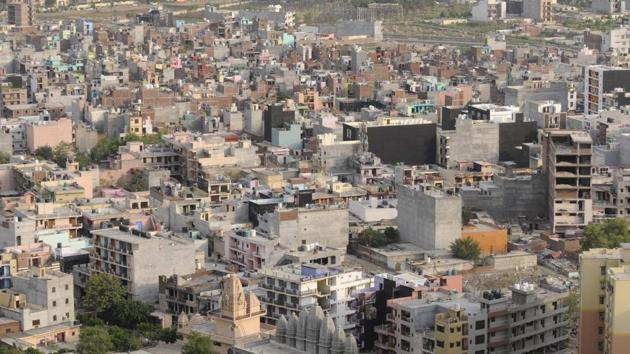
Noida’s 82 urban villages are mostly home to migrant workers and daily wagers such as factory workers. Planners said that issues in these thickly populated villages must be addressed soon.
The Noida authority has not put in place the necessary mechanism to ensure planned development of villages.
“Now, we have started the creation of a dedicated municipal wing and health department, which are on the way, to come up with a detailed municipal policy and adequate system to address civic issues in both rural and urban areas,” Rakesh Kumar Mishra, additional chief executive officer of the Noida authority, said.
Choked sewage system, lack of a proper drainage network, narrow roads, unsafe residential structures and thickly populated pockets are common characteristics of all Noida villages.
“The Noida authority and the state government never considered holistic development in villages. After farmers lost their agricultural land to development projects, they (mostly) depend on income from house rentals. Farmers keep constructing additional floors on their houses and rent them out to factory workers and labourers. It has increased Noida’s population beyond the permissible limit. If it continues, it will further lead to a bigger civic mess,” said Atul Gupta, an urban planner and the president of Architects’ Association for Noida Zone.
Social workers said that the population in Noida villages is on the rise and unregulated because the Noida authority did not make houses for people from the low-income groups, such as domestic helps and factory workers.
“The Noida authority did not make economically weaker sections (EWS) and low-income group (LIG) flats, thereby violating the NCR planning norms. NCRPB had on April 20 written to the principal secretary, housing and urban town planners of UP on this issue. NCRPB wants 25-30% of all housing units approved for the weaker section so that industrial factory workers can get an accommodation in planned areas, instead of having to depend on villages that are not meant to accommodate a large population,” said Anil Garg, a social activist.
Urban town planners said that if the population in urban villages keeps increasing it can severely affect the planned character of Noida. “We will address all issues prevailing in Noida in a systematic manner. We are on the way to develop a system for the same,” said Mishra.

Stay updated with all the Breaking News and Latest News from Mumbai. Click here for comprehensive coverage of top Cities including Bengaluru, Delhi, Hyderabad, and more across India along with Stay informed on the latest happenings in World News.


